Redshift Laser
 Skip to content

INDUSTRY SOLUTIONS: DIGITAL APPAREL & ACTIVEWEAR ✓ CE Certified
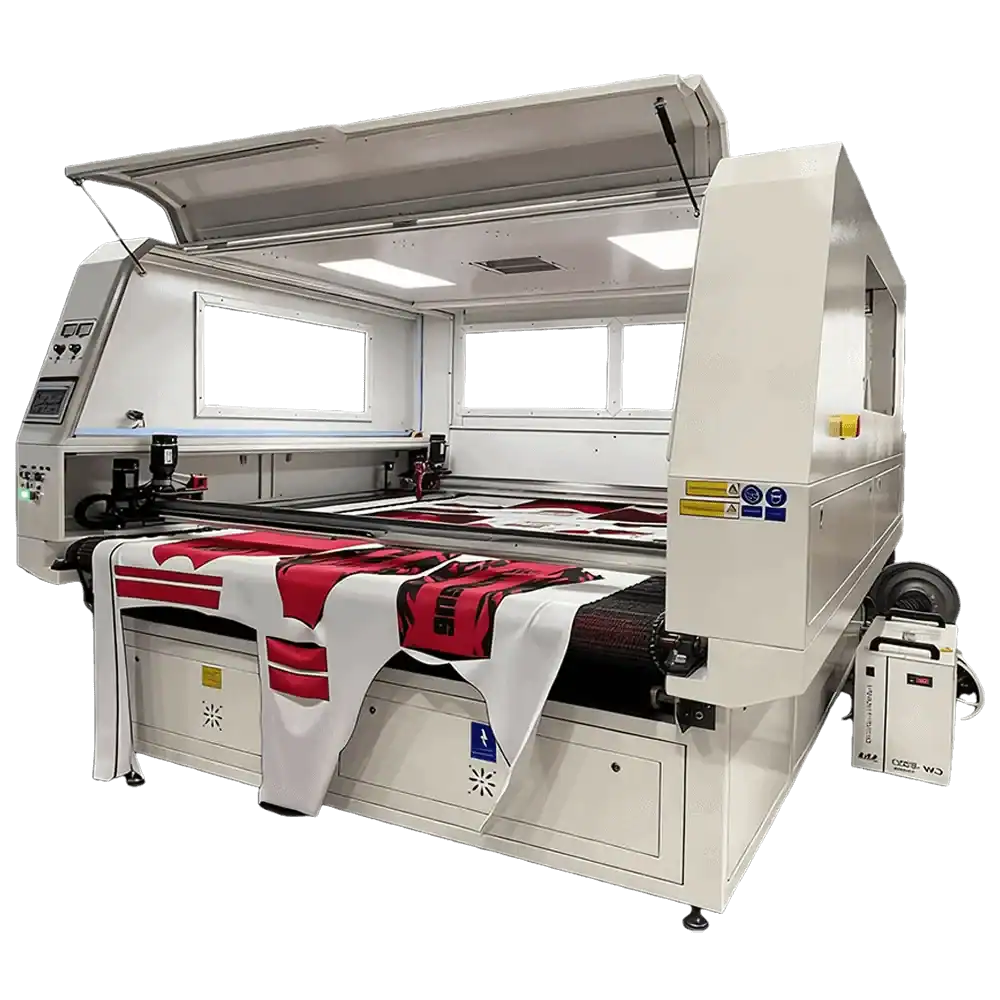
Roll-fed CO₂ laser cutting with camera contour recognition — for sublimation-printed polyester, sportswear panels, jerseys and teamwear. Cuts what the camera sees, not what the CAD file assumed.
Materials: Polyester Spandex-Lycra Printed knit Mesh · Application: Team jerseys Cycling Athleisure Swimwear
High-temperature rotary calenders and stretch-sensitive knits introduce physical variables that mechanical blades, static CAD files, and multi-ply cutting cannot handle.
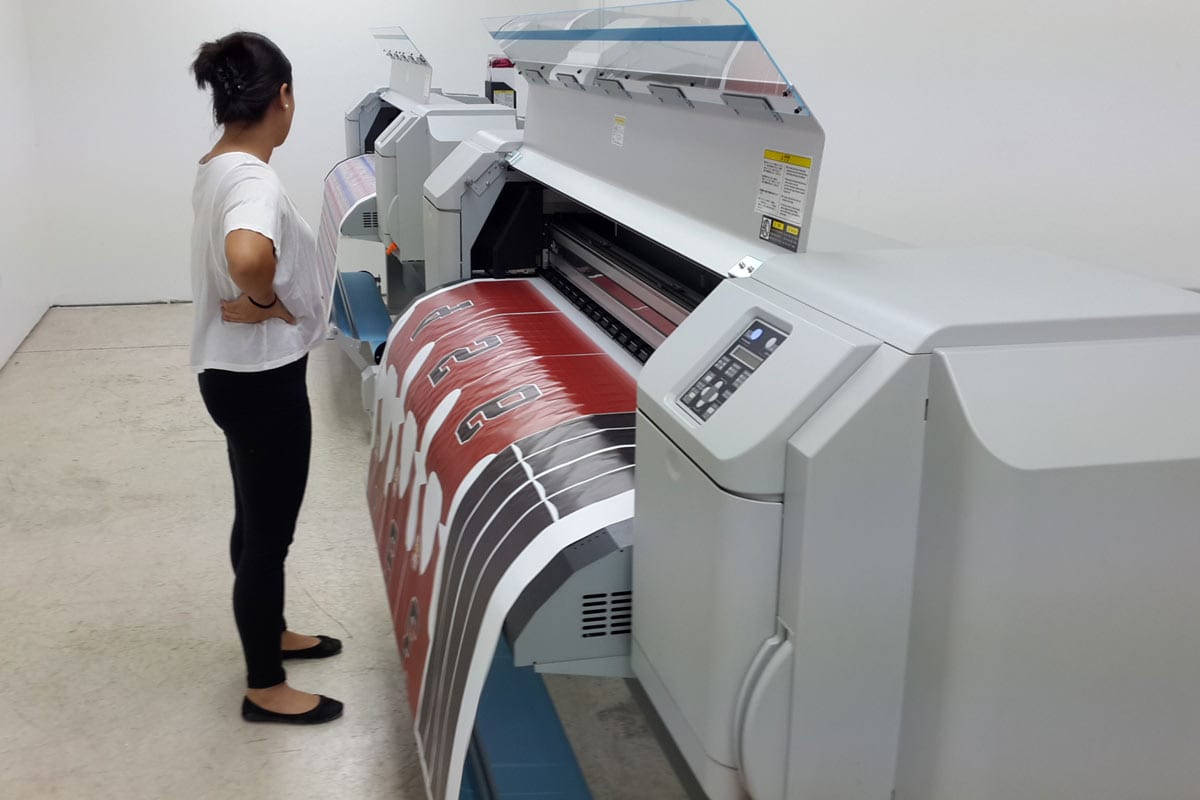
01 // THERMAL SHRINKAGE
196°C–204°C calender transfer causes 5%–10% non-linear contraction in polyester/Spandex knits. Static CAD blind cutting produces mismatched seams and scrap.
Redshift Solution Markerless vision captures actual distorted contours on the conveyor, cutting true physical shape at ±0.5mm.
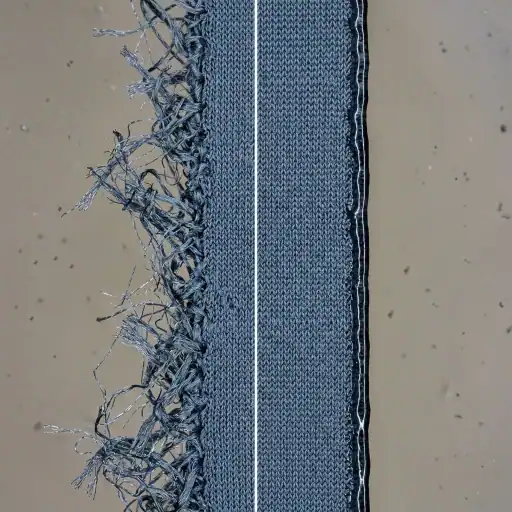
02 // MECHANICAL BLADE FRICTION
Knife blades pull and stretch elastic knit grain during fast turns. Raw cold-cut fiber ends fray immediately, requiring labor-heavy overlock serging.
Redshift Solution Non-contact laser vaporizes yarn with zero physical drag, melting fiber ends into a 0.08mm micro-bead — no serging needed.
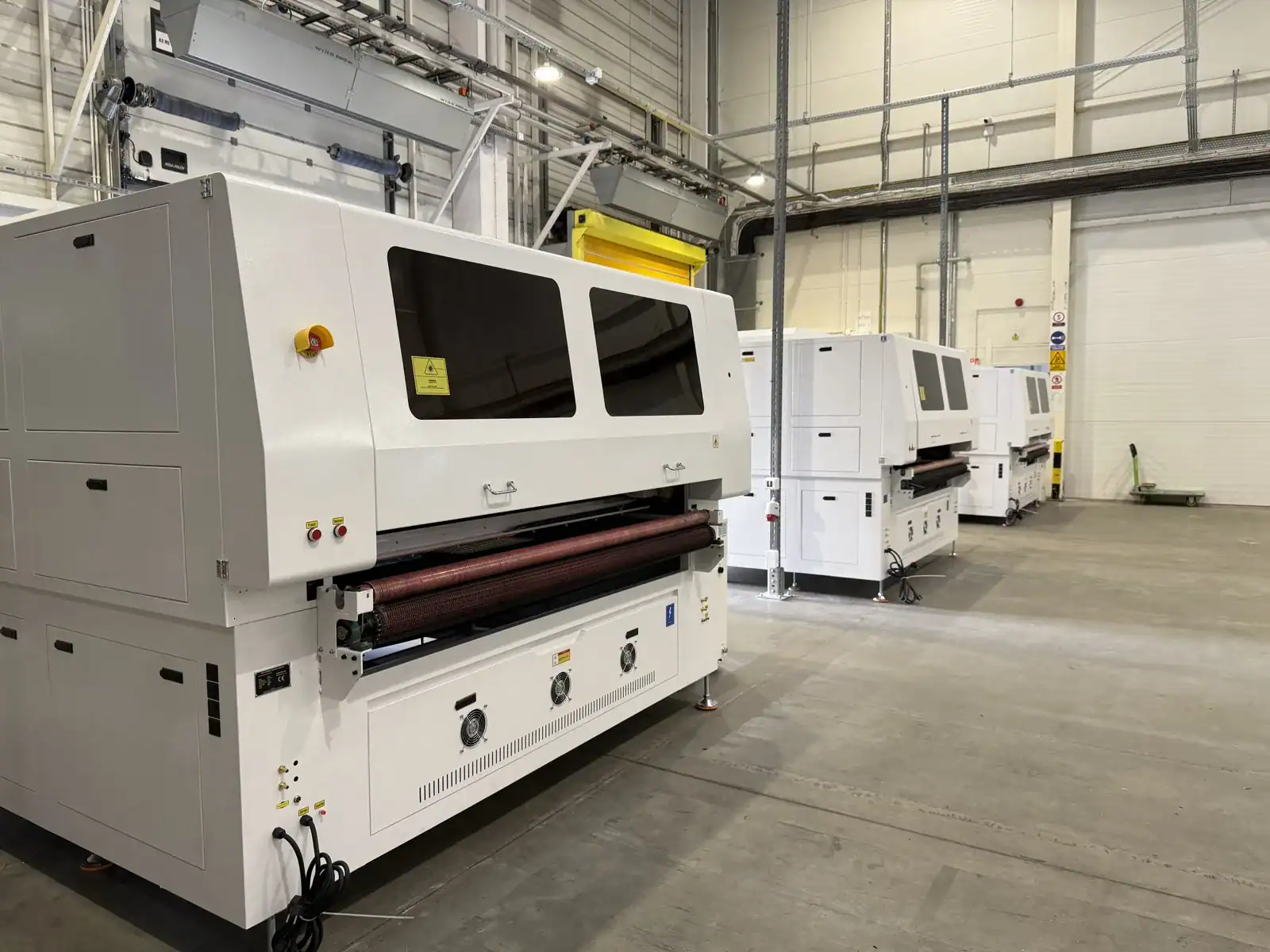
03 // SHORT-RUN MICRO-FACTORY
Personalized jerseys can't be multi-ply stacked — heat fusing and pattern mismatch result. Manual cutting requires 5–7 tailors per shift.
Redshift Solution Single-ply roll conveyor up to 1500 mm/s (Rack & Pinion Max Velocity) — 1 operator outpaces 6 manual tailoring stations.
We read the printed ink itself — no pre-printed crosshairs or fiducial marks needed. (Prefer registration marks? Our systems read those too — contour recognition and mark sensing are both standard.)
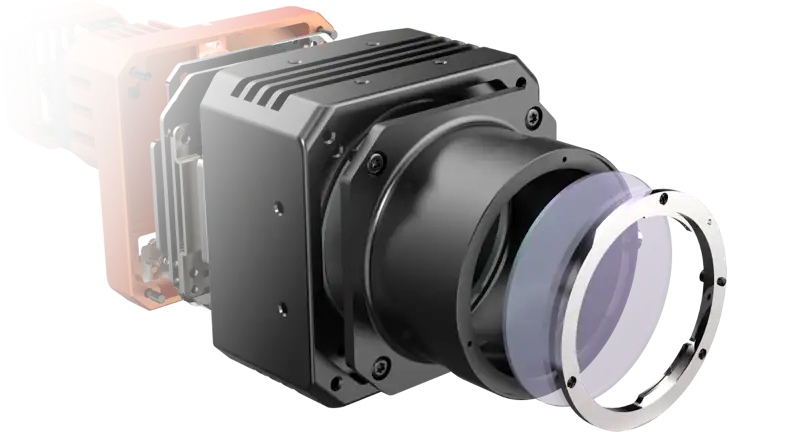
24MP Panoramic Area-Scan Vision
2s Full Bed
Top-mounted 24MP high-CRI camera digitizes the full 1800×1200mm working bed in 2s. Automatically extracts armhole, neckline, and panel boundaries directly from the printed ink graphic without requiring pre-printed marks or imported CAD files.
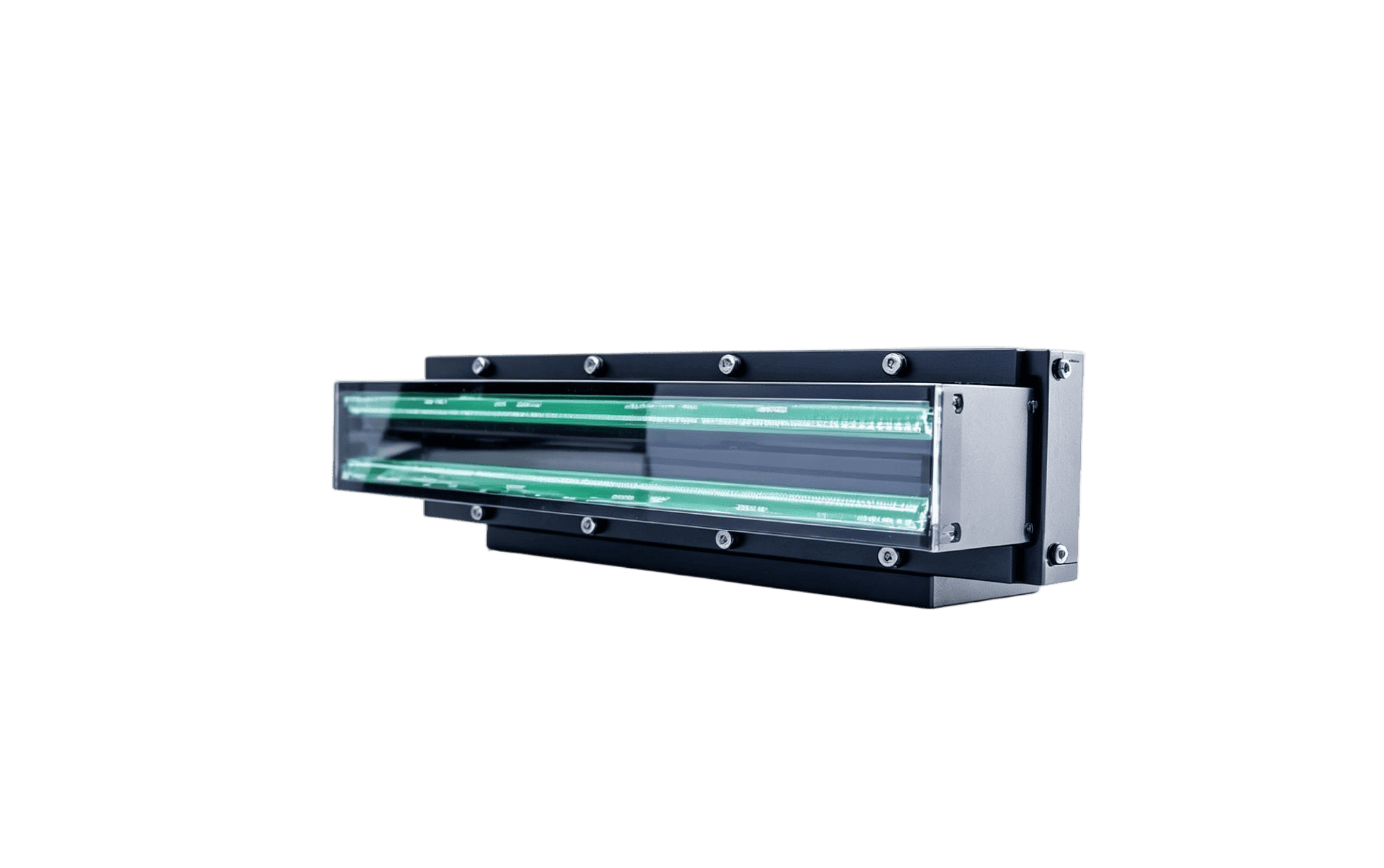
Contact Image Sensor (CIS) LineScan Vision
0.02mm Precision
Gantry-synchronized full-width linear optical array scanning line-by-line across wide rolls with 0.02mm optical resolution. Zero optical fish-eye distortion at table edges, enabling continuous non-stop cutting at speeds up to 1,500 mm/s.
01
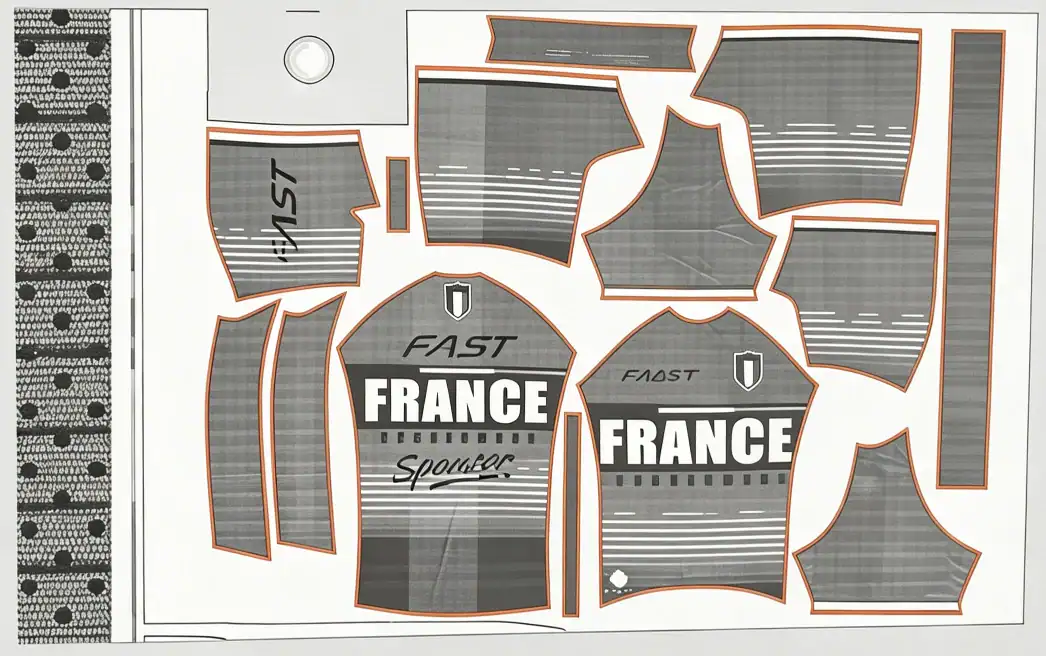
Camera captures high-resolution imagery of printed fabric resting on the vacuum bed.
02
Uses topological border following (Suzuki algorithm) to trace exact outer silhouettes from printed contrast edges.
03
Generates clean vector cut paths with user-defined 0–2mm bleed margins without requiring CAD imports.
04
Dual laser heads execute high-speed cuts at up to 500–1500 mm/s with sealed edges.
CLIENT FACILITY DEMO
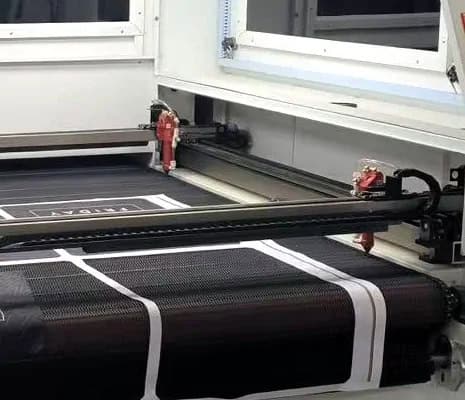
Watch the Redshift Vision Laser Cutter running live — automatic roll feeding, markerless contour recognition, and dual-head cutting of sublimation-printed jerseys.
Transform raw dye-sublimated fabric rolls into precision-cut, edge-sealed garment panels ready for flatlock sewing in one uninterrupted cycle.
STEP 01
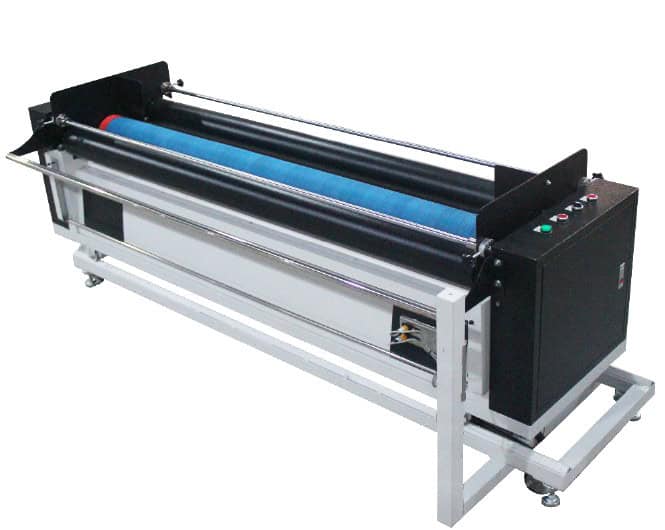
Smart de-reeler with infrared sag sensors matches conveyor advance, preventing stretch stress on elastic 4-way Lycra/Spandex before cutting.
STEP 02
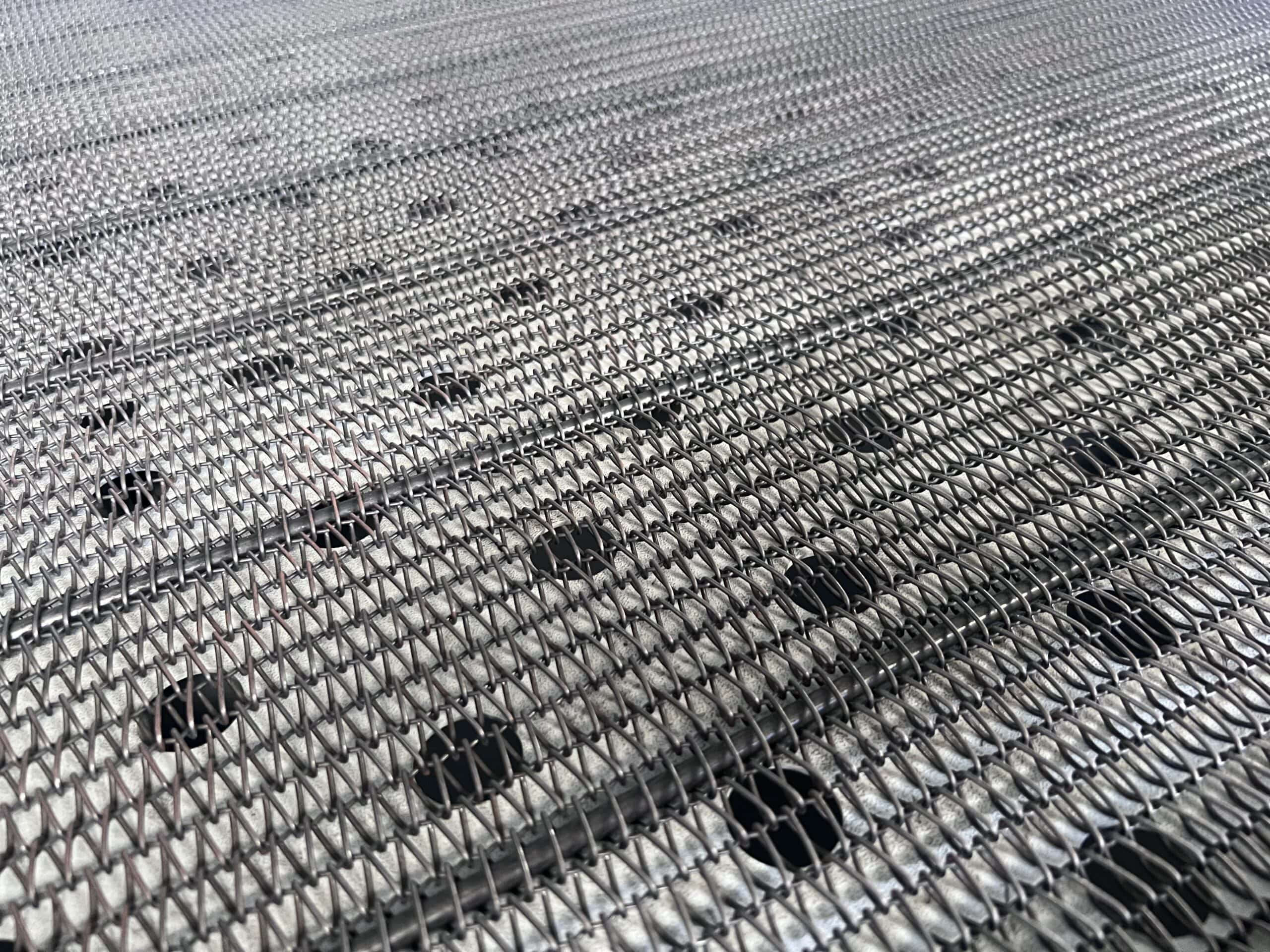
High-negative-pressure conveyor mesh holds ultra-lightweight mesh and slippery silk jerseys perfectly flat against high-speed airflow.
STEP 03
Vision system reads pattern contours in 2s during advance, instantly extracting cut paths directly from the printed ink silhouette.
STEP 04
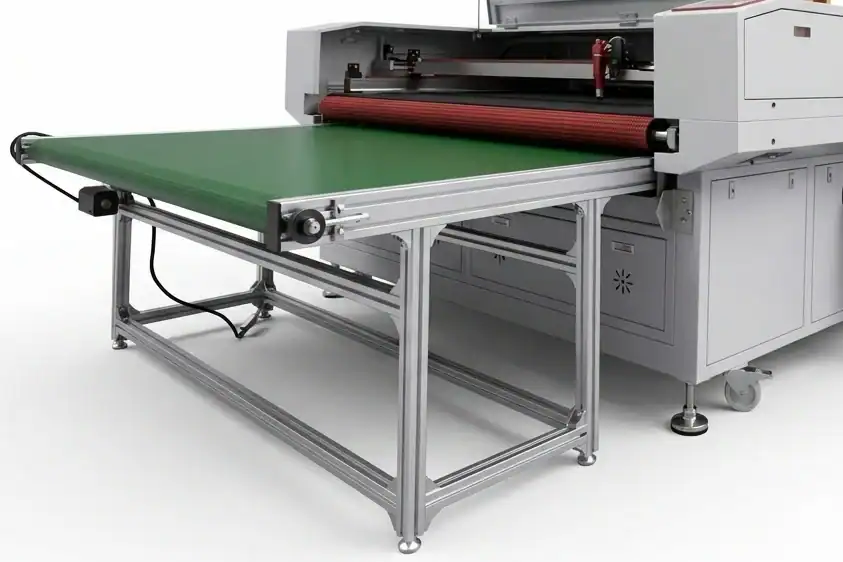
Independent asynchronous dual laser heads simultaneously cut perimeter contours, seal synthetic edges, and execute airflow micro-perforations at speeds up to 1500 mm/s (Rack & Pinion Max Velocity).
STEP 05
Finished panels glide onto the extended motorized collection table for sorting while the next bed scans without machine stoppage.
FULL PRODUCTION LINE DEMO
Watch the complete sublimation sportswear production pipeline — from digital printing on transfer paper, through vision laser contour cutting with automatic pattern recognition, to final flatlock sewing.
How Redshift’s laser thermal dynamics, dynamic PWM power ramp control, and inert gas shielding prevent synthetic fiber unraveling while eliminating scorched edges on pure white performance fabrics.
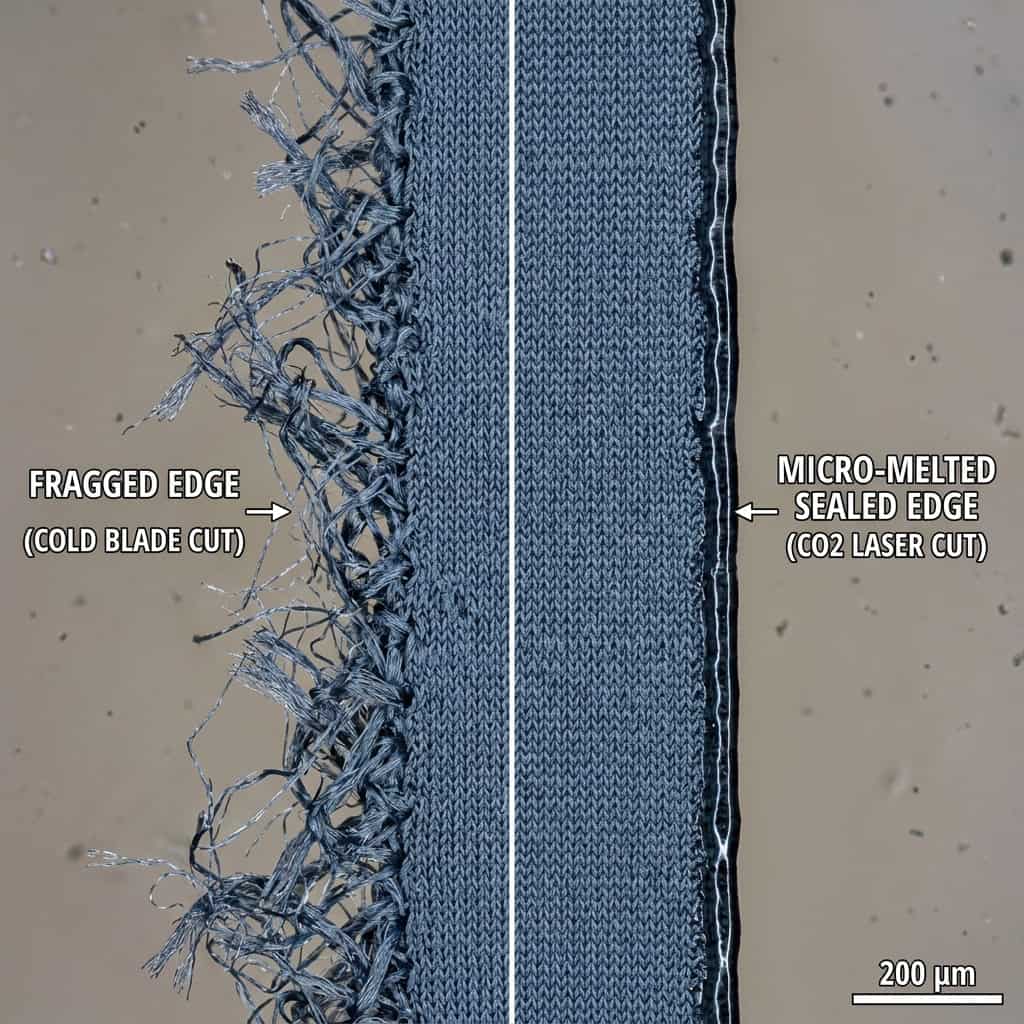
When 10.6 µm CO2 laser energy vaporizes polyester, the tightly controlled Heat-Affected Zone (HAZ) momentarily melts boundary fiber ends into a microscopic, smooth polymer bead (0.05–0.1mm) that permanently seals the weave without creating rigid, scratchy plastic burrs.
Eliminates overlock stitching stations, saving manual labor and removing bulky seam ridges that chafe athletes during motion.
Unified polymer edge anchors flatlock stitching thread firmly against high-tension pulling in rugby, cycling, and compression wear.
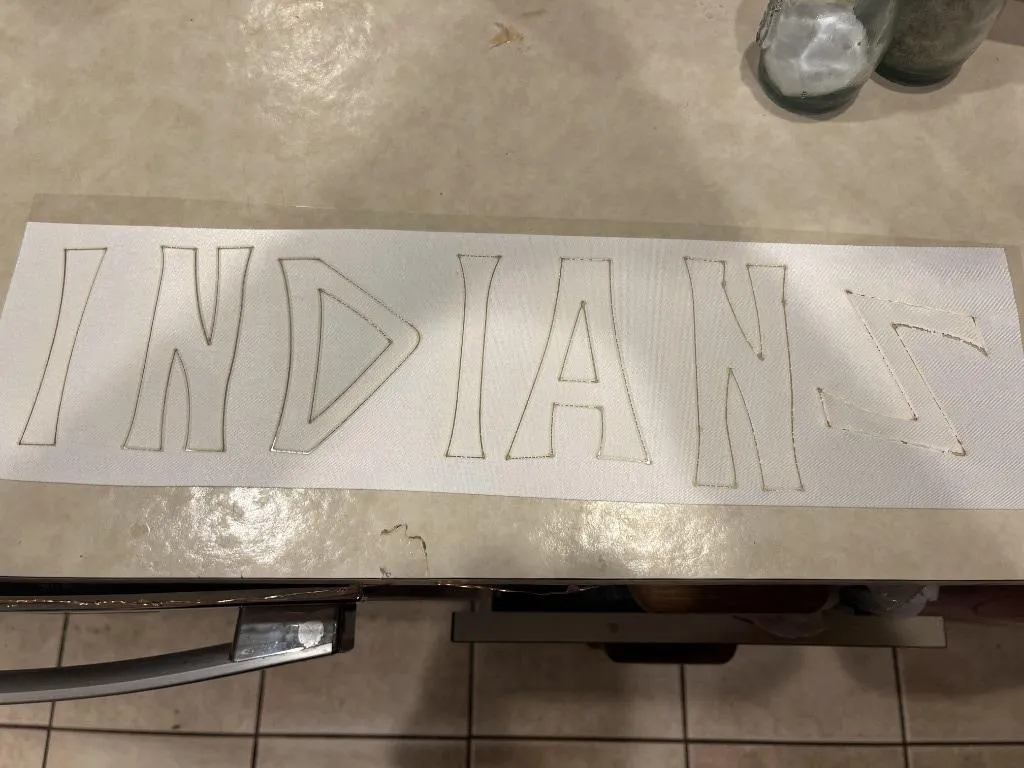
Cutting pure white jerseys without brown edges requires isolating the cut zone from oxygen, managing corner deceleration power, and rapidly purging vaporized resin fumes before they re-deposit onto the fabric.
Eliminates the common defect where stationary laser beams leave scorch marks at start/stop points. Controller synchronizes power with head acceleration in microseconds.
99.9% pure Nitrogen gas assist completely displaces atmospheric oxygen, eliminating exothermic oxidation yellowing that standard shop air causes.
High-speed vector travel with low dwell time prevents heat conduction, while heavy downdraft vacuum evacuates aerosolized VOC resins in milliseconds.
Deep Reading: Why Does White Fabric Turn Yellow on the Laser Cutter? →
From micro-vented marathon jerseys to heavy-compression suits, Redshift vision laser systems handle all athletic synthetic weaves with specialized contour presets.
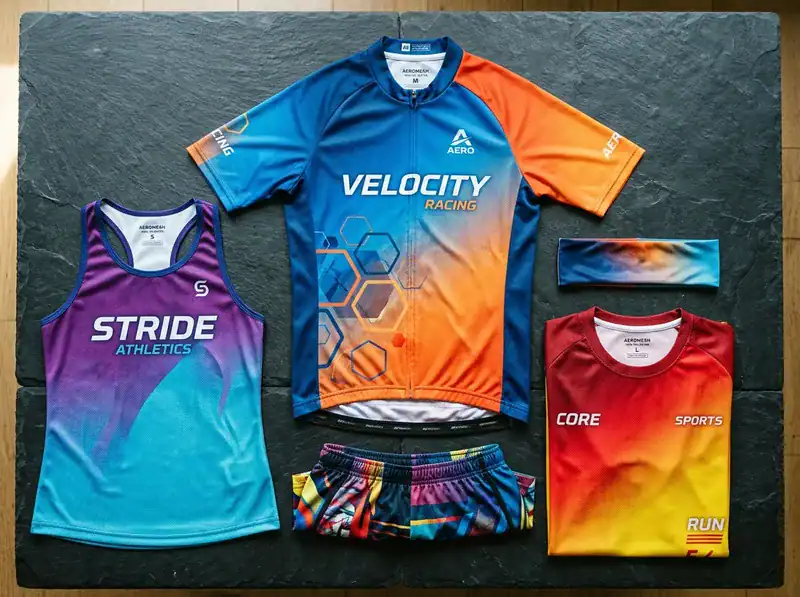
TEAMWEAR
Soccer, basketball, ice hockey, and baseball jerseys with dynamic player names, numbers, and team logos printed directly on single-ply polyester.

AERODYNAMIC RACING
Complex aerodynamic paneling combining dimpled sleeves, windproof membranes, and breathable side mesh panels with high elastane content.

ATHLEISURE
Form-fitting 80/20 Polyester-Spandex blends requiring ultra-soft cauterized edges that won't bite or irritate sensitive skin during stretching.

WATER SPORTS
Chlorine-resistant nylon/poly composites and quick-dry microfiber boardshorts requiring watertight clean edges without unraveling threads.
As a specialized manufacturer of industrial sublimation laser cutting machines, Redshift Laser engineers turnkey roll-to-roll cutting systems designed specifically for dye-sublimated sportswear, athletic jerseys, and stretch fabrics. Both systems feature our heavy-duty chassis, tension-free automated roll feeding, and continuous downdraft vacuum bed to eliminate blade drag, edge fraying, and manual contour tracing.
FLAGSHIP OPTICAL SCANNING UPGRADE
The upgraded vision technology for high-volume factories and continuous rolls. Contact Image Sensor (CIS) scans line-by-line across the entire bed width with zero optical edge distortion at full 1,500 mm/s production speed.
0.02 mmOptical LineScan Resolution
1,500 mm/sRack & Pinion Max Velocity
0% DistortionEdge-to-Edge Linear Scanning
ContinuousRoll-to-Roll Non-Stop Fly-Cutting
STANDARD SPORTSWEAR PRODUCTION WORKHORSE
The proven industry workhorse for digital sportswear print shops and micro-factories. Top-mounted 24MP panoramic camera captures the full bed in 2s during advance, automatically extracting cutting vectors directly from printed graphics.
Working Bed: From 1600 × 1200 mm to 1800 × 2000 mm (Customizable)
Laser Setup: 150W CO2 (Customizable)
Target Output: 500–800 Jerseys / Shift
✓ CE CERTIFIED LASER POWER OPTIONS: 80–300W CO₂ — GLASS OR RF METAL TUBE
Explore Vision Laser Cutter Details & Spec Sheet → ▶ Watch Full Solution Video →
One machine replaces 4–5 manual tailoring stations.
Monthly Savings$12k – $18k
Fabric Yield Gain+15–25%
Scrap Rate8% → <0.5%
// 500 JERSEYS / DAY
| Metric | Manual | Redshift Vision |
|---|---|---|
| Operators | 5–6 Staff | 1 Operator |
| Time / Jersey | 3.5 – 5.0 min | 30 – 40 sec |
| Edge Quality | Needs Overlock | Instant Seal |
| Scrap Rate | 7–10% | < 0.5% |
An objective engineering comparison for processing printed synthetic stretch textiles in high-mix apparel manufacturing.
| Evaluation Parameter | Redshift Vision CO2 Laser | CNC Oscillating Knife | Traditional Die Press | Manual Electric Shears |
|---|---|---|---|---|
| Cutting Mechanism | Non-contact thermal vaporization | Contact mechanical blade vibration | Heavy physical compression strike | Manual physical shearing |
| Synthetic Edge Quality | 100% Cauterized: Fuses fiber ends, zero fraying, eliminates serging | Raw Cold-Cut: Synthetic yarn unravels easily; requires overlock | Crushed Edge: Jagged fiber ends; high fraying risk | Unsealed: Frequent fraying and loose threads |
| Elastic Fabric Stability | Zero Physical Drag: No fabric stretching during high-speed cuts | Blade Drag: Knife friction causes micro-wrinkles on Lycra | Compression Warp: Die pressure shifts elastic fabric layers | Variable: Operator hands pull and deform knit grain |
| Heat Shrinkage Compensation | Direct Contour: Cuts actual physical contour on bed in real-time | Static CAD boundary (fails on warped sublimation prints) | Impossible: Physical steel die cannot adjust for shrinkage | Manual visual eyeball estimation (high fatigue error) |
| Tooling & Setup Cost | $0 Tooling: Digital file loaded instantly for 1-piece custom batches | $0 Tooling: Instant digital file changeover | $300–$1,200 per Die: 7–14 day lead time for steel tooling | $0 (Paper patterns must be manually graded) |
| Maintenance & Wear | Zero consumable blades; periodic optical mirror cleaning | Frequent blade replacement & vacuum underlay mat wear | High die sharpening & hydraulic seal maintenance | Daily blade sharpening and motor maintenance |
Answers to common engineering questions regarding markerless vision recognition, Spandex parameters, file compatibility, and fabric testing.
Do I need to print registration marks on every jersey panel for the vision camera to work?
No. Unlike traditional plotters or basic CCD cutters that require pre-printed crosshairs or corner dots, Redshift’s vision software uses Markerless Direct Contour Recognition. The 24MP panoramic camera (or CIS LineScan sensor) captures the entire cutting bed and automatically extracts cutting paths directly from the printed ink boundaries and contrast edges.
How does a dedicated sublimation laser cutting machine handle fabric shrinkage and distortion during dye sublimation?
During the high-temperature heat press process (190°C–210°C), polyester and spandex fabrics naturally undergo non-uniform shrinkage and distortion (typically 2% to 5%). A dedicated sublimation laser cutting machine equipped with a high-precision vision camera (upgradable to the RedShift LineScan System) photographs the printed fabric on the conveyor bed on-the-fly. The software supports two intelligent operating modes to eliminate sizing errors:
1. Template-Free Real-Time Scanning (Markerless Contour Extraction): Directly recognizes and extracts cutting contours from printed ink edges on-the-fly. This dynamically adapts to varying panel contours, flexible nested layouts, and custom one-off jersey orders without needing pre-loaded templates.
2. Original Vector CAD / Configured Template Matching: Matches actual distorted print contours against original CAD vector files (DXF/PLT) or pre-configured master templates. The software automatically scales, rotates, and compensates for non-linear fabric deformation with 0.1 mm precision, ensuring consistent panel sizing and exact seam alignment for volume production.
How does Redshift prevent burn marks and yellowing at laser start/stop points and on pure white fabrics?
We solve this through a multi-tier engineering approach:
1. Dynamic PWM Power-Frequency Synchronization (Power Ramp Control): As the laser head decelerates into sharp corners or pauses at start/lead-in points, excess thermal dwell normally causes pinhole burn marks. Our controller dynamically scales laser wattage proportional to instantaneous velocity in microseconds, eliminating burn marks at lead-ins.
2. 99.9% Inert Nitrogen (N₂) Gas Assist: Thermal yellowing on white polyester knits is an exothermic oxidation reaction caused by atmospheric oxygen (21% O₂) reacting with hot molten polymer. Nitrogen gas assist completely blankets the cut zone, shielding the synthetic fibers from oxidation and preserving pristine snow-white edges.
3. 3000 CFM High-Velocity Downdraft Exhaust: High-CFM vacuum pulls vaporized synthetic polymer smoke straight down through the conveyor bed before it can settle or re-condense onto white fibers.
📖 Recommended Reading: Why Does White Fabric Turn Yellow on the Laser Cutter? Complete Engineering Analysis & Parameter Settings →
Can I stack multiple layers of dye-sublimated fabric to cut faster?
While lasers can cut multi-ply fabrics, stacking is strongly discouraged for printed dye-sublimated sportswear. Laser thermal energy will fuse multiple synthetic plies together along the cut perimeter (cauterizing them into one piece), and manual stacking cannot compensate for the unique non-linear shrinkage variations of each individual printed layer. Instead, Redshift’s high-speed (up to 1500 mm/s) dual-head single-ply conveyor line delivers 500+ jerseys/shift with 100% individual pattern accuracy and zero layer-fusing.
Will laser heat create scratchy, hardened plastic beads that irritate athletes' skin?
No. Hardened plastic beads occur only when low-power lasers cut at slow speeds with excessive dwell time. By cutting at 500–1500 mm/s with fine focal optics, laser energy vaporizes synthetic yarn so rapidly that the Heat-Affected Zone (HAZ) is restricted to <0.08mm. The resulting micro-bead is completely smooth and flexible, anchoring flatlock stitching threads without scratching sensitive skin during sports activities.
What is the main difference between the standard Vision Laser Cutter and the LineScan Vision system?
Both machines share the same heavy-duty conveyor frame, roll feeding, and laser cutting mechanics. The standard Vision Laser Cutter uses a top-mounted 24MP panoramic camera taking snapshots during feed pauses, offering exceptional cost-efficiency for teamwear and custom sportswear. The LineScan Vision system is an optical upgrade featuring a Contact Image Sensor (CIS) that scans line-by-line across the full bed width continuously during advance (<3s per bed), providing 0.02mm resolution, 0% edge distortion, and non-stop continuous fly-cutting at speeds up to 1,500 mm/s for high-volume 24/7 factories.
What kind of training and installation support do you provide after purchase?
After your purchase, we provide a full-range service to get you free from any worry. We offer support that is specifically adapted to your laser system:
• Online Support: For standard setups, we provide detailed online video guidance, alongside rapid online diagnostics and interventions to walk you through the process efficiently.
• On-Site Installation & Training: For complex industrial systems, our technical engineers — who have a good command of spoken English — are available for professional overseas on-site installation.
• Inspection & Hands-on Training: We provide comprehensive inspection services at your facility, including operations and maintenance training. This ensures your operators receive personalized advice and are fully equipped to run and maintain the machine.
Direct Factory Engineering
Request a customized machine configuration, get direct factory pricing, or book a free 4K material test cutting report.
24-Hour Response GuaranteeDirect response from application engineering specialists.
Free 4K Video Material TestSend your material for cycle-time analysis and cut samples.
European Demo CentersVisit certified partner hubs across Western, Central & Eastern Europe.
// FREE APPLICATION VALIDATION
Mail us a 1-meter sample of your dye-sublimated fabric. We will cut your exact jersey design, record high-definition 4K microscope edge footage, measure shrinkage compensation, and provide a full parameter report.
🔒 Strict NDA & IP Protection⚡ Guaranteed 48-Hour Proofing🇪🇺 Direct European Engineering Support
 Optimized by Seraphinite Accelerator