Redshift Laser
 Skip to content
RedShift LineScan System in Action
Why choose between price and quality?
◆ Factory Pricing · ◆ European Quality · ◆ Local Service
Targeted vision scanning, distortion compensation, and automated roll-feeding engineered specifically for flexible and technical materials.
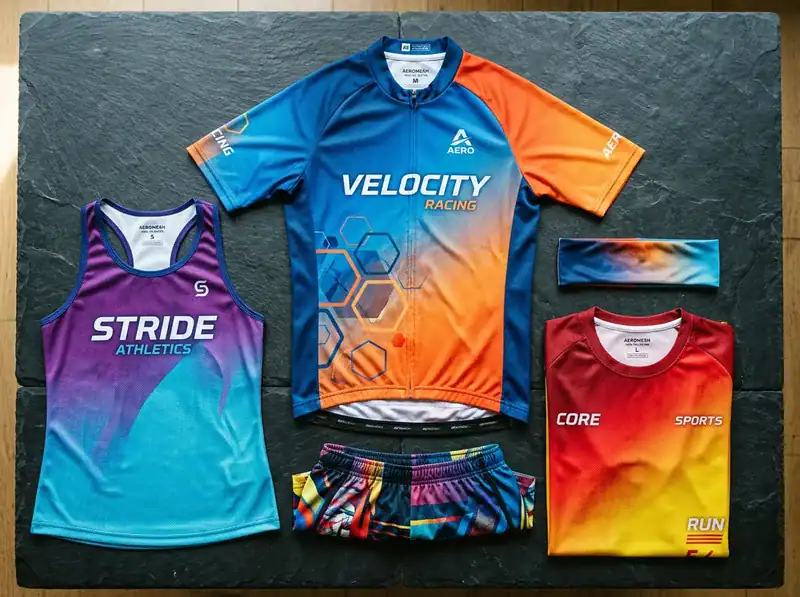
Instant contour scanning of printed jersey fabrics. Eliminates manual positioning and seals synthetic edges seamlessly.

Large-format backlit textiles, tension fabrics, and promotional banners with continuous roll-to-roll precision.
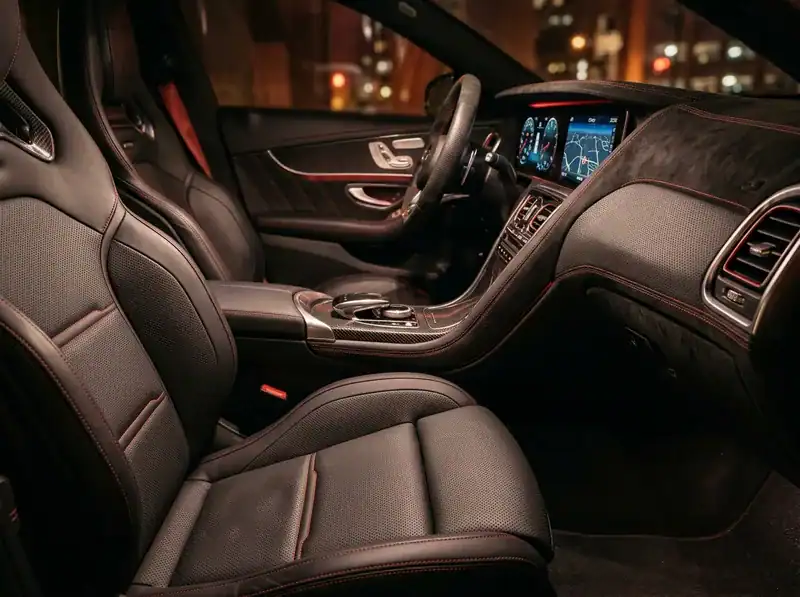
Micro-perforation and high-precision cutting for seat covers, headliners, and airbags for Tier 1 suppliers.

Versatile cutting for everyday apparel, excelling with zero distortion on high-stretch Lycra and spandex.
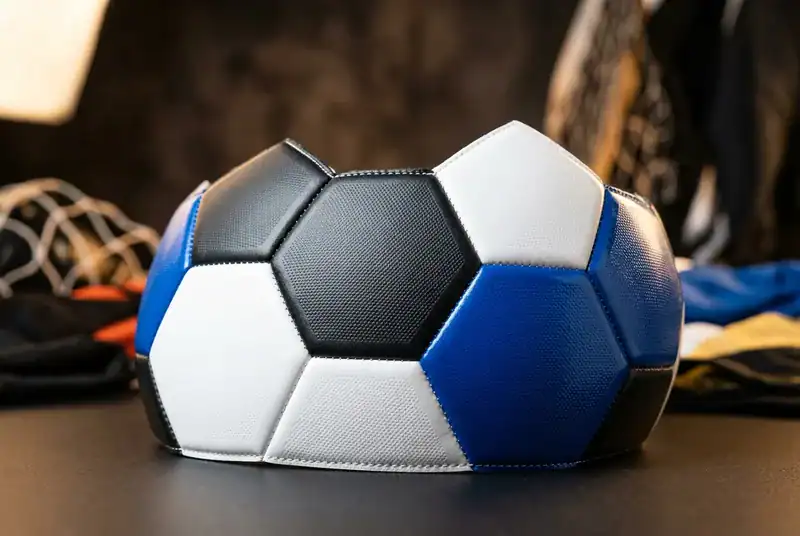
PU / TPU synthetic leather for official match balls and gear.
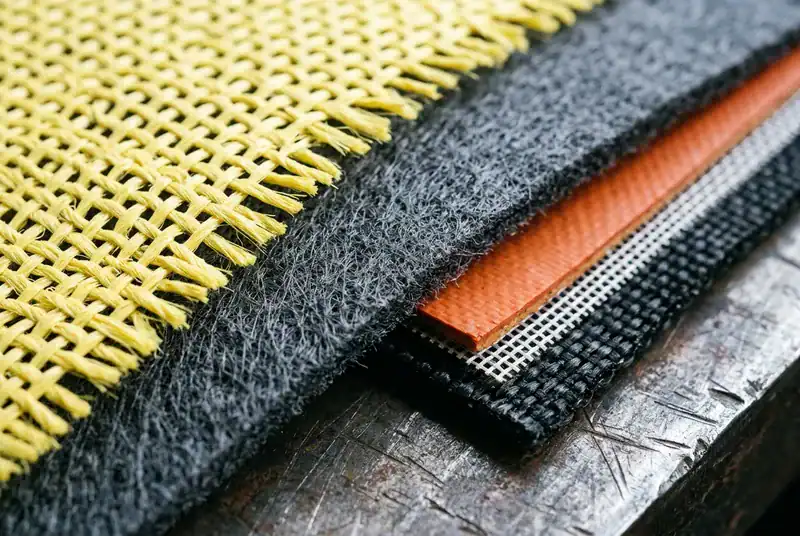
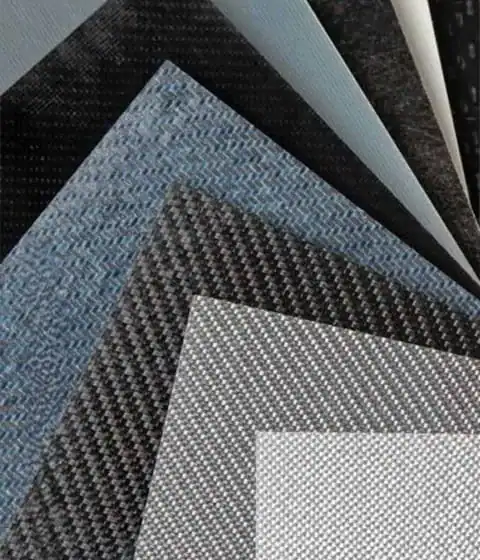
Filtration media, geotextiles, and Aramid composites.

Precision trimming for curtains, upholstery, and carpets.
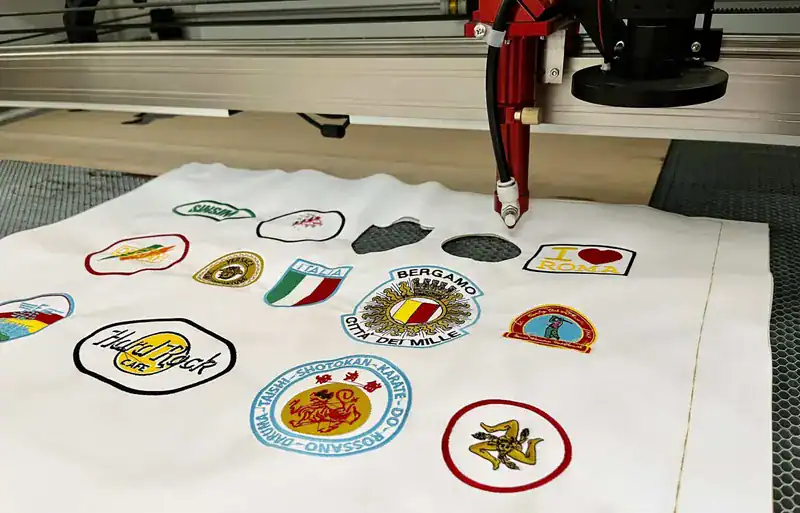
CCD auto-recognition cuts intricate badge contours at speed.

Thermal self-sealing edges with zero burn marks.
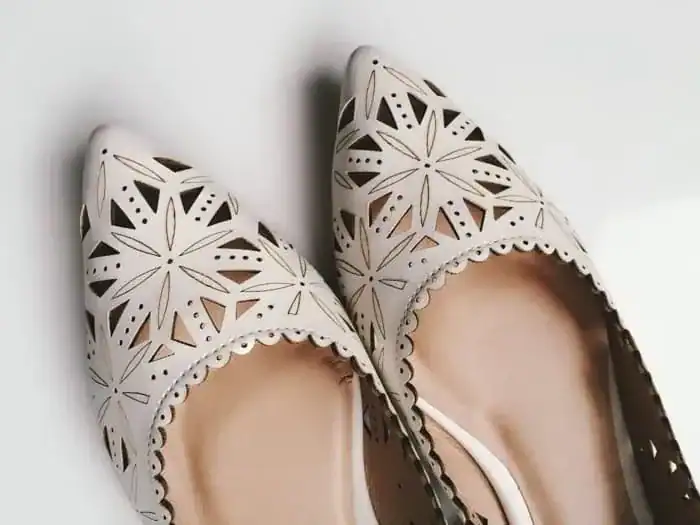
Clean edge genuine and microfiber leather cutting.

Waterless laser whiskering, fading, and precision distressing.
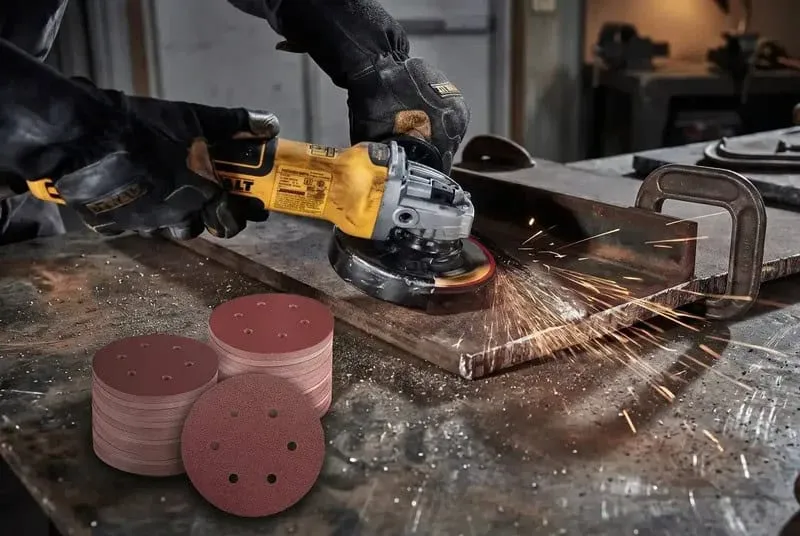
Multi-hole dust extraction perforation and contour cutting with zero blade wear.
Explore full laser compatibility across industrial textiles, synthetic leathers, optical polymers, and technical composites.
Need your specific fabric or substrate tested? Send a 1–2 meter material swatch for free 4K video test cutting, cycle-time benchmark, and physical sample return.
How dynamic power ramping, non-contact mechanics, and distortion-free optical scanning solve the toughest textile cutting bottlenecks.
01 · THERMAL CONTROL & EDGE INTEGRITY
"Why Does White Fabric Turn Yellow on Lasers — and How to Fix It?"
Dynamic power ramping, high-pressure coaxial air assist, and anti-flashback beds. White polyester and light sublimation fabrics turn yellow when excess thermal energy accumulates during corner deceleration, at start piercing points, or from honeycomb reflection. RedShift CNC systems dynamically modulate laser wattage with instantaneous velocity, while targeted coaxial air assist evacuates vaporized fumes instantly — delivering crisp, pure white edges with zero discoloration.
02 · NON-CONTACT VS MECHANICAL DRAG KNIVES
"Why Switch from Mechanical Drag Knives & Rotary Cutters?"
Zero blade drag, zero fabric pulling, zero out-of-square distortion. Mechanical CNC drag knives and rotary blades physically pull and stretch elastic textiles (like Lycra, Spandex, and fine knits), causing skewed cuts and fabric shift. RedShift CO₂ laser cutting is 100% non-contact: zero blade wear, no tool replacement downtime, and absolute dimensional accuracy across continuous rolls at up to 1,500 mm/s.
03 · VISION SCANNING & REGISTRATION
"Why Do Traditional CCD Cameras Miss Registration Marks?"
Full-width CIS LineScan eliminates optical fish-eye distortion. Standard dome CCD cameras only capture corner marks and lose tracking when fabric tension or print shrinkage distorts intermediate marks. RedShift's Contact Image Sensor (CIS) scans line-by-line across the entire bed width with 0.021 mm precision, reading all registration marks and automatically compensating for fabric stretch.
From high-volume roll-to-roll sublimation cutters to automated patch recognition systems, explore our proven equipment range.
FLAGSHIP OPTICAL SCANNING
The upgraded vision technology: handles both large-format rolls and small pieces with higher precision. No edge distortion. Cuts exactly where the print says, even at full 1,500 mm/s production speed.
0.021 mm
Optical LineScan Resolution
1,500 mm/s
Rack & Pinion Max Velocity
0% Distortion
Edge-to-Edge Linear Scanning
Continuous
Roll-to-Roll Automation
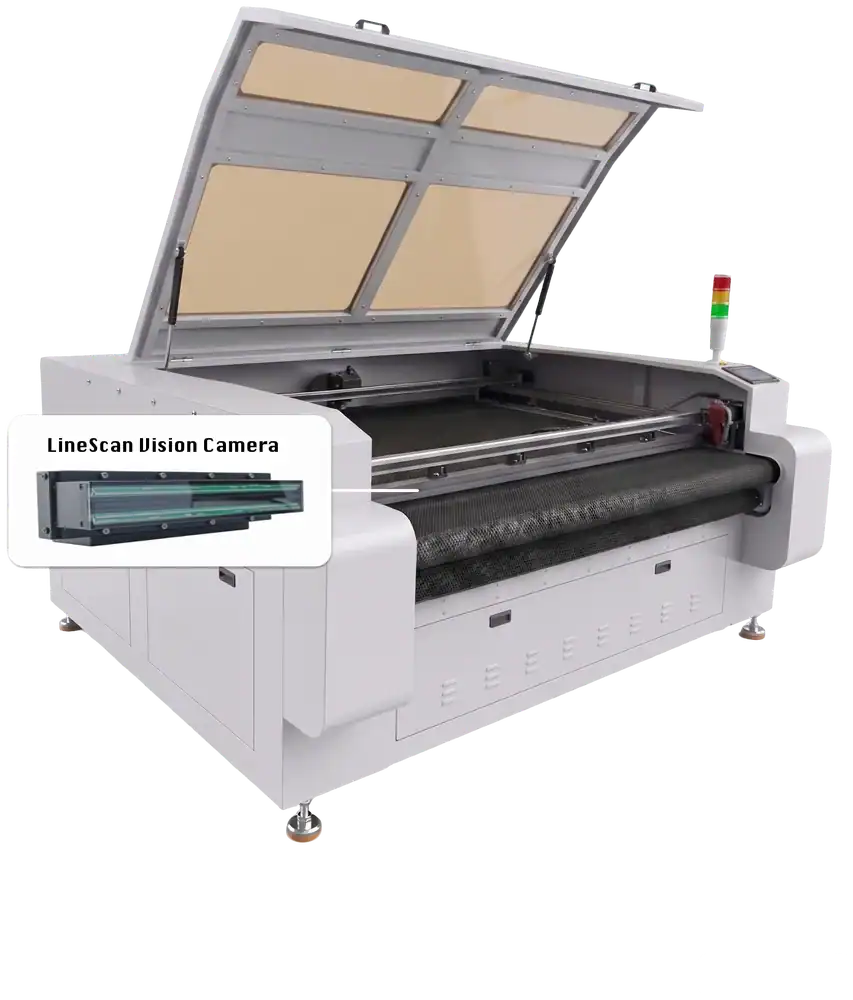
Hover to Play Live Action
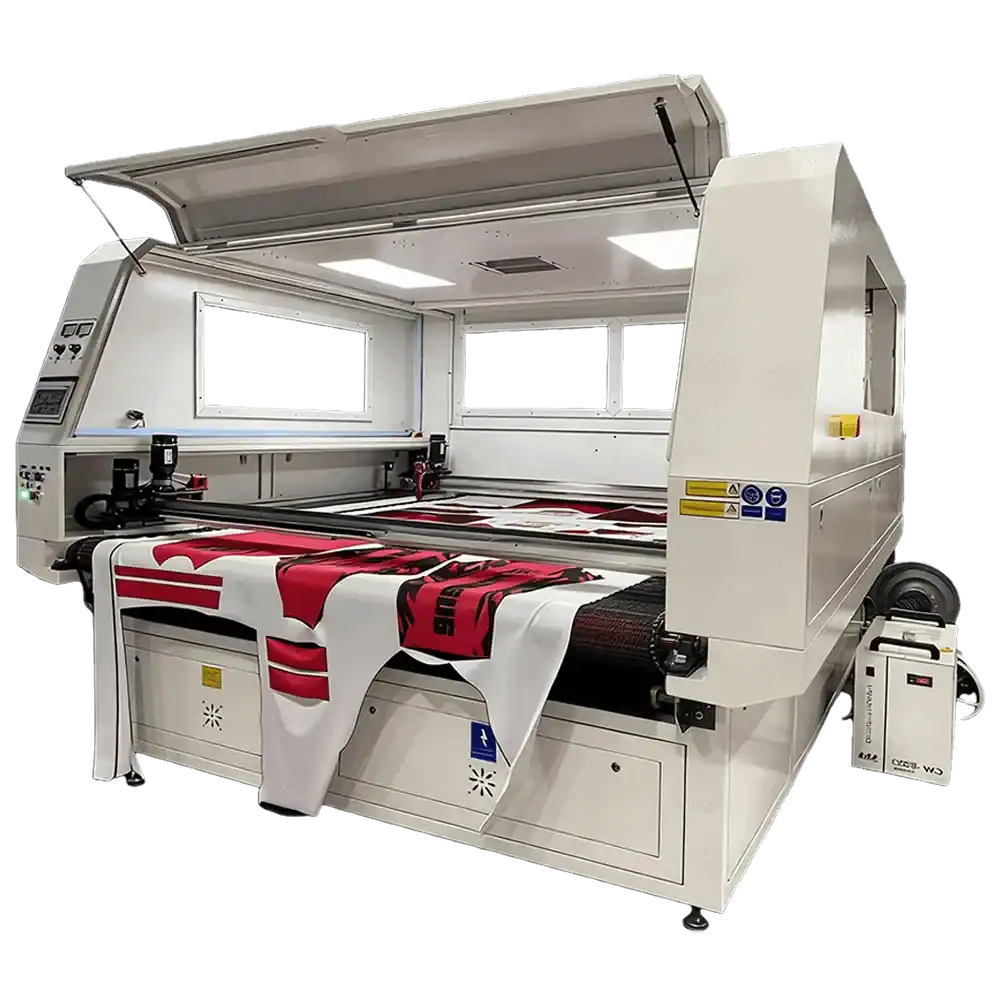
REDSHIFT MODEL: 1612 / 1812 / 1620 / 1820
High-speed optical contour scanning for sublimation fabrics and printed sportswear rolls. Automatically compensates for stretching and distortion.
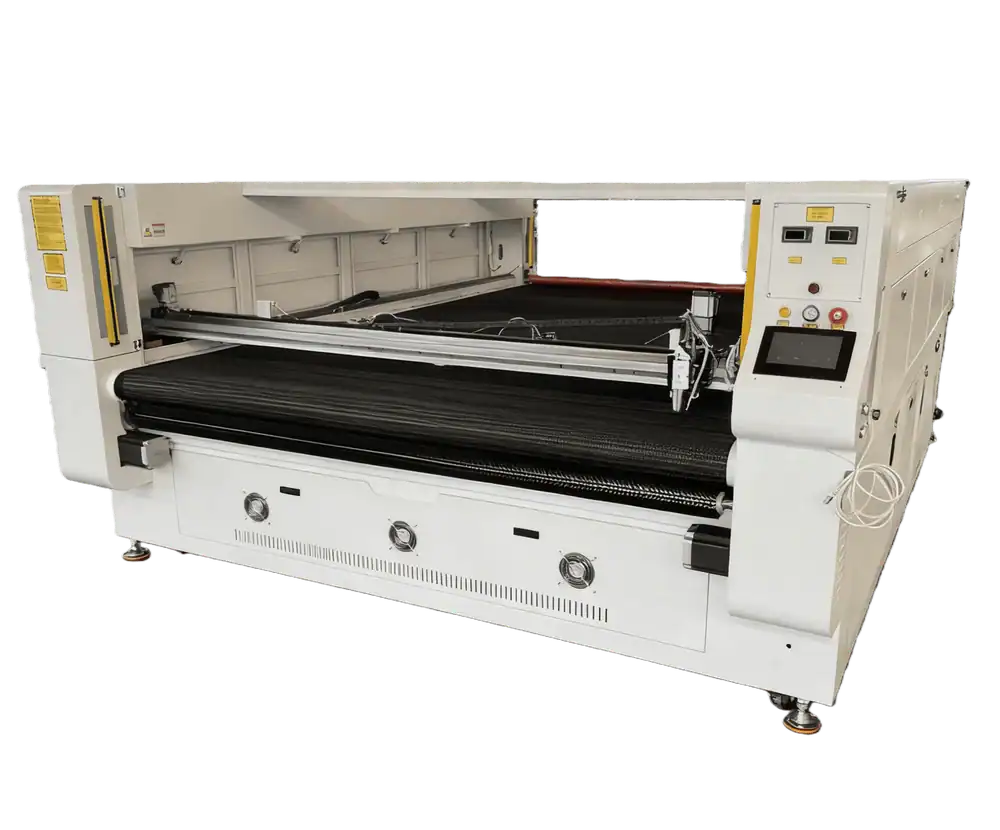
REDSHIFT MODEL: 1630 / 1830 / 2030 / 2040
Extra-large cutting table (up to 2000×4000mm) for bulk fabric, technical textiles, and workwear with vacuum conveyor and automated marker pen.
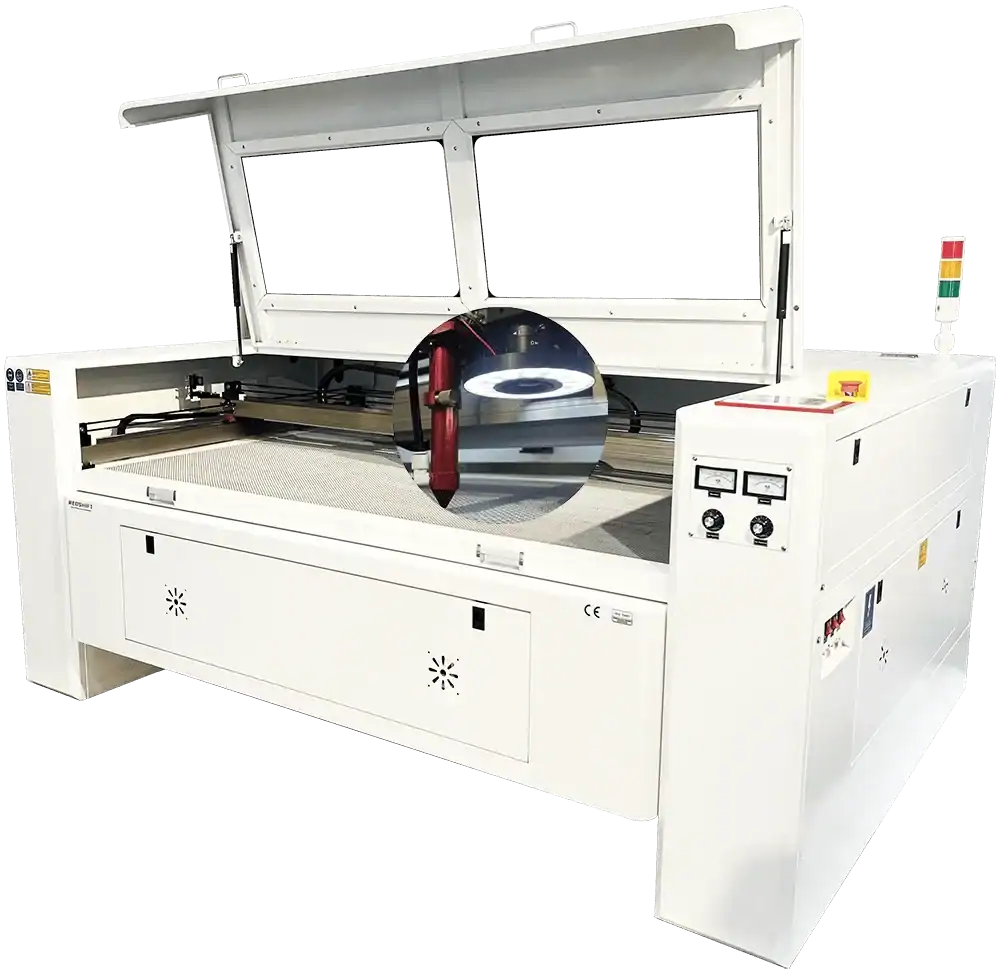
REDSHIFT MODEL: CCD1060 / CCD1490 / CCD1610
Automated recognition and cutting for woven labels, embroidery badges, printed patches, and small flexible components with defect identification.
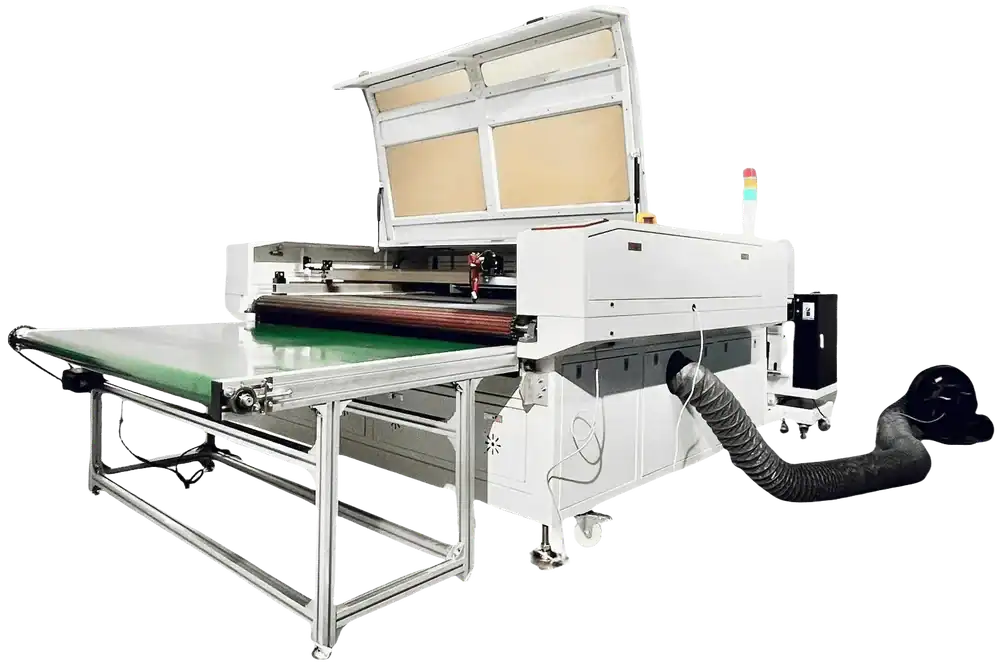
REDSHIFT MODEL: 1610C / 1612C / 1614C / 1814C
Continuous roll-to-roll automated production with synchronized vacuum feeding system, conveyor platform, and finished parts collection table.
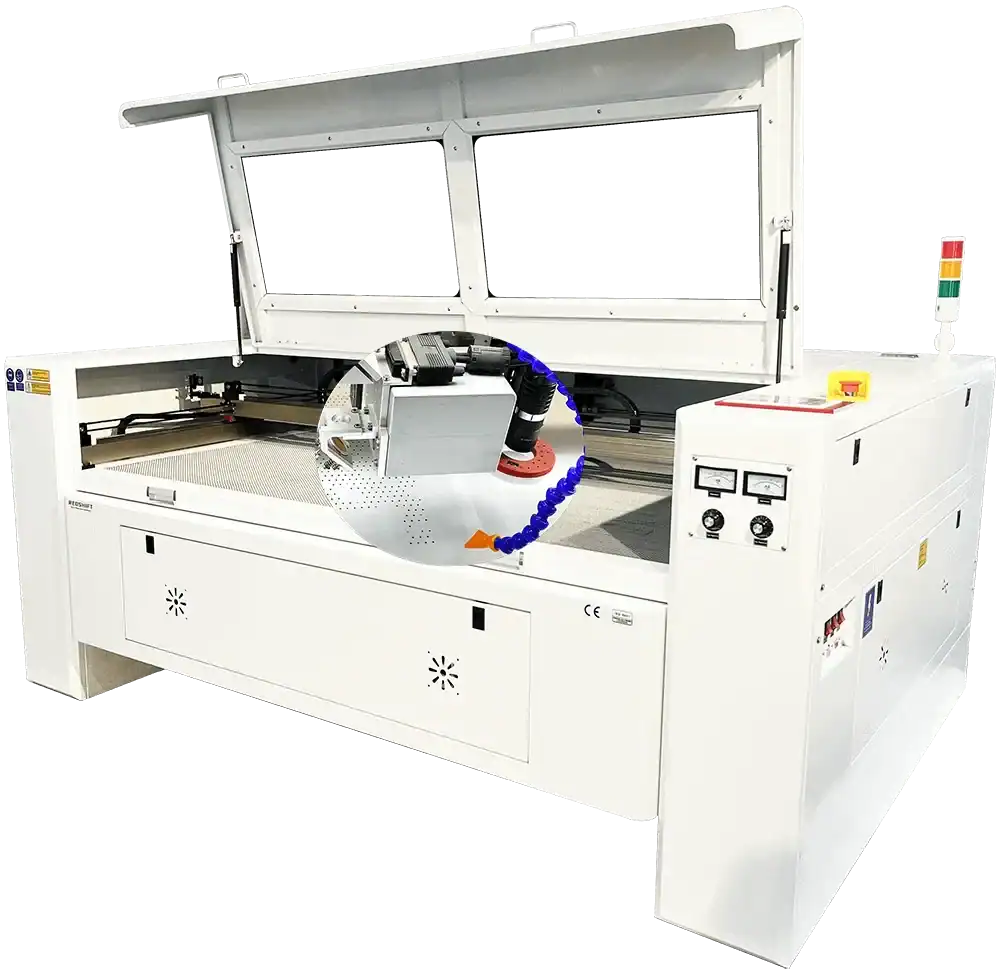
REDSHIFT MODEL: 1490G / 1610G / 1810G
Integrated dual-head system combining high-speed Galvo micro-perforation (up to 10,000 mm/s) with large-area Gantry contour cutting.
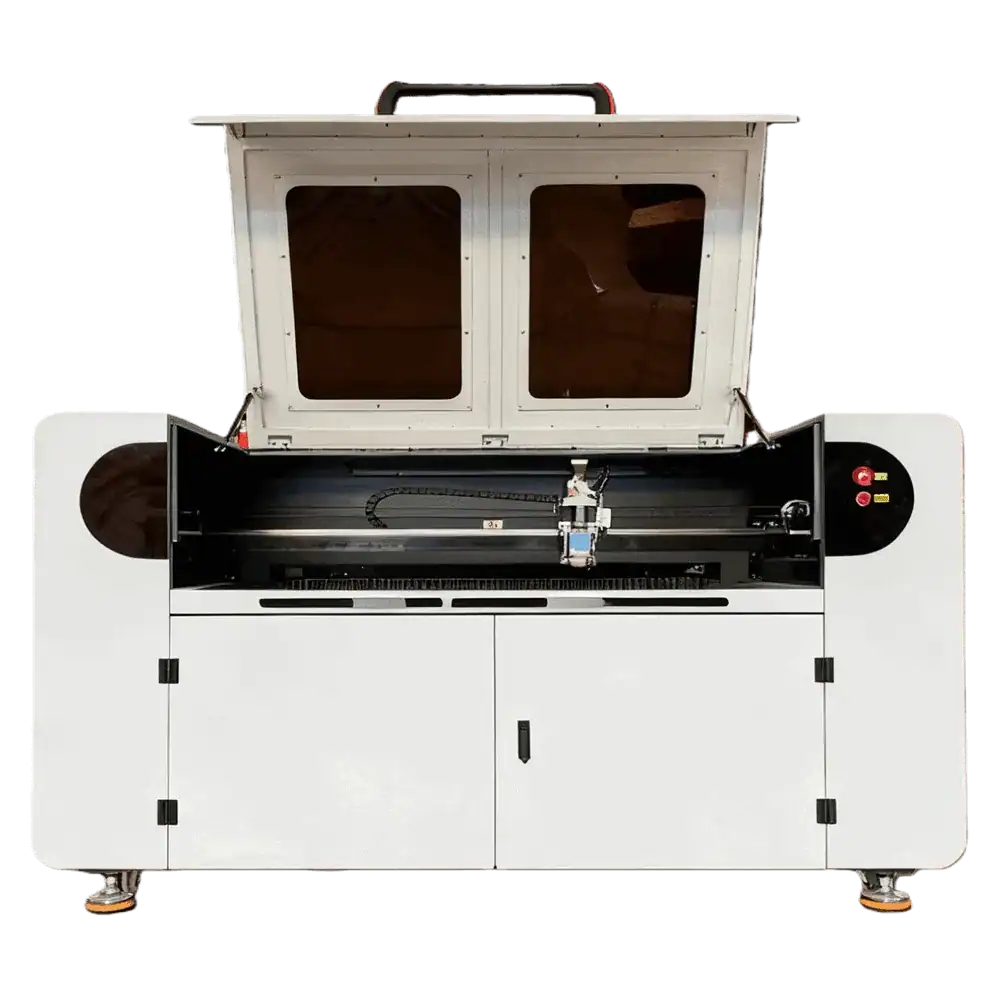
REDSHIFT MODEL NO.: RZ-1390
Versatile CO₂ hybrid laser system capable of precision cutting both organic flexible non-metals (acrylic, wood, fabric) and thin stainless/carbon steel.
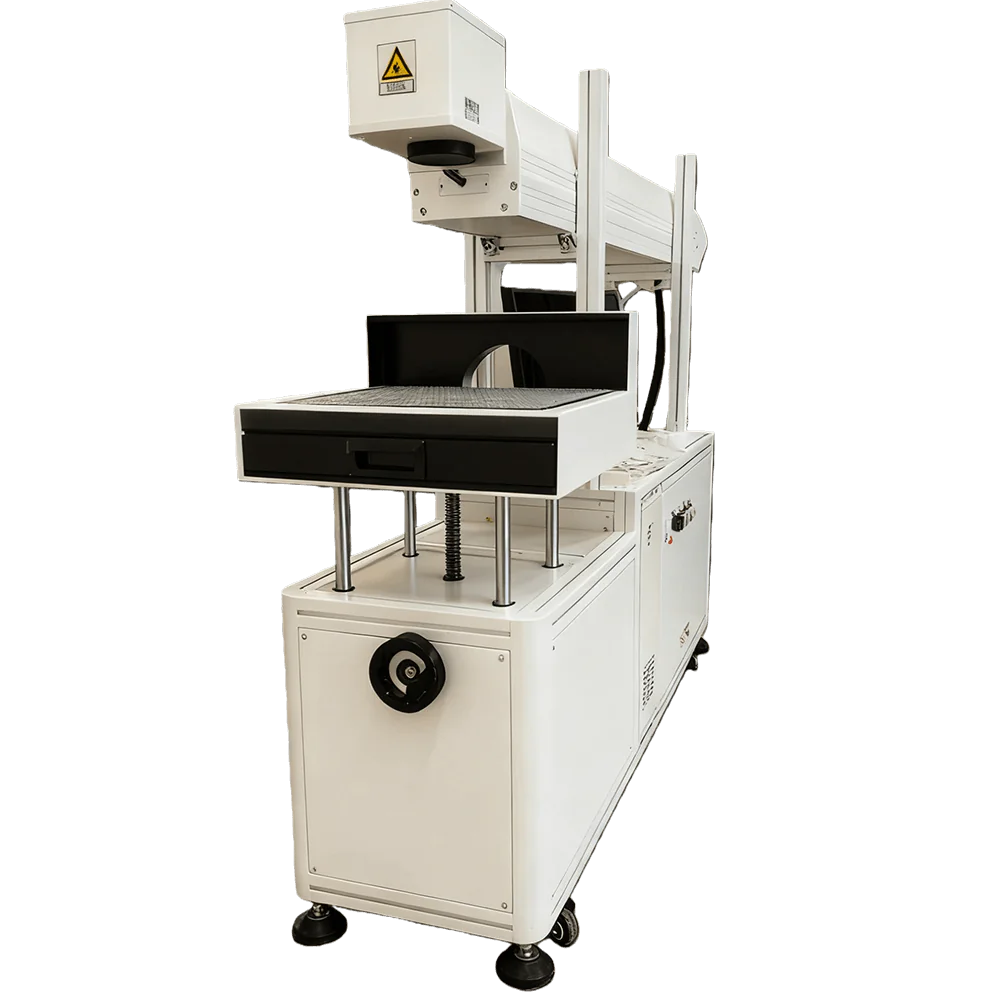
REDSHIFT MODEL: 3D-CO2-30W / 60W / 100W / 250W
3-axis dynamic focus optical scanning for large-area ultra-fast marking, perforating, and engraving on denim, leather, textiles, paper, and 3D curved surfaces.
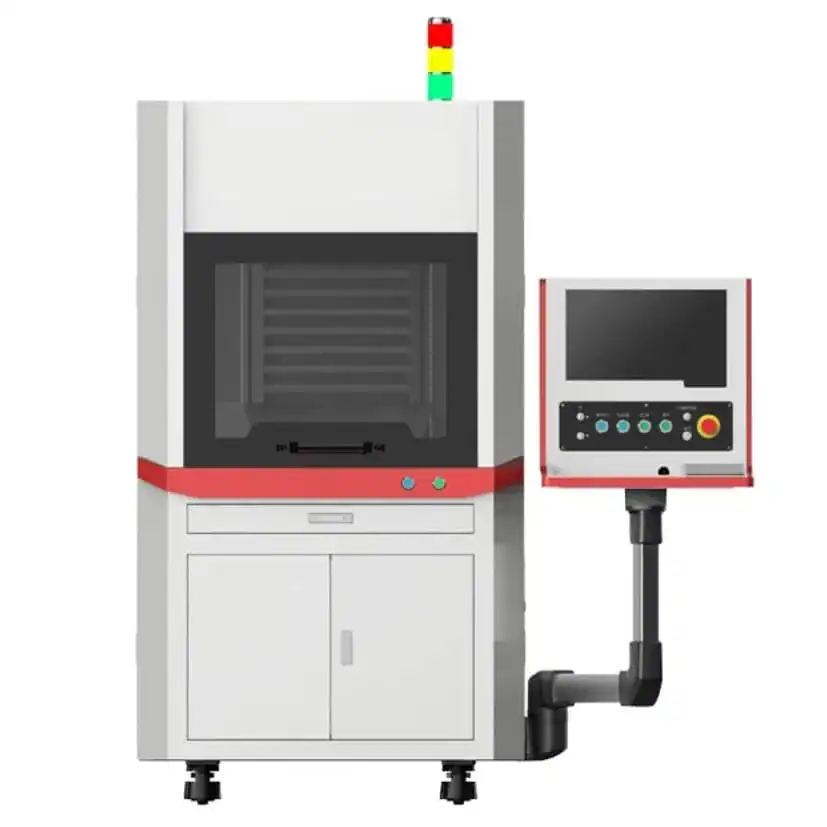
REDSHIFT MODEL: 150W / 250W / 350W (GALVO 6060)
High-speed dynamic optical Galvo marking and perforation for denim jeans, garment leather, shoes, paper, and non-metallic roll materials.
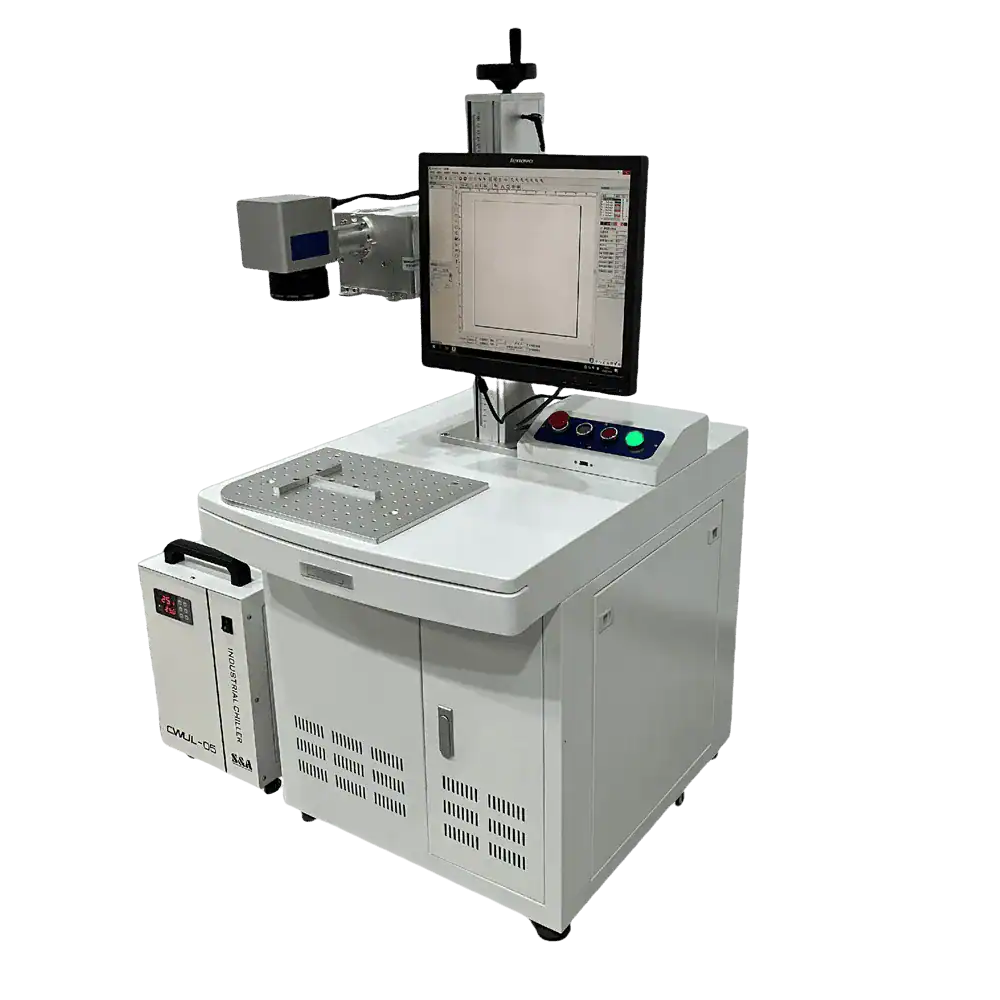
REDSHIFT MODEL: 30W / 50W / 100W (FIBER)
Maintenance-free high-speed marking for industrial hardware, metal tags, serial numbers, barcodes, QR codes, and engineered hard plastics.
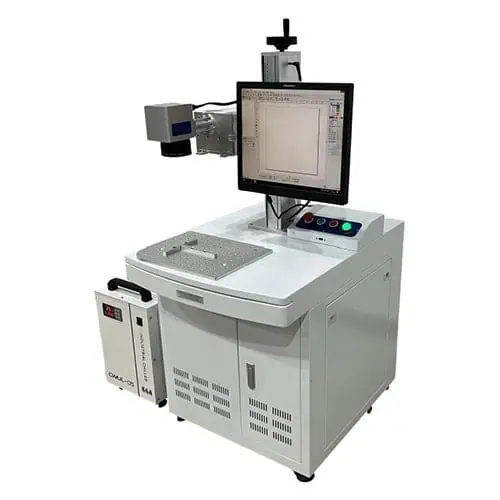
REDSHIFT MODEL: 3W / 5W / 10W (355NM UV)
355nm "cold laser" technology with minimal heat-affected zones, delivering micron-sharp micro-marking on glass, crystal, medical tubes, and polymers.
Explore complete technical specifications, laser source options (100W–300W RF & Glass), optical working areas, and accessories on our global product directory.
Direct manufacturing value × European engineering standards × Local European on-site engineering hubs.
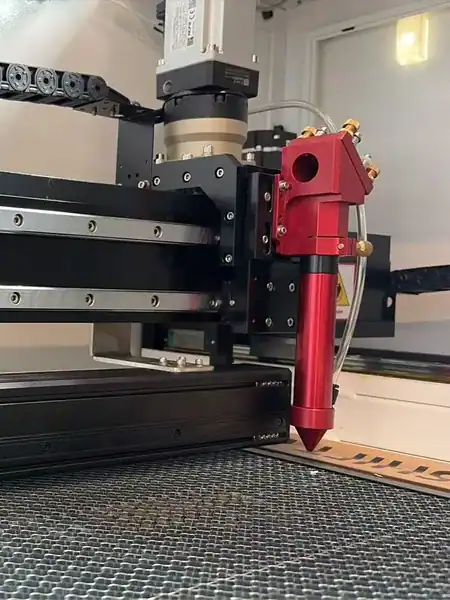
01
Handles both large-format rolls and small pieces. Zero edge distortion, zero missed marks — more precise than snapshot cameras.
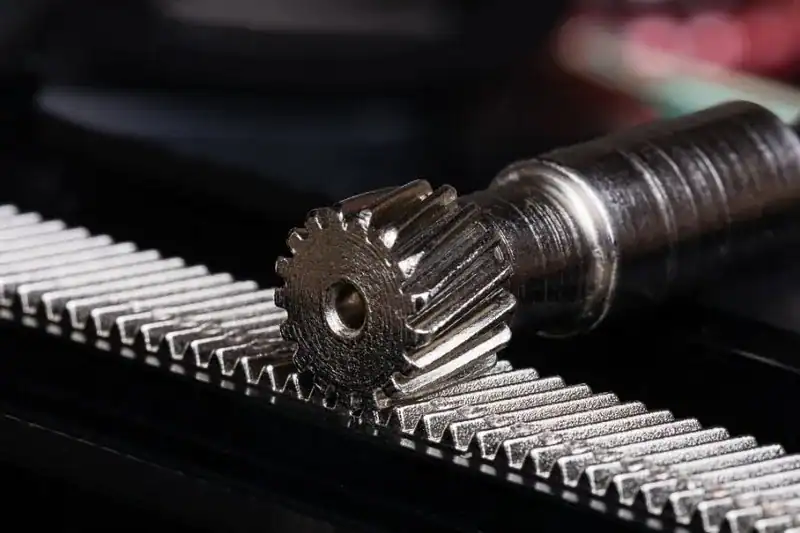
02
0.1mm mechanical accuracy that stays rigid. Speed up to 1,500mm/s — 3× faster than belt drives without belt stretching.
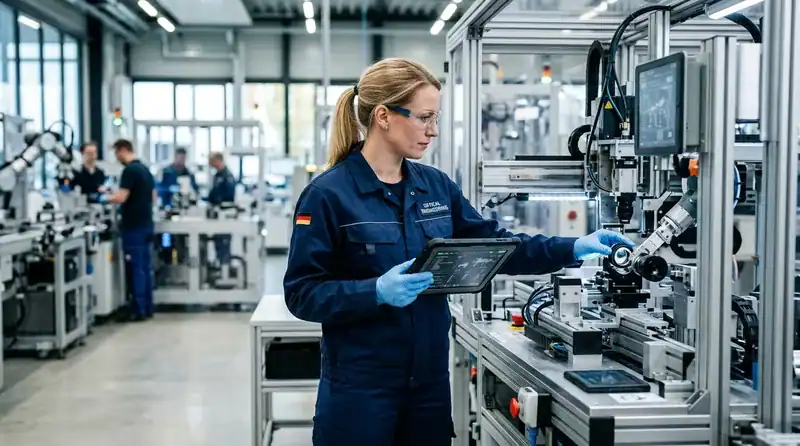
03
Europe-wide certified partner network + on-site field engineers. Inspect machines in person across Western, Central & Eastern Europe before buying.
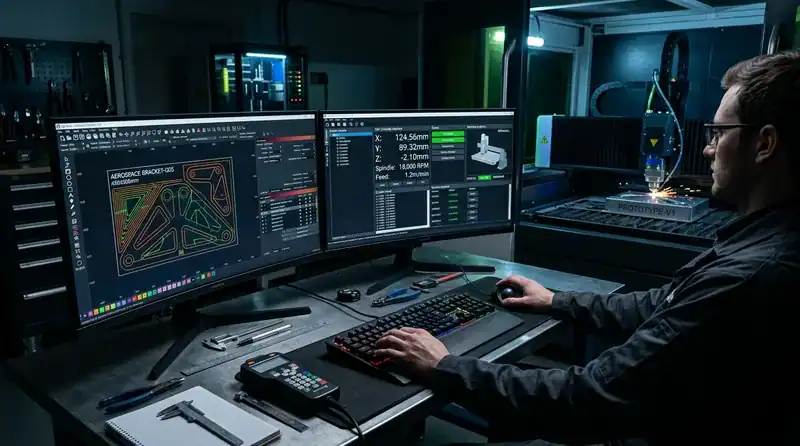
04
Works with Ruida, Trocen, LightBurn — your choice, not locked in.
Trusted By Global Supply Chains & Industry Leaders


20+
Years Experience
Core engineering team in industrial lasers
30+
Countries Exported
Active installations across EU, Americas & Asia
9 Mo
Average ROI
Capital payback through zero scrap & die elimination
35%
Repeat Customers
Manufacturers expanding with additional units
Direct technical coverage, rapid spare parts logistics, and hands-on machinery demonstrations spanning Western Europe, the Iberian Peninsula, Central & Eastern Europe, the Baltic corridor, and the Eurasian crossroads.
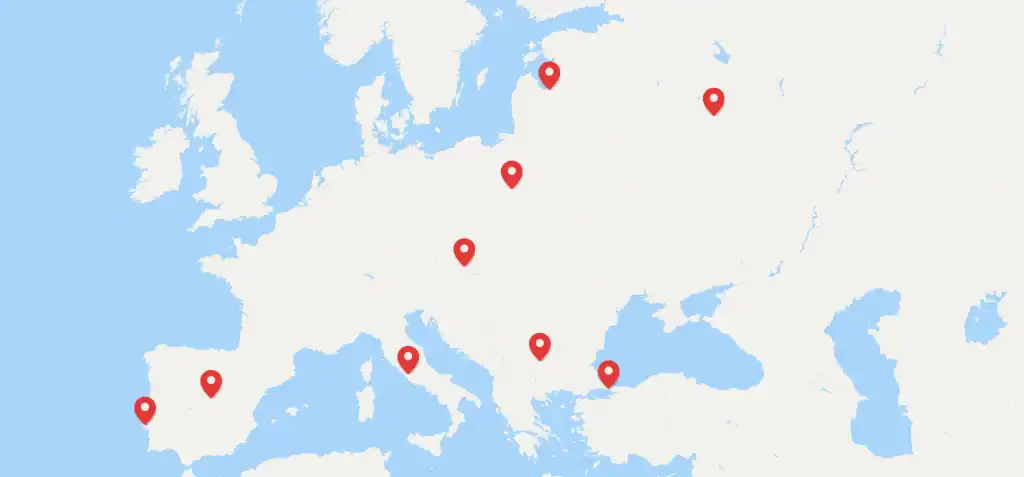
Western & Southern Hubs
Iberian Peninsula & Western Europe
Dedicated certified agents providing live machinery demonstrations, rapid installation setup, and bilingual field technical service.
Industrial Manufacturing Belt
Central & Eastern European Corridor
Regional engineering centers with active spare parts inventory, on-site commissioning, and continuous production support.
Northern Manufacturing
Baltic & Northern European Hubs
Local certified technician support for custom sportswear manufacturers, technical textile converters, and industrial signage producers.
Eurasian Crossroads
Balkans & Eurasian Gateway
Strategic regional parts depot, showroom facilities, and multi-language factory-certified engineers for immediate deployment.
Real feedback from sportswear manufacturers, signage producers, and automotive tier suppliers worldwide.
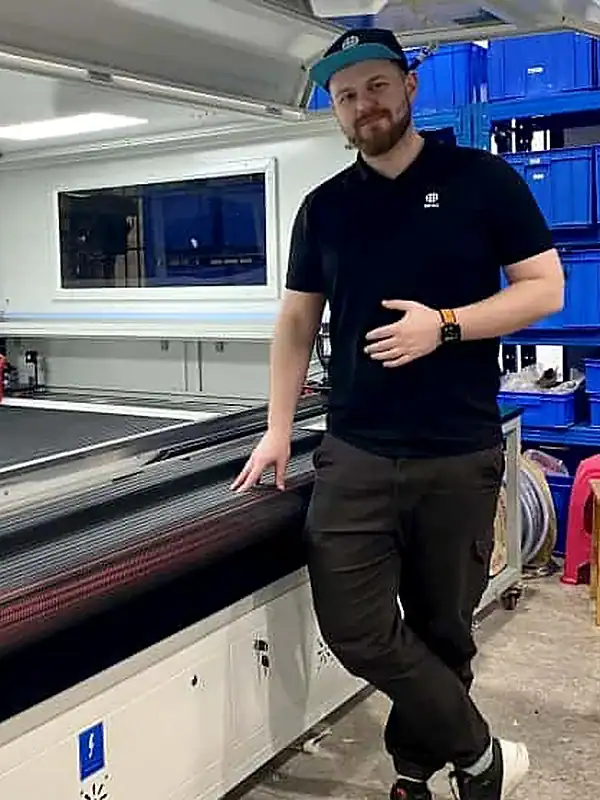
★★★★★
"The CO2 laser cutter from REDSHIFT has been a powerful addition to our workflow, allowing us to achieve precision cuts on even the most intricate designs. It’s reliable, efficient, and perfectly suited for our business needs."
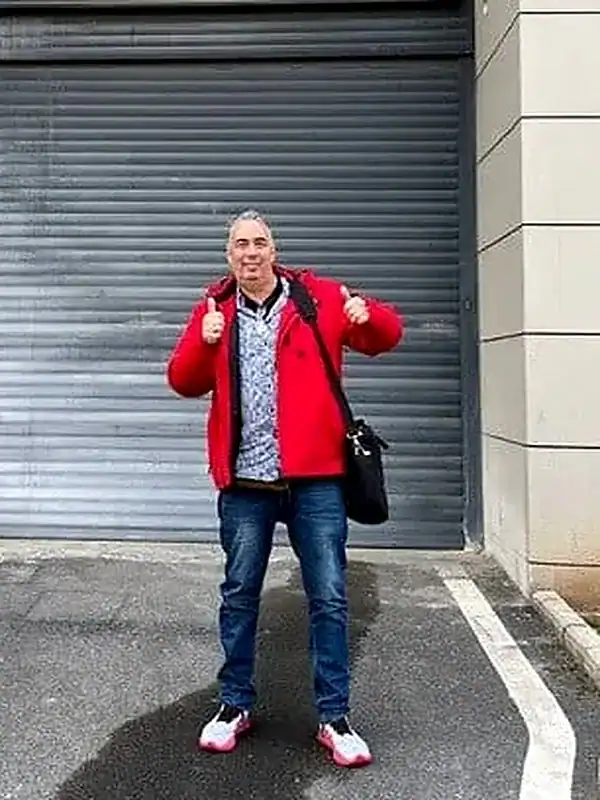
★★★★★
"REDSHIFT’s fiber laser marking machine has elevated our branding capabilities. The machine's speed and accuracy ensure our products have a high-quality, lasting finish, which our customers value immensely."
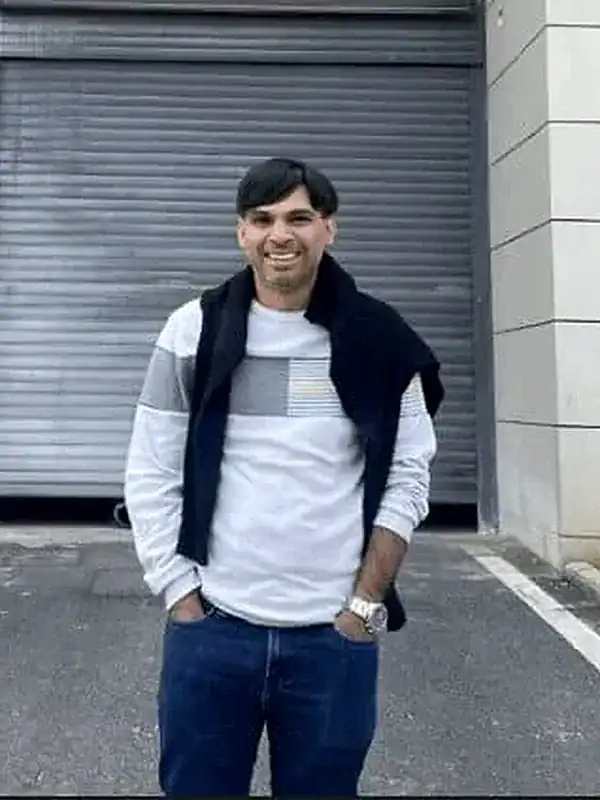
★★★★★
"Handheld laser welder from REDSHIFT has streamlined customer's welding process. It’s easy to operate, incredibly precise, and delivers clean, durable welds, making it ideal for customer small-batch production runs."

★★★★★
"Everything is running smoothly. We are quite happy with the machine!"
★★★★★
"We can cooperate for all machines. Your engineer is the best guy. He has more patience and explained us everything clearly."
CASE STUDY 01 · HYBRID GALVO & GANTRY LASER
A specialized automotive interior manufacturer integrated RedShift’s Hybrid Galvo & Gantry Laser Machine. The ultra-fast Galvo head delivers micro-perforations up to 4,500 holes/min for climate-control seating and acoustic leather panels, while the stable X-Y Gantry executes precise outer contour cutting in one continuous workflow — eliminating mechanical punch dies and cutting scrap by 30%.
4,500/min
Galvo Perforation
0.1mm
Gantry Cut Precision
-30%
Leather Scrap Waste

CASE STUDY 02 · INDUSTRIAL GLOVES
A global manufacturer producing protective and industrial gloves from polyester and synthetic fabrics replaced slow manual mechanical die presses with a RedShift Double-Head CO₂ Laser Cutter. By cutting two mirror-image glove panels simultaneously while sealing raw synthetic edges against fraying, productivity doubled instantly.
2.0×
Daily Throughput
100%
Thermal Edge Seal
-15%
Fabric Waste Reduction

CASE STUDY 03 · PROTECTIVE WORKWEAR
A prominent apparel and workwear manufacturer in Portugal automated their cutting line with a RedShift Flatbed Laser Cutter featuring an integrated automated marking system. Eliminating manual tracing and piece-by-piece sizing reduced layout preparation by 95% with sub-millimeter laser contour precision.
-95%
Layout Setup Time
<0.5mm
Contour Precision
+35%
Production Output

CASE STUDY 04 · SUBLIMATION SPORTSWEAR
By upgrading from traditional manual blade tables to RedShift's Vision Laser Cutter with LineScan automated roll-feeding, this manufacturer slashed raw fabric waste by 22% and doubled cutting throughput within the first 60 days of factory operation.
-22%
Fabric Scrap
2.0×
Cutting Throughput
7.5 Mo
Full ROI Recovery
Direct technical clarifications addressing burn prevention, anti-fray edge sealing, Lycra distortion, and European local engineering support.
1. How do you prevent burn marks and yellowing when laser cutting white sublimation fabrics?
RedShift utilizes Dynamic Power Ramping combined with coaxial high-pressure air assist and low-reflection conveyor beds. In traditional laser systems, laser power remains constant during acceleration and deceleration, causing excess heat accumulation at corners and start points (pierce points). Our CNC controller continuously modulates laser output in real time proportional to the instantaneous cutting velocity, ensuring energy is strictly localized to the micro-kerf. White, pastel, and delicate sublimation polyester cut crisp and clean with zero scorched edges or yellow residue. Read our complete engineering guide on preventing white fabric yellowing →
2. Does laser cutting seal fabric edges to permanently prevent fraying?
For synthetic materials, yes — 100% sealed. Synthetic fibers such as polyester, nylon, acrylic, and spandex melt instantly along the micro-kerf under the 10.6μm CO₂ laser beam, creating a cleanly fused, anti-fray thermal edge that eliminates the need for manual overlocking or hot-knife sealing. For natural fibers (cotton, silk, linen), the thermal melt does not occur; for natural textiles, we provide application guidance including water-soluble stabilizing backings, fusible interfacing, or optimized single-pass parameters.
3. Why is non-contact laser cutting better than drag knife cutters for elastic fabrics like Lycra?
Mechanical drag knives and oscillating CNC blades apply physical friction against the fabric. On high-stretch textiles (Lycra, elastane, swimwear knits), blade resistance pulls and deforms the material, resulting in out-of-square cuts, fraying, and costly fabric scrap. RedShift CO₂ lasers process materials 100% non-contact with zero physical drag. The material remains perfectly relaxed on the vacuum conveyor bed, guaranteeing micron-level repeatability and eliminating blade replacement downtime.
4. Why do traditional CCD cameras miss registration marks, and how does LineScan Vision fix it?
Conventional top-mounted CCD cameras use wide-angle lenses that suffer from optical fish-eye distortion near the edges of the cutting bed. Furthermore, if printed fabrics stretch or shrink during the sublimation heat-press process, standard cameras that only read 4 corner marks fail to track internal patterns. RedShift's CIS (Contact Image Sensor) LineScan system scans line-by-line across the entire bed width with 0.021 mm optical resolution, capturing every registration mark and contour 1:1 with zero perspective distortion, automatically calculating real-time mathematical deformation compensation.
5. Can you cut stacked multiple layers of fabric with a laser? (Single-Layer vs Multi-Layer Safety)
We strongly recommend single-layer continuous roll processing. Stacking multiple layers of fabric under a laser creates an internal heat trap between layers, leading to fused multi-ply edges, scorching, and serious fire hazards. To deliver high-volume industrial throughput safely, RedShift combines high-speed motion (up to 1,500 mm/s) with automated conveyor roll-feeding and synchronized tension-free unwinding, outperforming slow multi-layer manual setups without burning or quality degradation.
6. Does laser cutting leather cause brittle stitch holes or permanent burnt smell?
When properly configured, no. The common complaints of charred, brittle leather or lingering odors stem from underpowered lasers running too slowly or improper exhaust ventilation. RedShift systems use focused short-pulse optics and high-volume honeycomb downdraft exhaust to evacuate vapors instantly. Genuine leather, Alcantara, and automotive PU cut with clean edges, pliable fiber integrity, and crisp perforation holes ready for automated sewing.
7. What is the expected operational lifespan of CO₂ glass tubes vs RF metal lasers?
Standard high-grade CO₂ glass laser tubes provide 8,000–10,000 operational hours with low replacement cost. For 24/7 heavy industrial manufacturing, RedShift also offers upgraded all-metal RF (Radio Frequency) laser sources providing over 20,000 operational hours with narrower beam kerfs, faster pulsing response, and refillable gas canisters. Fiber and UV sources exceed 100,000 operational hours.
8. How does European on-site installation, technician training, and spare parts logistics work?
RedShift operates an Europe-Wide Certified Partner Network spanning 4 strategic corridors (Iberian Peninsula, Central & Eastern Europe, Baltic & Northern Hubs, and the Balkans & Eurasian Gateway). Our certified European field engineers provide on-site machine commissioning, optical alignment, and multi-language operator training. Critical spare parts (optics, mirrors, tubes, power supplies) are stocked locally in Europe for immediate dispatch.
9. What software and file formats are compatible? (Ruida, LightBurn, DXF, AI, PDF)
RedShift systems operate on open industrial CNC standards powered by Ruida and Trocen DSP controllers, with seamless native integration for LightBurn, RDWorks, and CAD/CAM software. You can directly import vector and raster formats including DXF, PLT, AI, SVG, PDF, BMP, and DST without proprietary subscription fees or recurring software lock-ins.
10. How can I test my actual fabric with the Free Sample Testing Service before buying?
We offer a 100% Free Physical Material Testing Service. Simply courier a 1–2 meter swatch of your actual production fabric or substrate to our testing facility. Our engineers will perform high-speed test cutting, measure exact cycle times, record high-resolution 4K video of the cutting process, and ship the cut physical samples back to your facility for inspection alongside an engineering benchmark report.
24-Hour Response Guarantee
Direct response from application engineering specialists.
Free 4K Video Material Test
Send your material for cycle-time analysis and cut samples.
European Demo Centers
Visit certified partner hubs across Western, Central & Eastern Europe.
Tell us your fabric specifications and production goals. Our engineering team responds within 2 business hours.
 Optimized by Seraphinite Accelerator