Skip to content

Here's something I keep running into at factories.
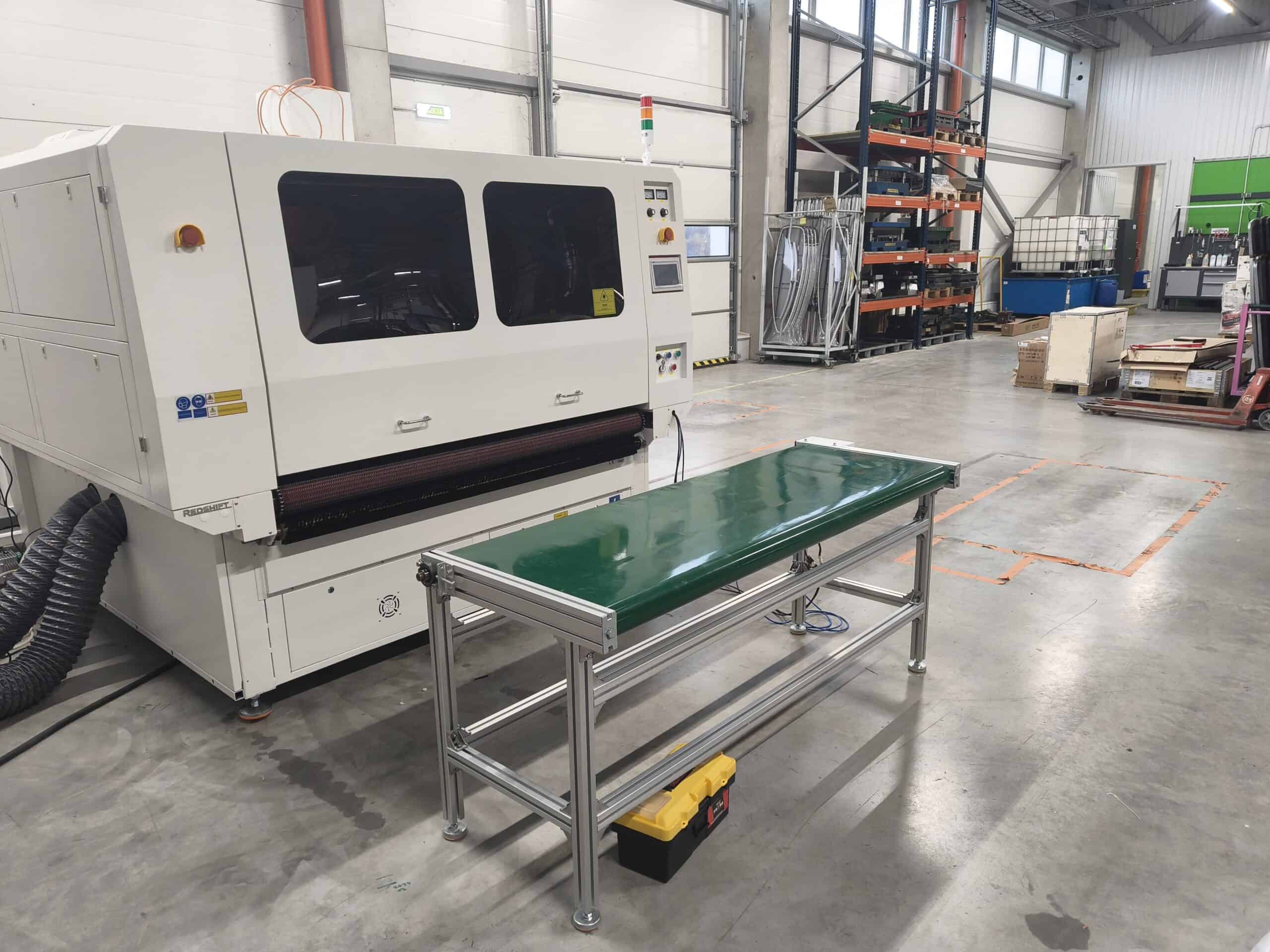
When shop owners go shopping for a laser cutter, the first things they look at are always the same: laser power, cutting speed, bed size.
Makes sense. Those numbers sit right on page one of every spec sheet — easy to compare, easy to justify to your boss.
But if your work involves contour cutting — tracing the printed edge of sublimated, digitally printed, or screen-printed fabric — here's something that might change how you think about equipment selection.
The thing you should care about most isn't cutting speed at all.
A story that changed how we see the problem
Last year we worked with a customer running large-format commercial signage, with plants across North America and Europe. They were hitting a production wall and needed new equipment.
You'd think they'd go straight for the fastest cutter on the market.
They didn't.
Instead, they did something most factories never bother to do: they pulled apart their entire print-and-cut workflow, station by station, and asked one question — where exactly are we getting stuck?
The answer wasn't cutting speed. It was the vision system.
Their production manager put it to me straight: "Our cutter is fast enough. It just doesn't always know where to cut."
Here's why that happens. By the time fabric reaches the cutter, it's already been through a lot — heat, tension, conveyor speed. Every step of the printing process stretches, distorts, or wrinkles the material. The registration marks on the actual fabric are no longer where your design file thinks they are.
That's where the vision system comes in. It has to find the real position of those marks in real time, calculate the offset, and tell the cutter exactly where to go.
If it can't do that accurately, it doesn't matter how powerful your laser is or how fast it moves. The edges will be off.
This customer ended up rolling out several new machines across their global facilities. Their one non-negotiable requirement: the vision system had to be precise.
I can't name them — the industry's small, and they'd rather not be a case study. But the lesson stuck with me. Most of the industry is still racing to compare wattage and speed. Walk the actual factory floor, and the thing holding back production usually isn't a dull blade. It's a blurry eye.
The two main vision approaches on the market
We've built and sold both of these setups, so I want to be fair about it. Each has real strengths, each fits a different kind of production — there's no universal "best." But there's a clear direction the technology is heading, and it's worth understanding why.
Area-scan cameras (large-field vision)
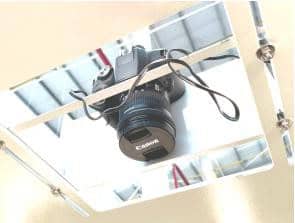
The idea is simple: take one big photo of the work area, then find the registration marks in it.
The advantage is speed. One shot, done. For jobs where extreme precision isn't critical — large-format rough cuts, patterns that are already big — area-scan cameras work well and are very cost-effective.
The limitation is optical distortion. Wide-angle lenses naturally produce barrel distortion: sharp in the center, less accurate toward the edges. Software can compensate to a degree, but it can't fully beat the physics. For high-precision print-and-cut work, especially with small or detailed patterns, area-scan cameras start to struggle at the margins.
Head-mounted cameras (small vision)
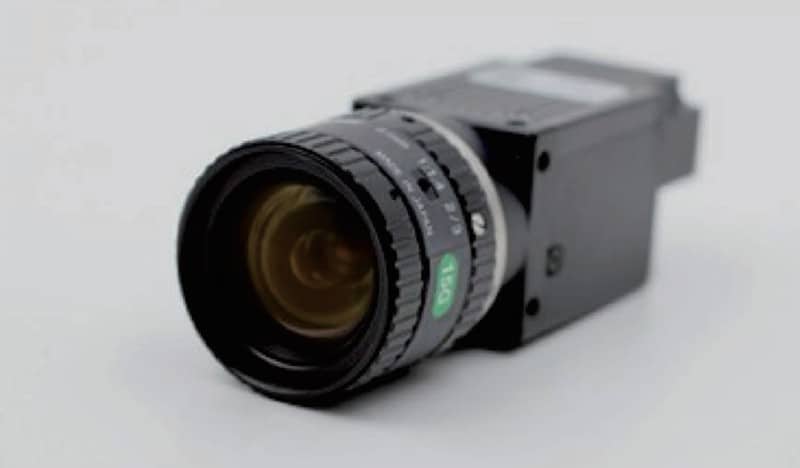
These mount directly on the cutting head and scan the fabric line by line, like a flatbed scanner.
Precision is solid — the camera sits close to the material and picks up fine detail clearly. For small to medium work areas, accuracy is more than adequate.
The trade-off is speed. The head crawls across the entire bed row by row; a full 2-meter bed can take several minutes. Then the software has to stitch together thousands of individual photos, and every stitch adds a little cumulative error.
Small vision is a great fit for complex patterns on smaller formats — short-run embroidery patches, boutique orders, detailed appliqué. But once you're running high-volume continuous production, scanning speed becomes the bottleneck.
So what's the third option?
These two approaches are a classic trade-off. One's fast but loses precision at the edges. The other's precise but slow.
For plenty of shops, either one works fine — you don't always need the most expensive setup.
But if your work demands both high precision and high throughput — dense contour cutting on sublimated fabric, wide-format continuous production — you eventually hit a ceiling. Speed or accuracy. Getting both at once has always been the catch.
This is where CIS comes in.
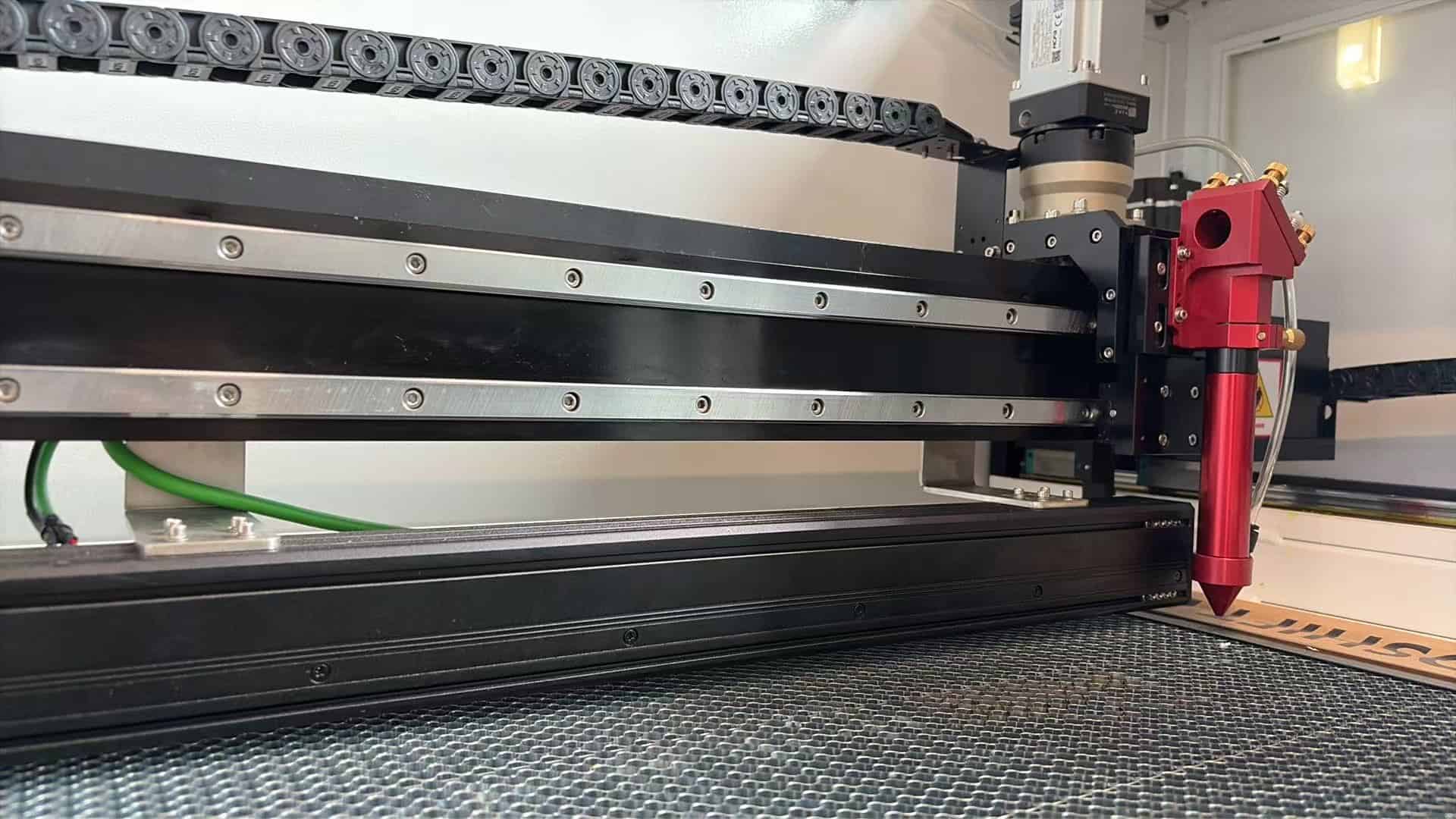
CIS stands for Contact Image Sensor — a line-scan technology that's been used in document scanners and industrial inspection for years. We were among the first to bring it into textile laser cutters.
The way it works is fundamentally different from a normal camera.
A regular camera uses a lens to shrink a large scene down onto a small sensor. That shrinking is exactly what creates distortion — the same way a magnifying glass warps text near the edge of a newspaper. It's a limitation of optics, not software.
CIS skips the lens entirely.
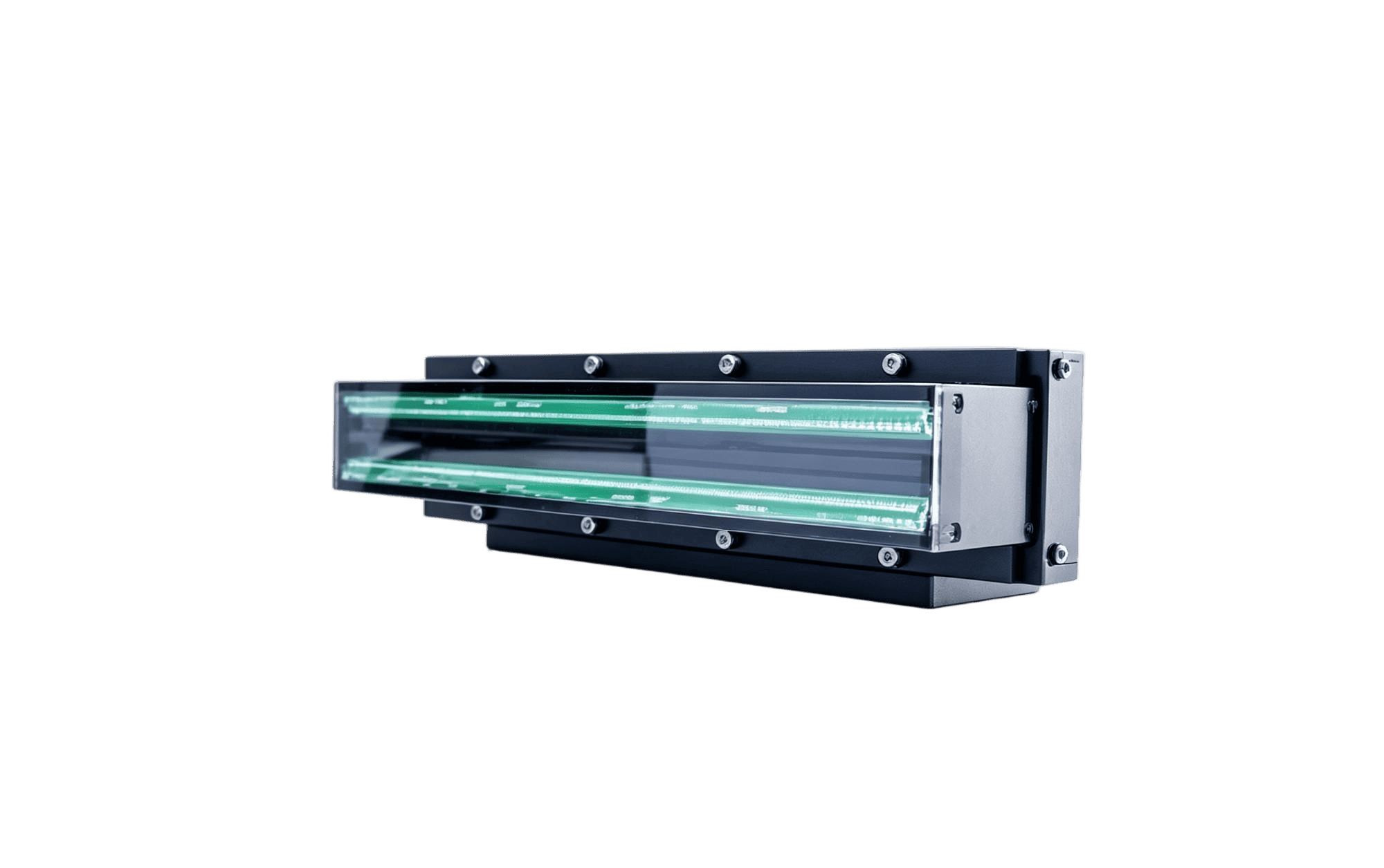
It runs a 1:1 contact scan — every pixel maps directly to one physical point on the fabric. Scan a 2-meter-wide bed, and the sensor array is genuinely 2 meters long.
No shrinking. No distortion. No edge falloff.
Precision at the edge of the fabric matches precision at the center, exactly.
A few numbers:
- Recognition precision: 0.021 mm. A human hair runs about 0.06–0.08 mm in diameter — this is roughly three times finer.
- Max scan width: 2 meters, in a single pass. No stop-and-go, no stitching — roughly 10x the throughput of head-mounted small vision.
- Built-in RGB illumination that software can mix into any color to suit different materials — no external lighting rig needed.
- Runs on Halcon-based algorithms, the industry benchmark for machine vision. It automatically identifies registration marks and complex contours, then calculates the optimal cutting path — even on badly stretched or warped fabric.
The first time I saw the precision numbers, I had to double-check them.
Two real production scenarios
Does this actually matter day to day? Two concrete examples.
Sublimation printing.
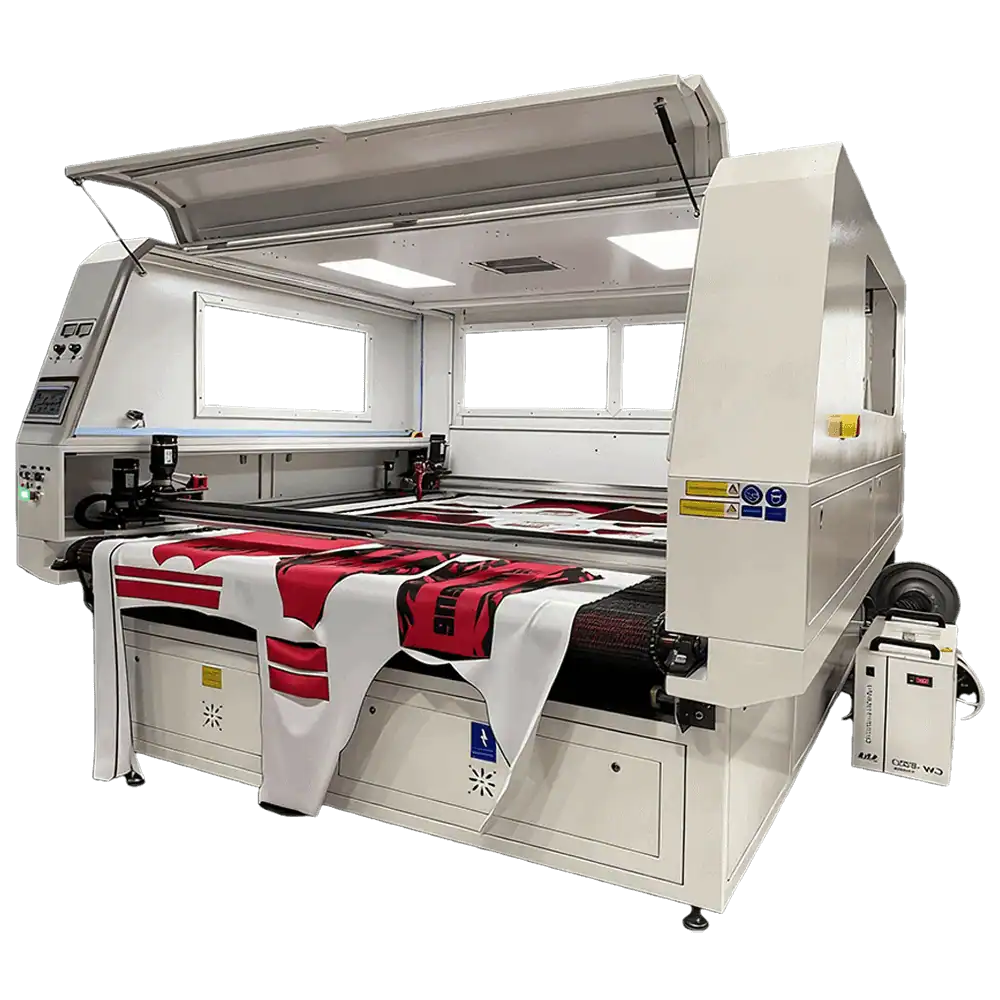
You probably know this process well. Fabric goes through a high-temperature, high-pressure calender step where solid dye converts directly into gas, penetrates the fiber, then cools and locks in the color. Only after that does it hit the cutter.
The heat and tension from calendering distort the fabric unevenly — some areas stretch more than others.
With a traditional vision system, you often get a visible misalignment strip between the cut edge and the print. Watch a long run closely, and you'll see the cut gradually drift away from the pattern as fabric deformation compounds over distance. Noticeable up close. Customer sends it back.
CIS reads the actual deformation the instant it scans and adjusts the cutting path on the fly. Even if the fabric has stretched 5%, the edge tracks the print precisely — and the laser seals the edge in the same pass, so there's no fraying and no secondary finishing step.
Embroidery patches and appliqué.
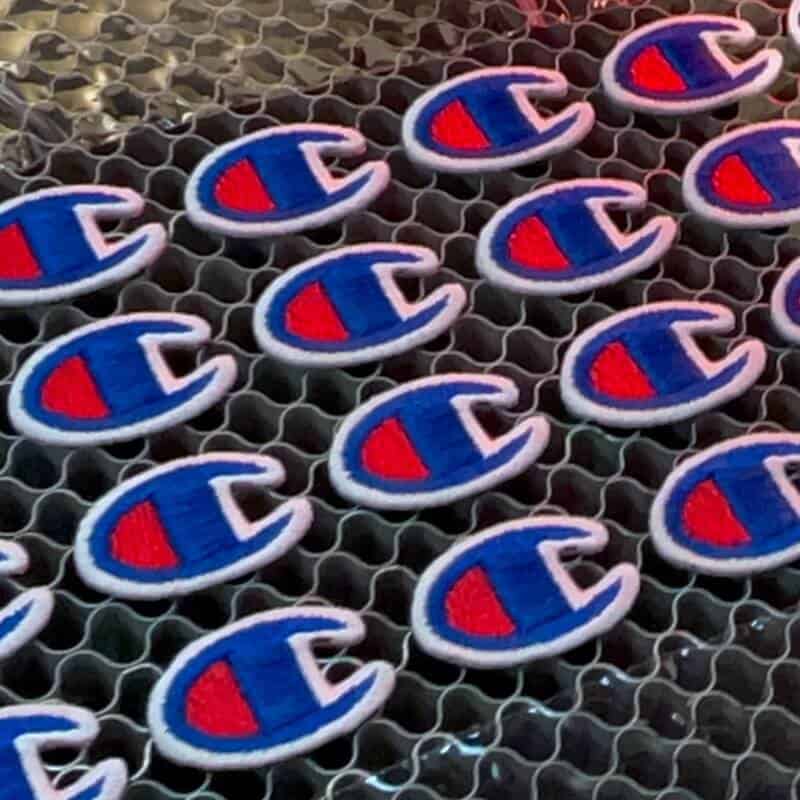
Different challenge here. Patterns tend to be complex and irregular, and a single sheet might carry dozens or hundreds of individual pieces.
With head-mounted small vision, every patch gets identified and cut one at a time — slow. With an area-scan camera, edge precision isn't consistent, and some pieces come out crooked.
CIS scans the whole sheet in one pass, identifies everything at once, then cuts in batch. Every piece gets the same precision, whether it's dead center or way out at the edge.
An analogy I keep coming back to
In the 1880s, electricity started spreading through American factories. Mill owners spent serious money ripping out steam engines for electric motors. Then, after the install — productivity barely moved.
Why?
Because they'd only swapped the power source. The layout, the workflow, the line shafts, the machine placement — all of it stayed exactly the same, still arranged around where the old steam engine used to sit. The electric motor's real advantage never got a chance to show up.
The factories that actually captured the gains were the ones that understood what electricity really offered: distributed power. They rearranged machines around the production flow instead of around a central power source. Output multiplied.
The laser cutting industry is having a similar moment.
Everyone's chasing more watts, more speed — the same way factories once competed over whose steam engine had more horsepower. But the real efficiency gain probably isn't going to come from a faster blade. It's going to come from a sharper eye.
The vision system is the "distributed power" of textile laser cutting.
It won't be the headline number on page one of the brochure. But it decides your yield rate. It decides whether you can land high-end clients. It decides whether your shop is "functional" or "competitive."
A note on transparency
At this point, some of you are probably thinking: this is just a pitch for RedShift's CIS.
Fair. CIS is a product we actively sell. But the optical physics, the production scenarios, the trade-offs between approaches — none of that is something we made up. It's what we've validated repeatedly, year after year, working directly with customers. Don't take my word for it — ask any industrial vision engineer. You'll get the same answer.
Why I'm writing this is simple.
We've worked with too many factories where equipment selection spends 80% of the time comparing laser power and cutting speed, 20% on bed size and price, and roughly zero on the vision system.
Then the machine shows up, cut quality doesn't hold, and the laser gets blamed.
That's not a one-off. It's an industry-wide blind spot.
So here's my ask: if your work involves post-print cutting, spend real time evaluating the vision system on whatever machine you're considering. You don't have to pick ours. Just know what you're actually buying, and why.
If, after doing that homework, you land on CIS being the right fit — we'd love to talk.
And if you find something better, tell me. I'm genuinely curious.
We're in this to make the industry a little better. That's really it.