Skip to content

Are you tired of textile cutting that results in frayed edges, distorted patterns, and wasted time? Traditional blades push and pull on fabric, leading to costly errors.
A CO₂ laser cutter delivers high-speed, millimeter-level precision, and perfectly sealed edges. This technology eliminates fabric distortion and fraying, ensuring consistent quality for both small custom batches and large-scale production runs, which boosts competitiveness.

For purchasing managers like Matt, consistency is everything. You need to know that the 10,000th piece looks just as perfect as the first sample. Traditional methods can't always promise that. Let's dig into why CO₂ lasers have become such a critical tool in modern textile manufacturing, and how they solve these exact problems.
Can a CO2 Laser Cut Fabric?
Many people I talk to worry that a laser will burn or damage delicate fabrics. It's a valid concern, especially when dealing with expensive technical textiles.
Yes, a CO₂ laser cuts fabric cleanly by vaporizing or melting the material along a precise path. This non-contact method avoids the pulling and stress of blade cutting, resulting in a perfect cut without pressure marks or distortion, especially on knits and synthetics.

From my experience in sock manufacturing, I know how easily knit materials can deform under pressure. A blade has to physically press down and drag through the fibers. This is where the issues start. A laser beam, on the other hand, never touches the material.
How Laser Cutting Works on Textiles
The focused heat from the laser beam is incredibly intense but also incredibly small. It instantly melts or vaporizes the fibers. For synthetic materials like polyester, this process creates a "heat-sealed" edge, which means the fibers melt together, preventing any future fraying. This is something a blade can never do.
| Cutting Method | Action on Fabric | Edge Result | Best For |
|---|---|---|---|
| Blade/Die | Physical pressure and shearing | Can fray, might crush | Simple shapes, non-stretch materials |
| CO₂ Laser | Non-contact thermal vaporization | Sealed, clean, precise | Complex patterns, knits, synthetics, leather |
This makes CO₂ lasers ideal for everything from delicate sportswear to durable industrial textiles, delivering a superior finish every time.

Learn More
How Precise Is a CO2 Laser?
Inaccurate cuts lead to rejected samples and wasted materials, which directly impacts your bottom line. When patterns have intricate curves or sharp corners, precision is not a luxury—it's essential.
A modern CO₂ laser guided by computer software achieves cutting accuracy down to the millimeter level (often ±0.1mm). It perfectly replicates complex digital designs, ensuring every piece is identical, from the first sample to the final production unit.
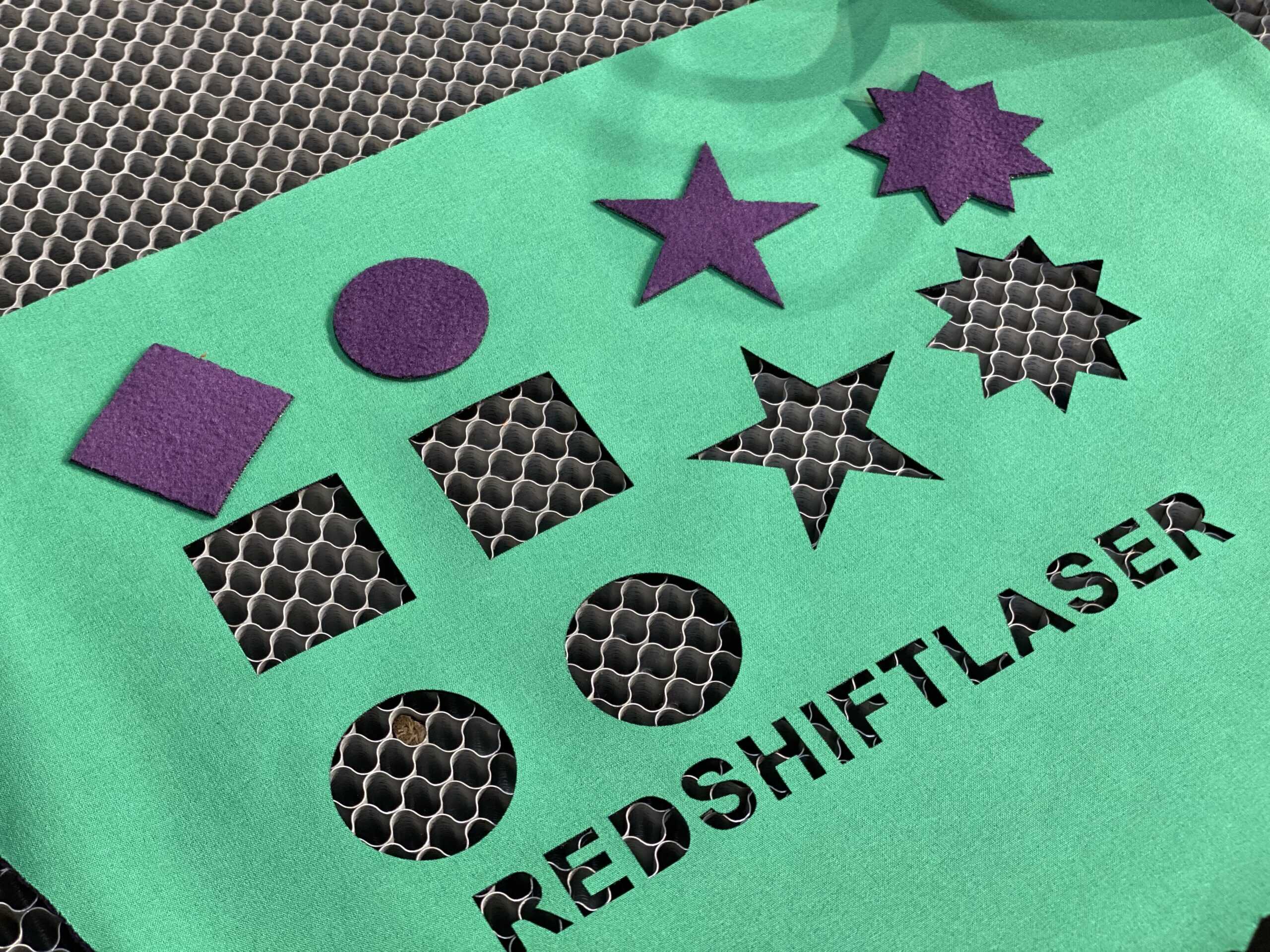
This level of precision is where the real value lies. It's not just about cutting faster; it’s about cutting right, every single time. This is the core advantage that my most demanding clients, who require perfect consistency for their brands, rely on.
Consistency for Custom and Bulk Orders
Whether you need a single custom-printed jersey[^1] or a run of 10,000 units, the laser follows the same digital path. There's no tool wear to worry about, so the last piece is just as sharp as the first. This closes the quality gap[^2] between sampling and bulk production.
Handling Complex Designs with Ease
Think about detailed patterns, small holes, or sharp internal corners in a sportswear design. A blade would struggle, often snagging the fabric or leaving rounded edges. A laser’s focused beam can navigate these complex geometries effortlessly, producing sharp, clean results that are impossible to achieve manually. This opens up tremendous creative freedom for designers.
How to Improve Laser Cutting Quality?
Owning a laser cutter doesn't automatically guarantee perfect results. Poor settings can lead to burnt edges or incomplete cuts, which defeats the purpose of investing in the technology.
To improve quality, you must balance three key settings: laser power, cutting speed, and beam focus. Adjusting these variables for each specific fabric type ensures a clean cut without charring or melting, along with proper use of an air assist feature.

I always tell my partners that a laser machine is a precision instrument. Once you learn to tune it correctly for your materials, the results are consistently amazing. It’s a small learning curve for a massive payoff in quality.

Key Parameters for a Perfect Cut
Here’s a simple breakdown of what to manage:
| Parameter | What It Controls | How to Optimize It |
|---|---|---|
| Power | The intensity of the laser beam | Use just enough to cut through cleanly. Too much power causes charring. |
| Speed | How fast the laser head moves | Find the sweet spot. Too fast may not cut through; too slow can burn. |
| Focus | The sharpness of the laser point | A properly focused beam concentrates energy for the cleanest cut. |
| Air Assist | A stream of compressed air at the cut point | It blows away debris and vapor, reducing flare-ups and cooling the edge. |
By creating and saving profiles for different fabrics—like one for polyester mesh[^3] and another for thick fleece[^4]—operators can ensure consistent, high-quality results with just a few clicks.
How to Make a CO2 Laser More Effective?
You have a precise, high-quality machine. Now, how do you maximize its output and get the best return on your investment? Efficiency is about more than just cutting speed.
To make a CO₂ laser more effective, integrate it with smart nesting software and automated systems. Nesting software optimizes pattern layouts to dramatically reduce material waste, while auto-feeders and conveyors enable continuous, unattended operation for maximum throughput.

This is what transforms a great tool into a production powerhouse. A purchasing manager like Matt values streamlined supply chains, and this is where the biggest efficiency gains are found. It's not just about the machine; it's about the entire workflow around it.
Boosting Throughput with Software and Automation
Nesting Software: This software automatically arranges all the pattern pieces on the fabric roll in the most compact way possible. I've seen it reduce material waste by 15% or more, which is a huge cost saving over a year.
Auto-Feed Systems: Instead of an operator manually loading each sheet of fabric, an automated system can unroll material directly onto the cutting bed. A conveyor then moves the cut pieces to a collection area while the next section is being cut. This creates a non-stop production cycle.
Regular maintenance, like cleaning the lens and checking alignment, also plays a vital role. A well-maintained machine is an effective machine.
Conclusion
CO₂ laser cutting provides unparalleled precision, clean edges, and design freedom. It solves textiles' biggest production challenges, boosting quality, reducing waste, and enabling true consistency across all order sizes.
Related:
[^1]: Explore this link to understand how custom-printed jerseys can enhance your brand and provide unique designs.
[^2]: This resource offers insights on strategies to minimize quality gaps in manufacturing, ensuring consistent product excellence.
[^3]: Explore this link to understand how polyester mesh can enhance fabric profiles and improve quality.
[^4]: Discover techniques for creating effective profiles for thick fleece to ensure consistent results.