Skip to content

At RedShift, we’re often asked, “Should I choose an RF metal tube or a glass CO₂ tube?” The honest answer: both are excellent just for different jobs. Below we explain what each tube is, how they differ in performance and lifespan, when each shine, and a simple way to choose based on your production needs and budget.
1. Glossary: What Each Tube Actually Is
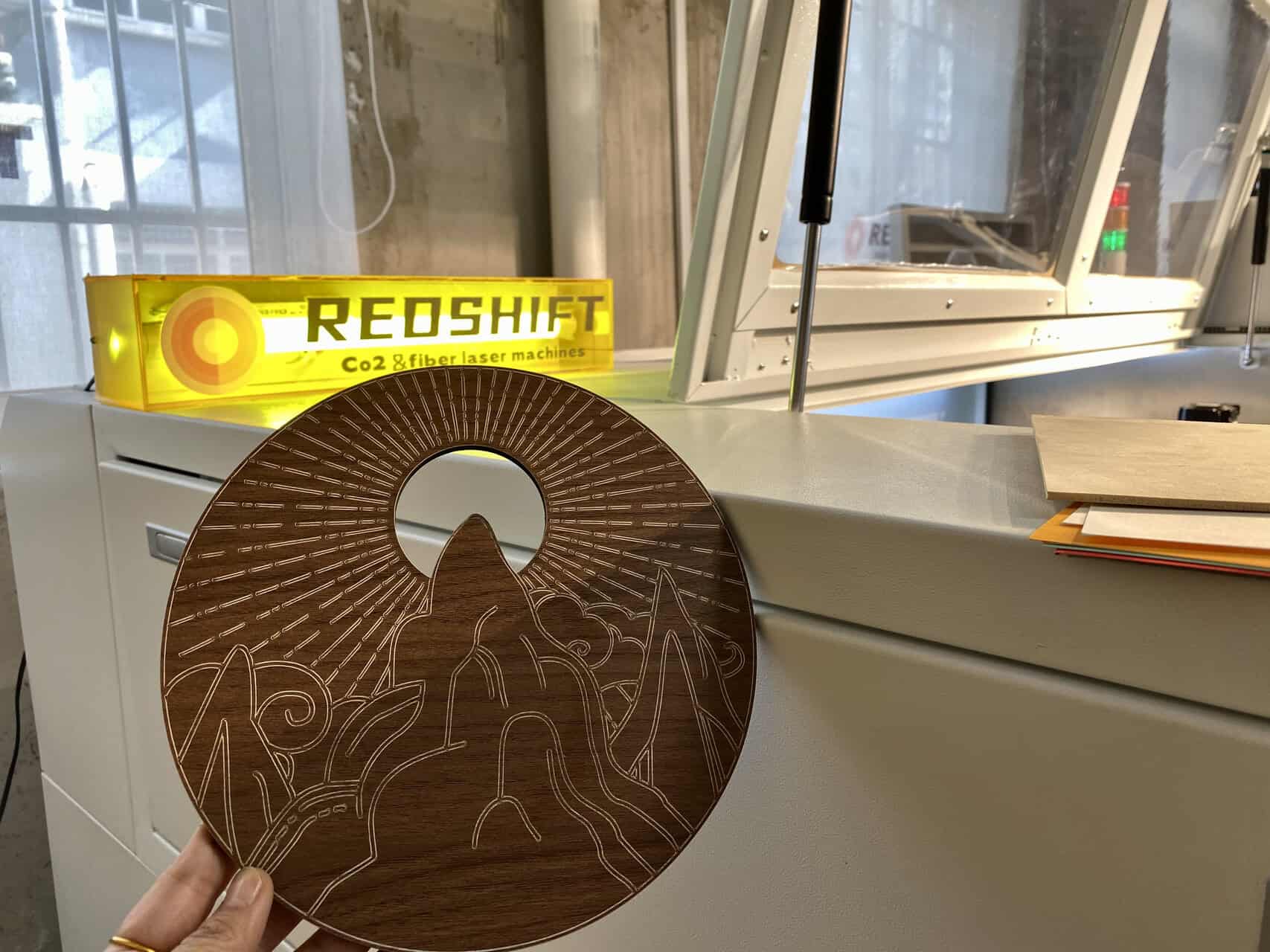
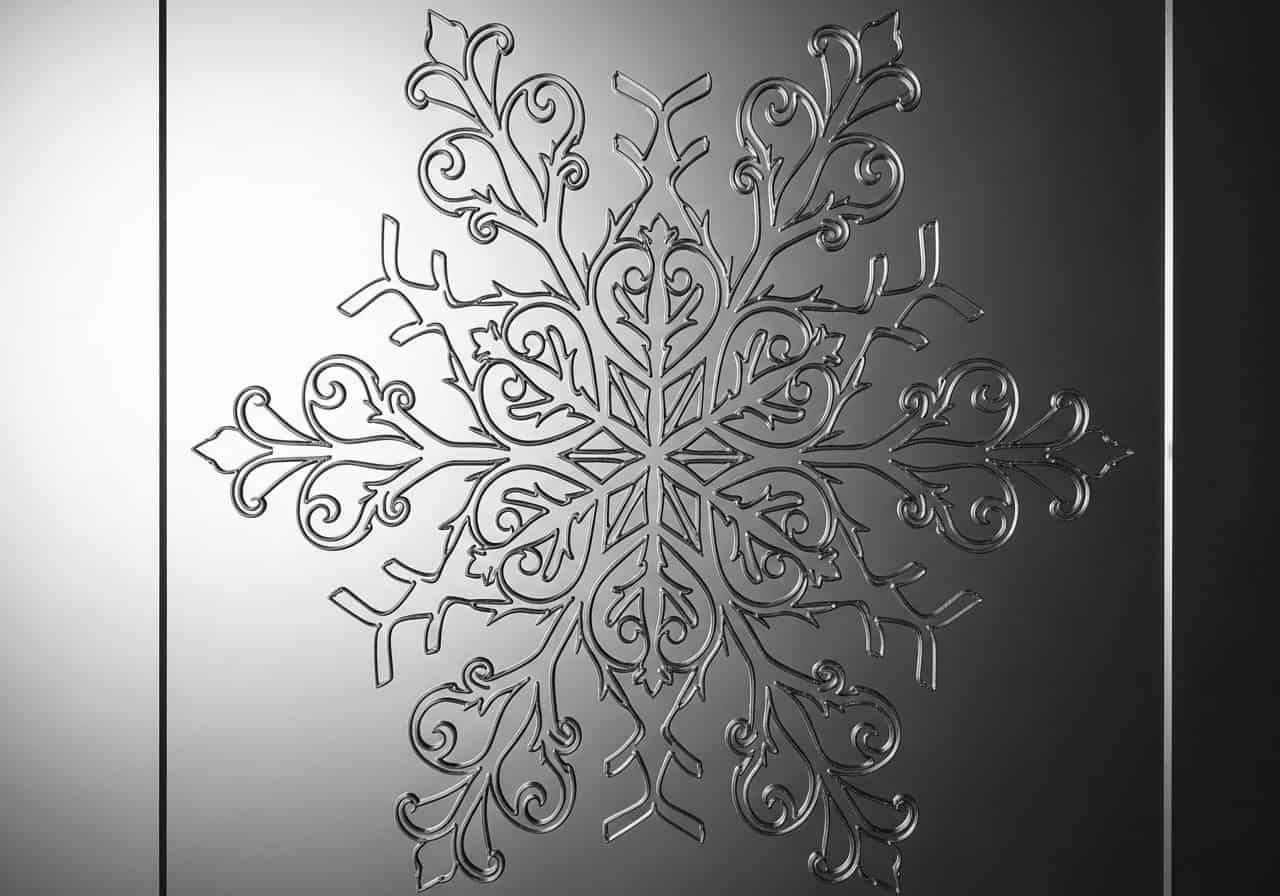
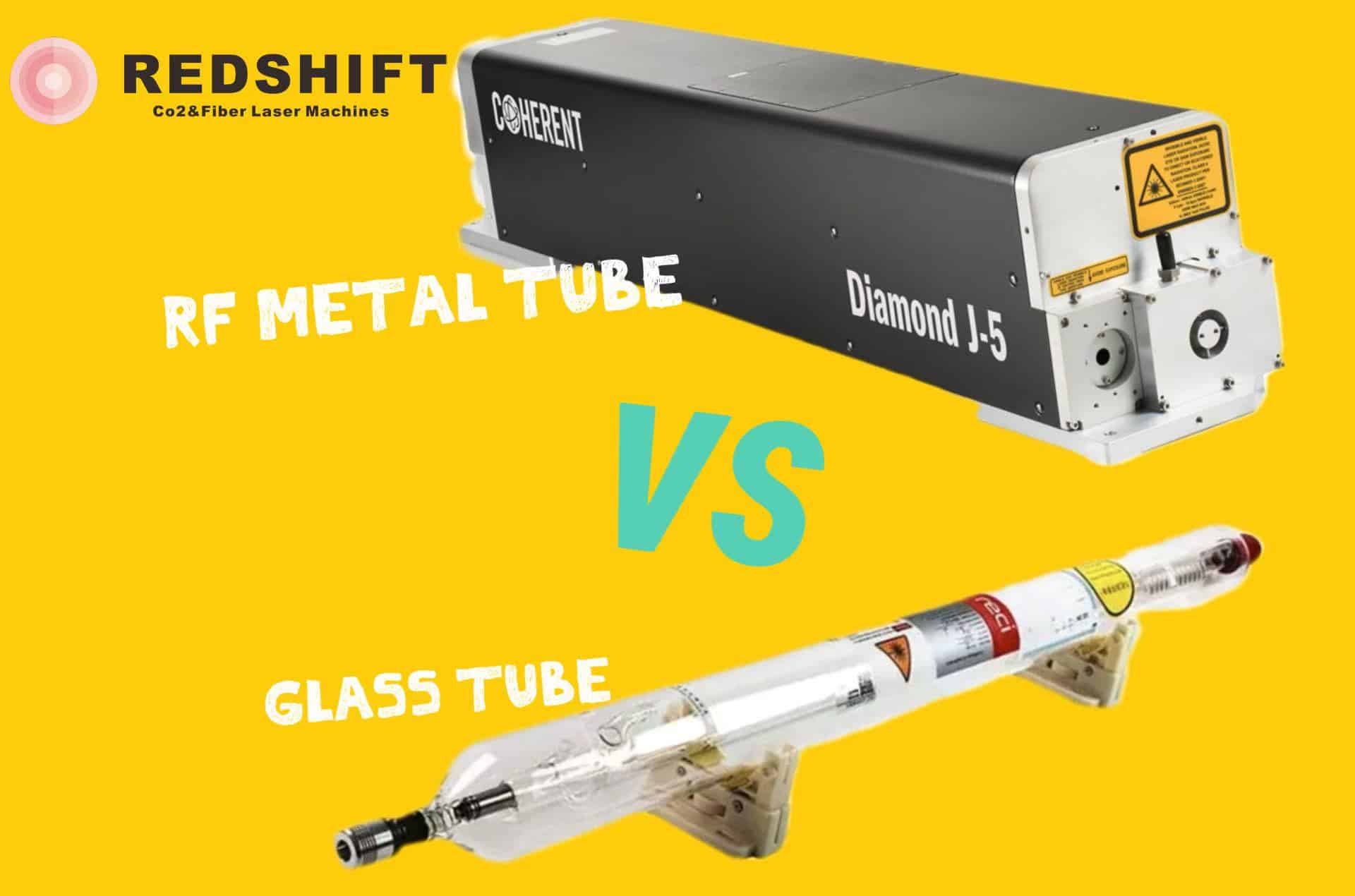
RF metal tube (RF-excited, metal/ceramic). A sealed CO₂ resonator powered by radio frequency. It’s compact, typically air-cooled, and delivers excellent beam stability with rapid pulse control ideal for razor-sharp engraving, tiny fonts, and consistent output in production.
RF metal tube: sealed, RF excited design for fast, precise pulsing and stable beam quality.
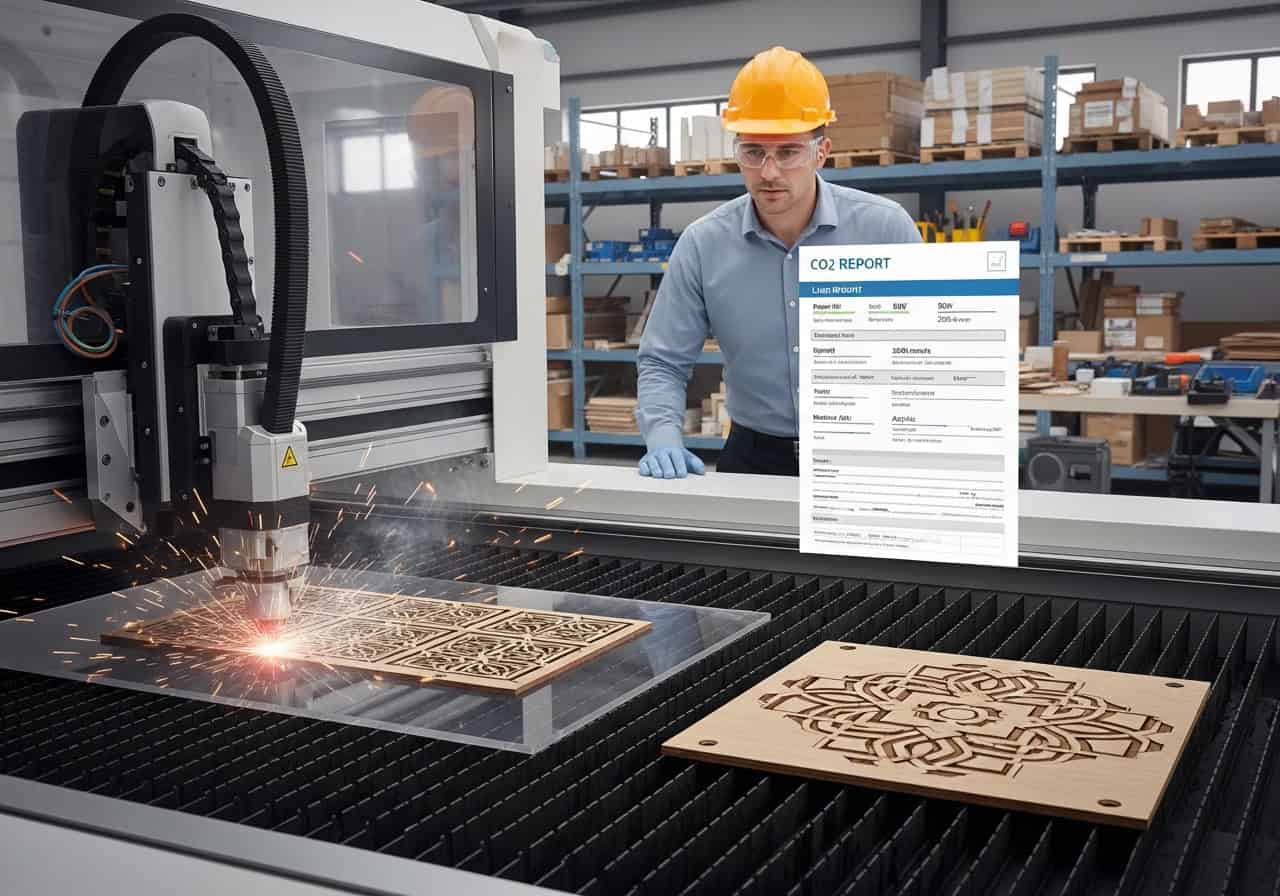
Glass tube (DC-excited). A long glass envelope driven by high-voltage DC. It’s water cooled via a chiller and offers exceptional watts per dollar, making it the go to choose for thick material cutting (wood, acrylic) at a friendly machine price.

2. Differences in Performance, Lifespan & After Sales
2.1 Engraving & Cutting Behavior
RF metal tubes produce a finer spot and switch on/off much faster. Result: crisp micro text, clean logos, barcodes, and photo engravings with less “halo.” Glass tubes excel at thick cutting throughput thanks to cost effective power, they’re fantastic for 6–20 mm acrylic and hardwood in signage and fabrication.
2.2 Lifespan, Cooling & Maintenance
RF tubes generally run longer with more stable output and less day to day maintenance (often air cooled). Glass tubes offer solid life for the price but require proper chiller care and basic alignment/optics cleaning.
2.3 Ownership Cost & Support
RF: Higher upfront and replacement cost, but less downtime and strong diagnostic support.
Glass: Lower initial cost and easy to source; plan for periodic tube/PSU replacements, coolant care, and routine optics cleaning.
3. Which Tube Fits Which Use Case
Choose RF metal if your work lives or dies by engraving precision, serialized part marking, and micro features. If you engrave tiny text, intricate logos, stamps, or photo plates and you value repeatability with minimal tinkering RF is the low-stress choice.
Choose Glass if your daily bread is cutting especially thicker acrylic or wood and you want maximum power per dollar.
4. How to Choose for Your Production & Budget
If it’s engraving quality & fine detail, go RF you’ll win on edge crispness, tiny fonts, and repeatability.
If it’s thick-material cutting throughput on a tighter budget, go Glass serious cutting performance without overinvesting.
Mostly engraving small items (badges, instruments, gifts): RF 30–60 W.
Balanced light cutting + attractive engraves (sign shops, custom goods): RF 60–100 W or quality Glass 80–100 W if budget limited.
Primarily cutting 6–20 mm acrylic/wood: Glass 100–180 W with a reliable chiller and good optics.
Industrial coding/marking: RF (fast modulation + consistent beam).

5. Quick Comparison Tables
5.1 At-a-Glance Summary
| Decision Point | RF Metal Tube | Glass Tube |
| Engraving tiny text/photos | ★★★★★ | ★★★ |
| Thick acrylic/wood cutting | ★★★ | ★★★★★ |
| Cost per watt | ★★★ | ★★★★★ |
| Upfront machine cost | ★★★★ | ★★ |
| Maintenance burden | Low (often air-cooled) | Moderate (chiller + routine care) |
| Modulation (on/off speed) | Very fast | Moderate |
| Typical use | High-precision engraving, coding/marking | Value-focused cutting & thick materials |
5.2 Performance & Care Details
| Aspect | RF Metal Tube | Glass Tube |
| Beam/spot size | Finer spot → crisp micro-detail | Larger spot → great for thick cuts |
| Cooling | Air-cooled (usually) | Water-cooled (chiller required) |
| Lifespan trend | Longer, stable output | Solid for cost; more upkeep |
| Maintenance focus | Minimal routine | Coolant quality, optics cleaning, basic alignment |
| Replacement cost | Higher | Lower (easy to source) |
| Best fits | Precision engraving, barcode/serials, production marking | Signage, acrylic/wood fabrication, budget-driven throughput |
6. Final Recommendation & Next Steps
If you sell precision engraving or need high uptime with minimal maintenance, choose an RF metal tube you’ll see the difference in every shift. If your shop is cut dominant and price sensitive, especially for thick acrylic/wood, choose a glass tube for unbeatable cost per watt.