Skip to content

In today’s fast-paced production environments, precision and efficiency are everything. Whether you’re working with textiles, leather, packaging, or synthetic materials, adding a marking solution to your CO₂ laser cutter can dramatically simplify your workflow.
At RedShift, we provide two powerful marking options: the Marker Pen Module and the Inkjet Printing Module. Both are designed to help you label, align, or code workpieces during processing, ensuring smooth downstream operations such as sewing, assembly, and quality control.
These solutions are especially valuable in industries like apparel, automotive, and packaging, where accuracy not only saves time but also reduces costly errors.
1. Why Do Marking Solutions Matter in Laser Cutting?
Adding marking to your laser cutting process does more than just label your materials. It:
1.Streamlines Production → Clear marks guide workers during sewing or assembly.
2.Improves Traceability → Add serial numbers, production dates, or size codes.
3.Reduces Errors → Accurate labeling minimizes rework and scrap.
4Boosts Productivity → Automated marking saves time compared to manual labeling.
2. What Materials Can Be Marked?
Both marking options are optimized for a wide range of industrial materials:
· Polyester
· Polypropylene
· Thermoplastic Polyurethane (TPU)
· Acrylic
· Most synthetic fabrics
· Leather
· Cardboard and packaging substrates
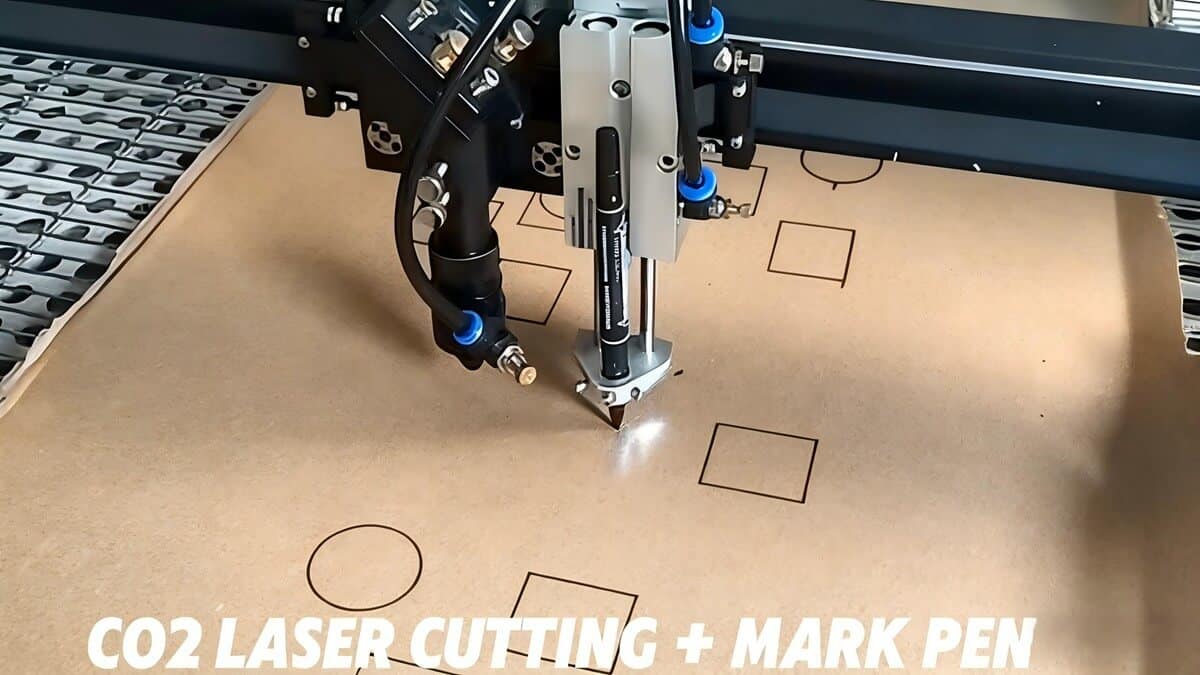
3. Marker Pen Module: Simple and Cost-Effective
The Marker Pen Module is designed for textile and garment manufacturers who need a reliable, low cost solution. Integrated directly into the laser process, it allows you to mark cut pieces with sewing guides or identifiers like product sizes and batch numbers.
Best For: Apparel, footwear, and textile workshops
Features & Highlights:
· Multiple pen colors for visibility
· Precise marking for sewing and alignment
· Easy, quick pen replacement
· Low operating cost (affordable consumables)
· Ideal for small to medium businesses
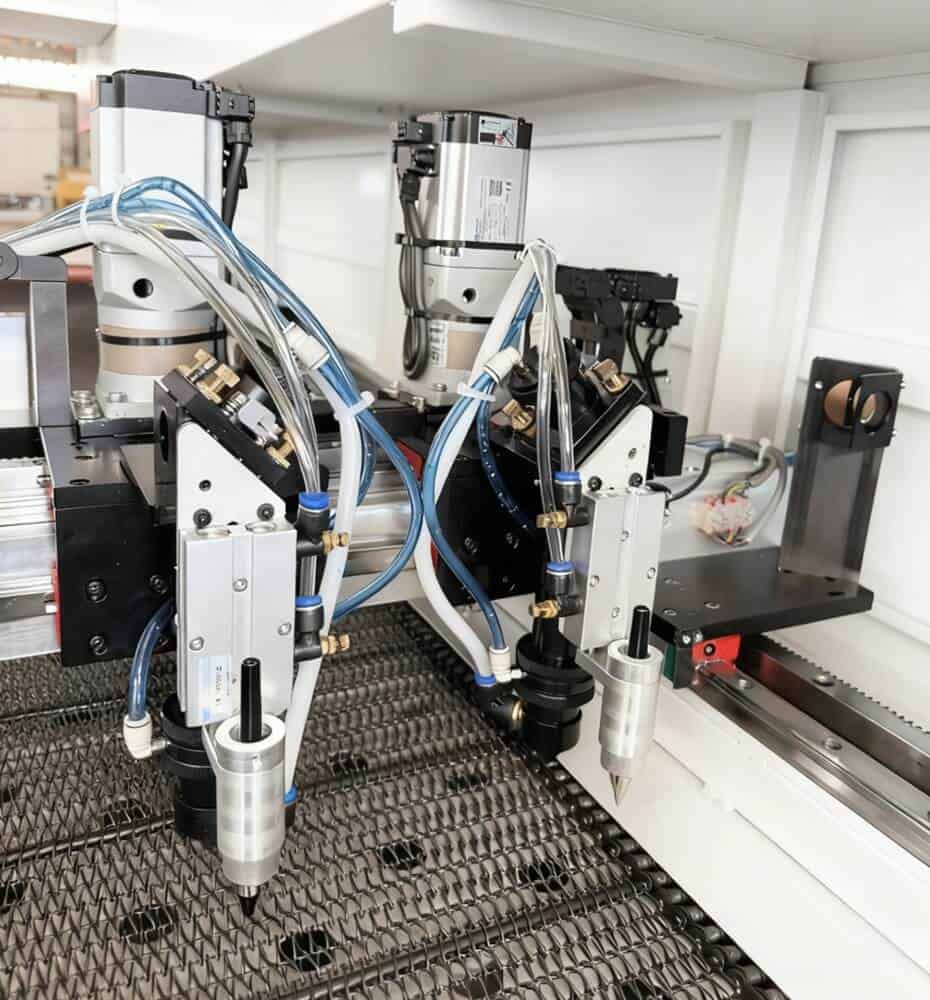
4. Inkjet Printing Module: Fast and Contact-Free
The Inkjet Printing Module is the advanced alternative. Using a non-contact process, it sprays micro ink droplets onto the surface of your material, allowing for fast, flexible, and distortion-free marking.
Best For: High volume, multi-material industries (packaging, automotive, leather goods)
Features & Highlights:
· Contact free marking (no material distortion)
· Quick drying, durable ink options (temporary or permanent)
· Capable of high precision logos, barcodes, and alphanumeric codes
· Multiple ink colors available
· Faster throughput than marker pens
5. Marker Pen vs. Inkjet: Side-by-Side Comparison
| Feature | Marker Pen Module | Inkjet Printing Module |
| Best For | Sewing guides, numbering in textiles | High volume marking across many materials |
| Marking Type | Contact-based, temporary | Contact-free, temporary or permanent |
| Speed | Good for low to medium runs | Very fast, ideal for large production volumes |
| Cost | Very affordable, low consumable cost | Higher initial investment, lower per-mark cost |
| Flexibility | Limited to textile-friendly applications | Works on textiles, leather, packaging & more |
| Ink Options | Multiple pen colors | Volatile (temporary) & non-volatile (permanent) |
6. Choosing the Right Marking Option for Your Workflow
Choose the Marker Pen Module if:
You focus on textiles or apparel, need sewing guides, and want an affordable, straightforward solution.
Choose the Inkjet Printing Module if:
You manage large scale production, handle multiple material types, or require permanent high precision markings like barcodes or logos.
7. Conclusion & Next Steps
Both the Marker Pen and Inkjet modules are excellent marking solutions each tailored for different workflows. Whether your priority is cost efficiency in textiles or high speed versatility across industries, RedShift has you covered.
Contact our RedShift engineers today for a consultation, and we’ll help you choose the right marking module for your production line.