Skip to content

Struggling to keep up with fast fashion's demand for diverse styles and quick turnarounds? Traditional cutting methods are often too slow and rigid, causing production bottlenecks and missed opportunities.
CO₂ lasers revolutionize fashion production by enabling rapid, precise cutting of complex patterns directly from digital files. They automate the process, support small-batch orders without extra costs, and seal fabric edges simultaneously, drastically speeding up the entire garment manufacturing workflow from design to finished product.

For a purchasing manager like Matt, the pressure to deliver trendy, high-quality apparel on a tight schedule is constant. The old way of creating physical patterns and using die-cutters for every new style is no longer viable. This is where laser technology steps in, not just as a cutting tool, but as a complete production solution. Let's break down how it delivers this competitive edge.
What CO₂ Laser Cutting Features Matter for Fabric Processing?
Choosing the right machine can feel overwhelming with all the technical specs. Buying a laser without the right features is like buying a car without power steering—it works, but it’s not efficient.
For fabric, the most critical features are a vision scanning system for print alignment, an auto-feeder for continuous production, and a large-format cutting bed. These ensure accuracy on printed textiles, boost efficiency, and accommodate standard fabric roll widths without issue.

From my own experience in textile manufacturing, I can tell you that the machine's basic ability to cut is just the starting point. The features built around it are what truly save time and money. For anyone sourcing apparel, understanding these features helps you identify a supplier with a truly capable and modern production line.
Key Features and Their Production Impact
Here’s a breakdown of the features I consider non-negotiable for serious apparel production:
| Feature | What It Does | Why It's a Game-Changer for Fashion |
|---|---|---|
| Vision/Camera System | Scans the fabric, detects printed patterns, and aligns the cut path perfectly. | Eliminates human error in cutting printed apparel like jerseys or dresses. |
| Auto-Feeding Conveyor | Automatically unrolls fabric onto the cutting bed and moves cut pieces. | Enables continuous, 24/7 operation with minimal staff, maximizing output. |
| Nesting Software | Intelligently arranges pattern pieces to minimize fabric waste. | Directly reduces material costs, often saving up to 15% on fabric. |
| Large Cutting Bed | Accommodates wide fabric rolls (e.g., 1.6m to 3.2m). | Prevents the need to pre-cut fabric rolls, streamlining the workflow. |
These features transform the laser from a simple tool into an automated production system, perfectly suited for the demands of the fashion industry.
How Is Small-Batch and Multi-Style Production Made Easy?
Does your brand need to produce 50 units of one style and 75 of another, all within the same week? Traditional tooling makes this a logistical and financial nightmare due to high setup costs.
CO₂ lasers eliminate physical patterns and die-cutting tools. An operator simply loads a new digital file, and the machine is ready to cut a different style in seconds. This zero-setup-cost model makes producing small batches just as economical as large runs.

I remember the old days in the T-shirt business when creating a new design variation meant investing time and money into new tooling. It was a barrier to experimentation. A laser completely removes that barrier. This agility is the secret weapon for staying ahead in fast fashion.
The Digital Workflow Advantage
The process is incredibly lean. A designer finalizes a pattern on their computer and sends the digital file (like a DXF or AI file) directly to the laser cutter's software. There are no physical templates to create, ship, or store. This allows for:
- Instant Prototyping: A sample can be cut and ready for sewing within minutes of a design being approved. This dramatically shortens the development cycle.
- On-Demand Manufacturing: Brands can respond to real-time sales data. If a particular style is selling out, another batch can be put into production immediately without costly setup interruptions.
- Mass Customization: Offering personalized apparel becomes feasible. The laser can cut a unique pattern for each customer just as easily as it can cut a thousand identical ones.
This flexibility allows brands to be more responsive to trends and reduce the financial risk of overproduction.
How Does Automatic Edge Sealing Save Time and Steps?
Fraying edges are a persistent problem, especially with synthetic and knit fabrics. This often forces an extra production step, like overlocking or serging, which adds labor time and cost.
The laser's focused heat melts the fibers of synthetic fabrics (like polyester or nylon) as it cuts. This creates a clean, sealed edge that will not fray, eliminating the need for a separate finishing step and producing a more durable garment.

This is one of those "small" benefits that has a huge downstream impact. I've seen it firsthand. By delivering perfectly sealed pieces directly from the cutter, you simplify the entire sewing process. The sewing team can work faster and more efficiently because they aren't fighting frayed or unraveling edges.
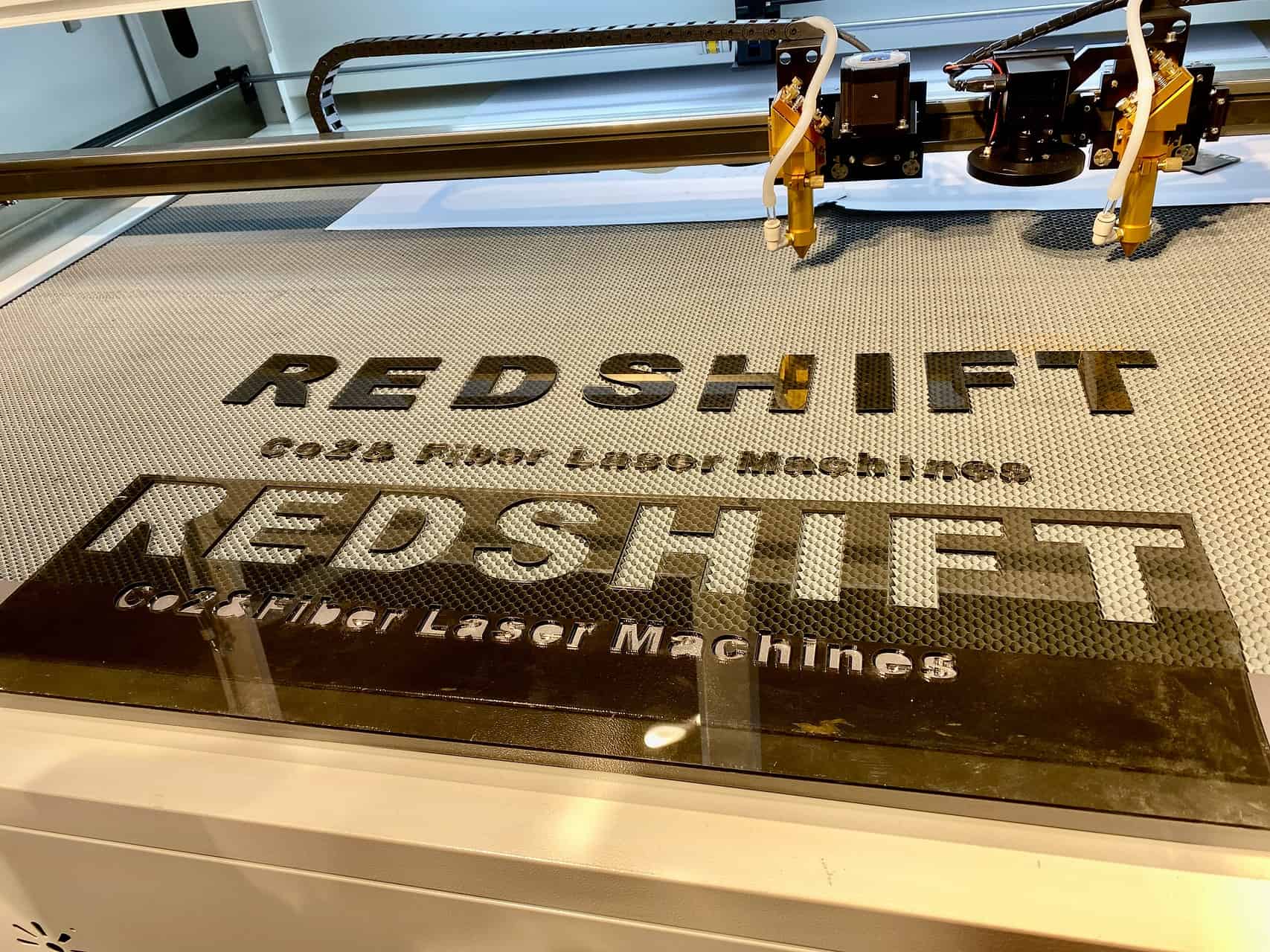
CO2 Laser Cutter with Conveyor and Collection Table
The Practical Benefits of a Sealed Edge
This single feature provides multiple advantages:
- Reduced Labor Costs1: It removes the need for an entire post-cutting finishing step. One less person and one less machine are needed in the production line.
- Improved Product Quality2: The sealed edge is smooth and highly durable. It holds up better to washing and wearing, which is a quality feature that customers can feel.
- Cleaner Garment Construction: When sewing pieces together, there are no loose threads to get caught in the seams, resulting in a cleaner and more professional-looking final product.
For a purchasing manager focused on total cost and quality, this automatic finishing feature is a massive value-add that simplifies the supply chain.
What Are Some Real Customer Examples?
Theory is great, but how does this technology perform in the real world for fashion brands? The applications are diverse and prove the laser's versatility across different market segments.
A sportswear company used vision laser cutting to perfectly align sublimated prints on team jerseys. A fast-fashion brand launched new dress styles weekly by sending digital patterns directly to their laser, skipping all tooling. Both saw faster turnarounds and higher quality.

I've worked with partners who have completely transformed their production with this technology. One client specializing in custom cycling gear went from a two-week lead time to a three-day turnaround for personalized kits. The precision of the laser meant their intricate, multi-panel designs fit together perfectly every time.
Case Study: Fast-Fashion Brand
A U.S.-based online fashion retailer needed to release ten new styles every two weeks to stay competitive. Their traditional cutting process, involving contractors and physical dies, was too slow and expensive for such small, fast runs.
- Problem: High setup costs and long lead times for each new style.
- Solution: They invested in an in-house CO₂ laser system3 with nesting software.
- Result: They could go from a designer's sketch to a cut fabric pattern in less than an hour. Material waste was reduced by 12%, and they could test new designs with a batch of just 50 units without financial penalty. This agility became their primary competitive advantage.
This is a perfect example of how the right technology empowers a modern business model.
Conclusion
CO₂ lasers are a key enabler for modern fashion. They provide the speed, flexibility, and quality needed to thrive in a market that demands small batches, diverse styles, and rapid turnarounds.
Related:
-
Exploring this link will provide insights into how reducing labor costs can enhance efficiency and profitability in production. ↩
-
This resource will help you understand the significance of product quality in retaining customers and boosting brand loyalty. ↩
-
Explore this link to understand how a CO₂ laser system can enhance efficiency and reduce costs in manufacturing processes. ↩