Skip to content

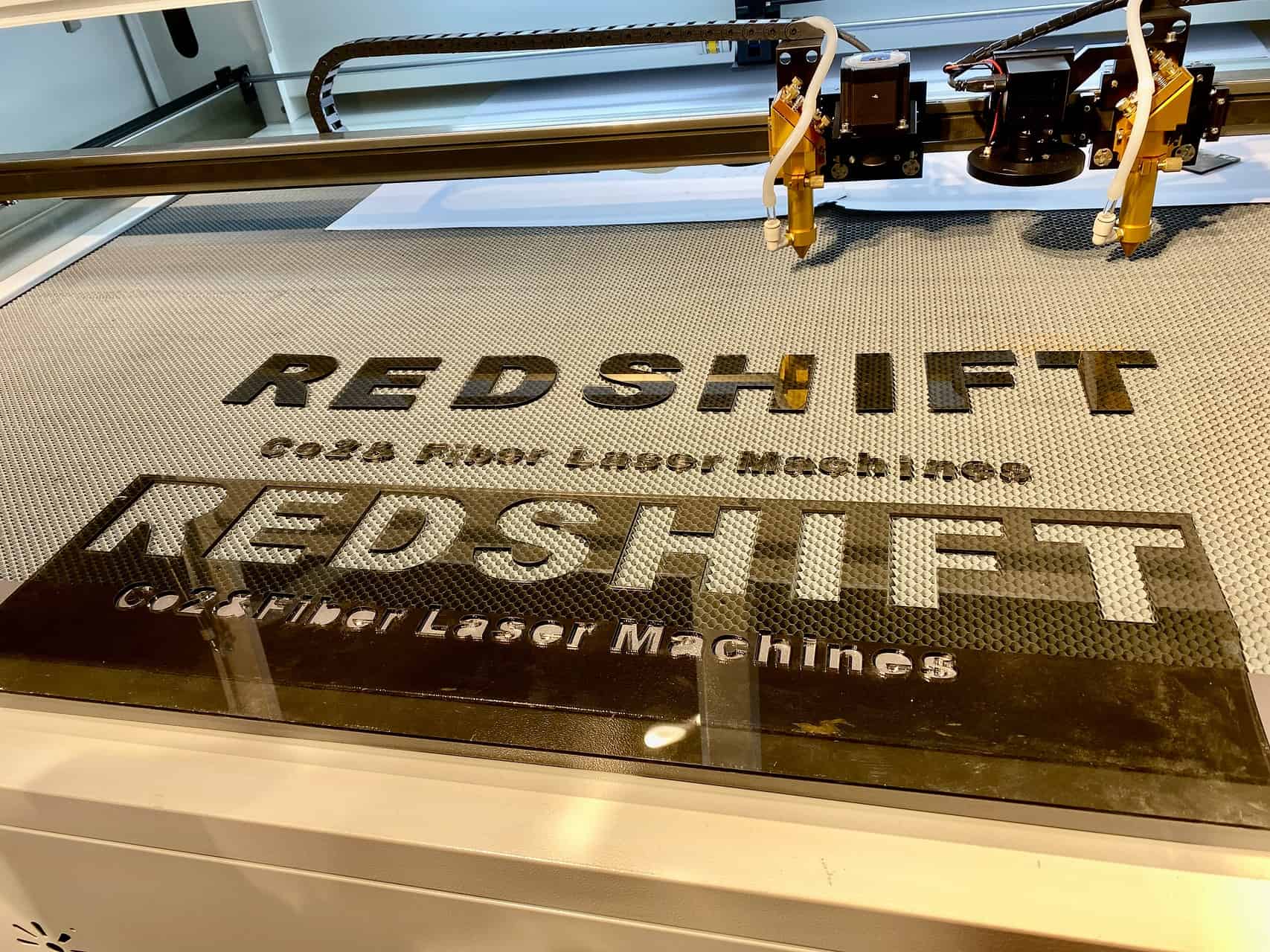
1. Dual-head Single Gantry
Core Features
Structure:
Dual cutting heads share a single gantry, requiring synchronized movement.
Advantages:
Efficient cutting of small, regular patterns: Ideal for dense arrangements of garment trims (e.g., lace, mesh ventilation holes).
Typical Applications
Garment Fabrics:
Lace cutting (0.5mm thickness).
Silk/chiffon lace patterns (50mm-wide repeating units).
Trims Processing:
Non-woven fabric ventilation holes (2mm diameter array).
Hook-and-loop tape slotting.
Sandpaper Cutting: Fine-grain sandpaper (P120-P400) linear slitting (width ≤10mm).
Motion Space Calculation (1.6m Width)
Head Spacing: 0.8m evenly distributed to cover the full width.
Efficiency Example: Cutting lace mesh (10mm repeat unit) achieves 2x efficiency compared to single-head systems.
2. Dual-head Dual Gantry

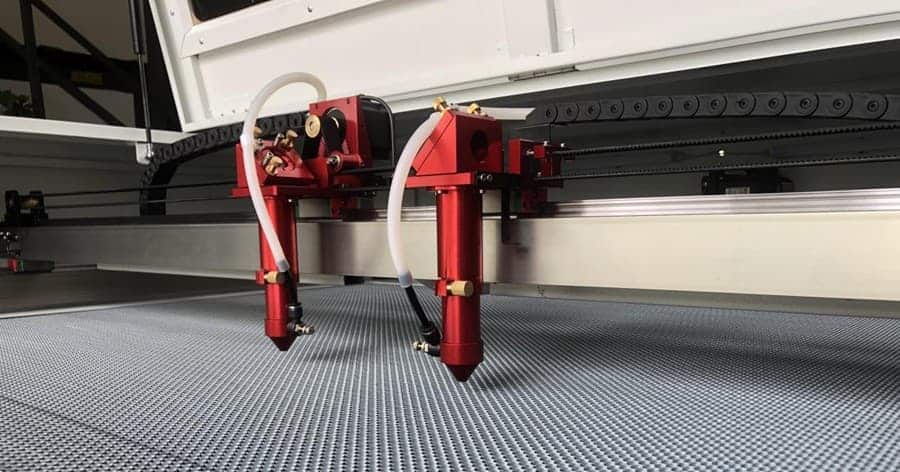
Core Features
Structure: Two independent gantries with asynchronous parameter control.
Advantages: Large-format complex pattern handling: Suitable for irregular garment designs (e.g., asymmetric skirts, artistic prints).
Multi-material hybrid cutting: Simultaneous cutting of thin fabrics and thick trims.
Disadvantages: Higher cost – Complex dual-gantry mechanics increase purchasing cost
Typical Applications
Large Garment Designs: Wedding dresses/gowns (3D structured patterns, 1.6m×3m width).
Sportswear Cutting: Freeform layout cutting without restrictions.
Dynamic Coverage Mode: Gantry 1 covers 0.0–0.8m (fabrics); Gantry 2 covers 0.8–1.6m (trims).
Efficiency Example: Cutting asymmetric dresses (lace + chiffon) achieves 3x efficiency improvement.
3. Quad-head Single Gantry
Core Features
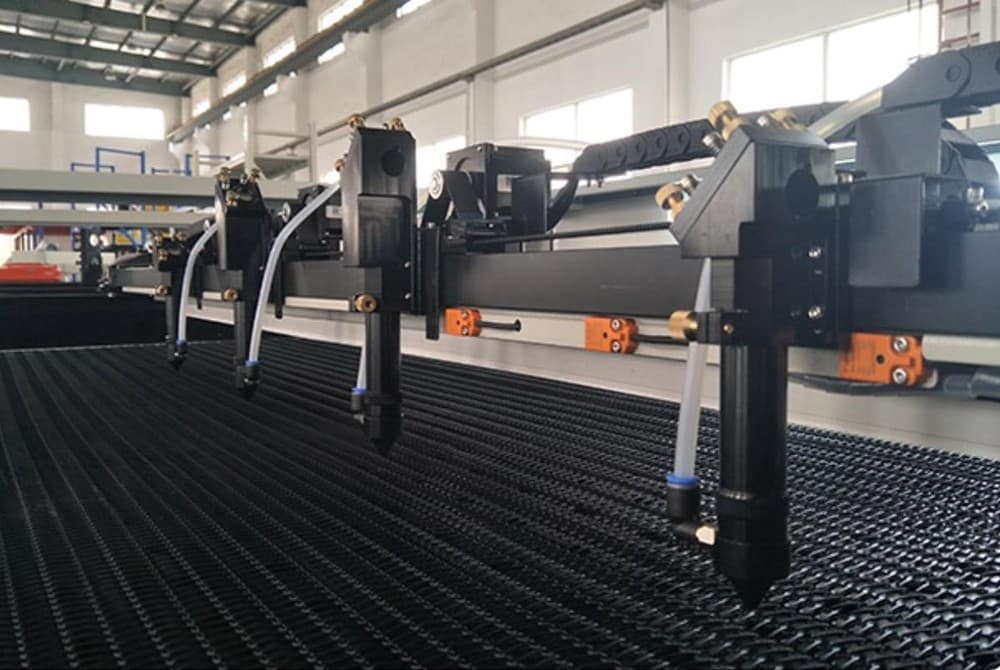
Structure:
Four cutting heads on a lightweight single gantry, optimized for high-density cutting.
Advantages:
Rapid slitting of small, regular patterns: Ideal for mass-producing trims (e.g., elastic bands, edge trim decorations).
High-density pattern coverage: Lace mesh (≤1mm holes), sandpaper linear slitting (width ≤5mm).
Disadvantages:
Low flexibility: Unable to handle large irregular patterns.
Reduced speed: Four heads on one gantry compromise cutting velocity.
Typical Applications
Garment Trims:
Elastic band slitting (10mm width, 30m/min speed).
Edge trim decorative patterns.
Sandpaper Cutting:
Fine-grain sandpaper (P240-P600) precision slitting (width ≤3mm).
Lace Processing:
Dense mesh arrays (50×50 holes/m²).
Motion Space Calculation (1.6m Width)
Head Spacing Optimization:
Uniform Mode: 0.4m spacing for full-width coverage (elastic band slitting).
Overlap Mode: 0.3m spacing for lace micro-hole arrays (reduces edge misses).
Efficiency Example:
Slitting elastic bands (10mm width) achieves 4x efficiency with Redshift Laser dynamic focusing (60% speed boost).
4. Comparative Summary
Dimension | Dual-head Single Gantry | Dual-head Dual Gantry | Quad-head Single Gantry |
Best Materials | Lace, silk, thin non-woven | Complex designs, mixed materials | Elastic bands, edge trim, sandpaper |
Suitable Graphics | Small regular patterns (repeating units) | Large irregular designs | Ultra-dense small patterns (≤1mm holes) |
Speed Advantage | 2x dual-head sync efficiency | 3x async cutting efficiency | 4x dense-pattern efficiency |
Typical Use Case | Shirt lace, hook-and-loop tape | Wedding dress panels, art prints | Edge trim, sandpaper slitting |
5. Selection Guide
Dual-head Single Gantry
Use Case: Small-batch, high-density trim cutting (e.g., lace mesh, elastic slitting).
Pitfall Alerts: Avoid for large-scale bridal/gown cutting sheets.
Dual-head Dual Gantry
Use Case: Large complex designs (e.g., asymmetrical gowns, 3D panels).
Quad-head Single Gantry
Use Case: Mass production of ultra-dense patterns (e.g., edge trim, sandpaper slitting).
Final Recommendation
Mass-produced Trims → Quad-head Single Gantry (e.g., 30m/min elastic slitting).
Complex Garment Designs → Dual-head Dual Gantry (supports irregular shapes and mixed materials).
Cost-effective Trim Processing → Dual-head Single Gantry (optimal for lace/mesh at lowest cost).
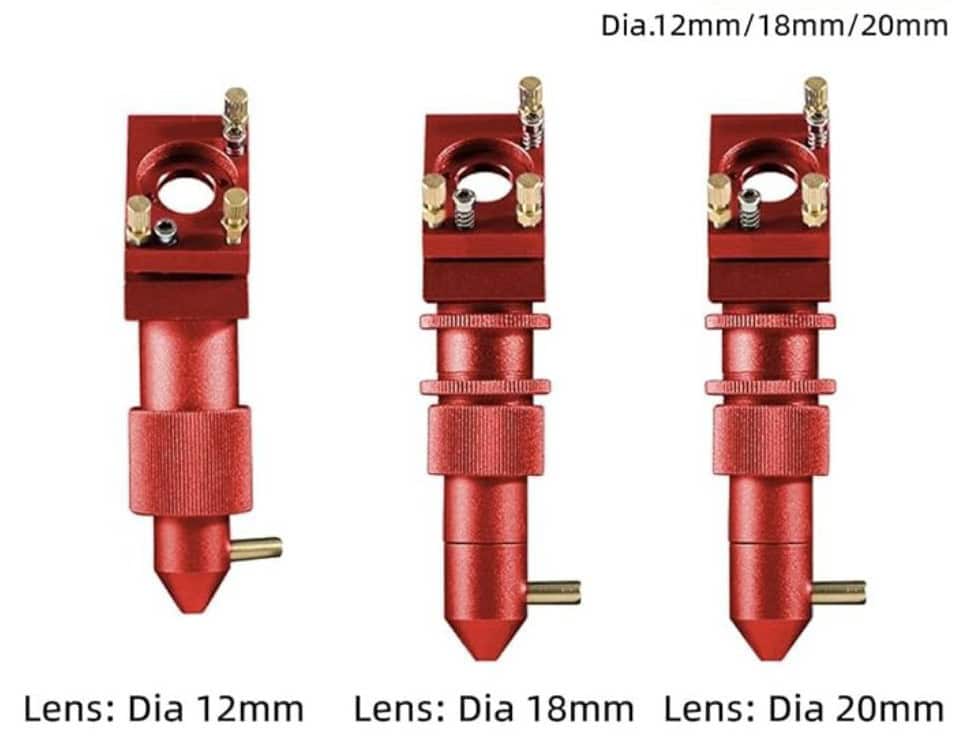
Nuzzle type: