Skip to content

You’re ready to start a new project with your CO2 laser, cutting intricate designs from a beautiful sheet of wood. You’ve double-checked your speed and power settings, but the results are maddeningly inconsistent. One part cuts through cleanly, another is charred black, and a third section fails to cut through at all. Frustrated, you start tweaking the settings again and again, wasting expensive material and valuable time, convinced you’re the one making a mistake. The promise of precision manufacturing feels like a lie.
Yes, you can achieve perfect, repeatable cuts on wood with a CO2 laser. The secret isn't just about mastering your speed and power settings; it's about understanding the material's internal consistency. Standard wood panels, especially plywood, often contain hidden glue pockets, voids, and dense knots. These inconsistencies are the primary cause of failed cuts and flare-ups. The key to predictable, high-quality results is using laser-grade materials specifically designed to be uniform throughout, which minimizes risk and guarantees a clean cut every time.

During my time at Redshift Laser, I’ve seen this exact scenario play out countless times. A client will call me, completely frustrated, saying their new machine isn't cutting wood correctly. They'll list off all the settings they've tried. My first question is always the same: "What kind of wood are you using, and where did you get it?" More often than not, they're using standard plywood from a big-box hardware store. Beginners focus on wood types and settings, but seasoned professionals know the real variable is the material's hidden flaws. A laser beam tuned for wood fiber reacts wildly when it hits a dense pocket of urea-formaldehyde adhesive. This variance, not the settings, is the root cause of failure. Let's explore how to overcome this.
What's Really Happening When You Laser Cut Wood Panels?
You see a laser beam moving across a sheet of wood, and it looks simple enough—a light beam that cuts. But you might not fully grasp the process behind it. Why does the edge look burnt? Why is it so much cleaner than a saw cut? Without understanding the fundamental physics, you can't truly troubleshoot problems or appreciate the quality of a good cut.
This knowledge gap can be a handicap. When something goes wrong, you might blame the machine's focus or power when the issue is something else entirely. For a purchasing manager like my client John, who needs to evaluate finished products, understanding the process is key to identifying superior quality. Knowing how it works allows you to spot a well-made product versus a poorly made one just by looking at the cut edge.
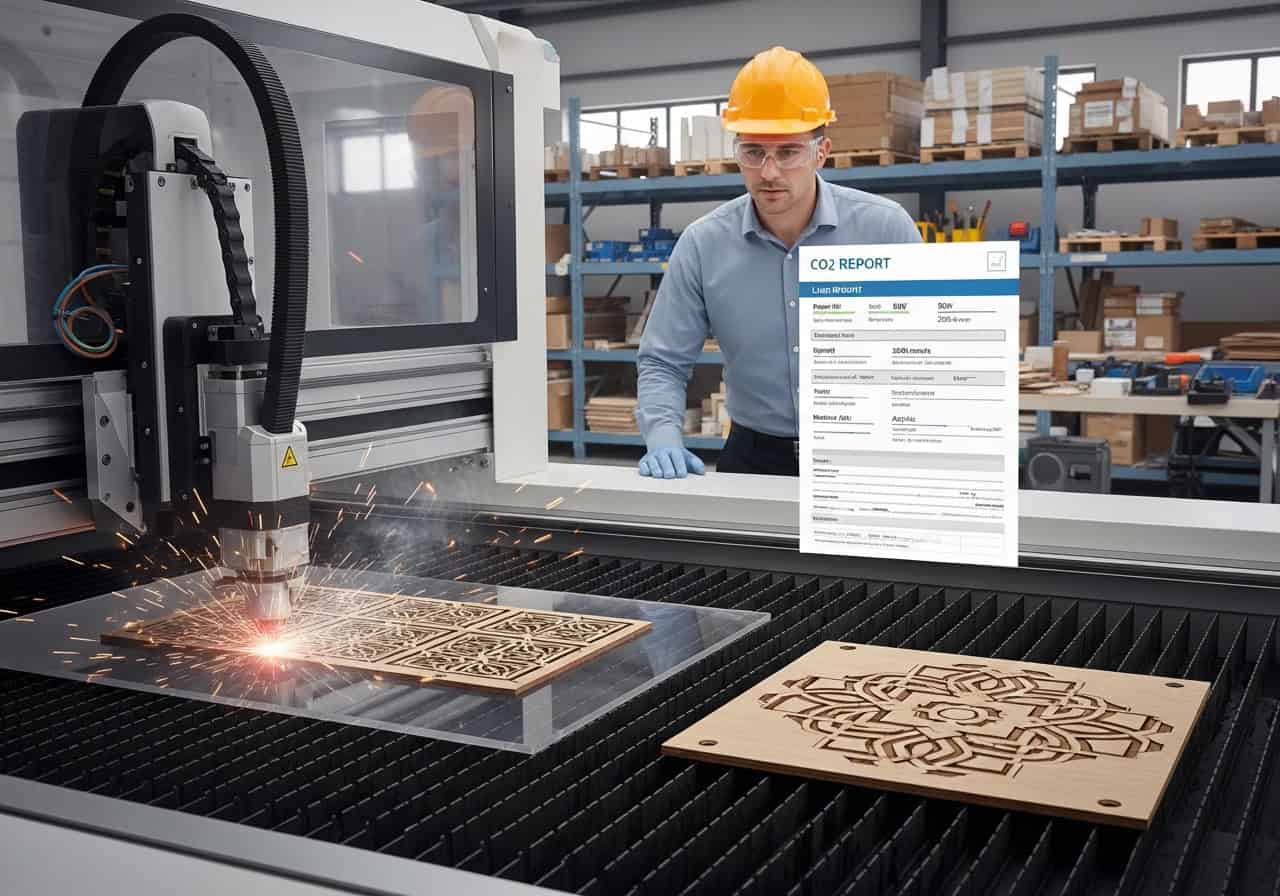
Laser cutting wood is a high-precision thermal process, not a mechanical one. A focused beam of infrared light from the CO2 laser instantly heats a tiny spot of wood to the point of sublimation—turning the solid material directly into gas. This vaporizes the wood along a precise path, creating a cut. The surrounding wood gets slightly singed by the intense heat, which naturally seals the edge, preventing splinters and creating the characteristic clean, dark finish. The process is non-contact, eliminating mechanical stress on the material.

The Science of Sublimation
Unlike a saw blade that tears away fibers, a laser removes material with heat. The energy from the laser is so concentrated that it doesn't just burn the wood; it vaporizes it. This process, known as sublimation, is what allows for incredibly fine details that would be impossible with a traditional blade. Because the wood turns directly into vapor (smoke), it is cleanly removed from the cut path.
Understanding the "Kerf"
The "kerf" is the width of the material that the laser removes as it cuts. For a CO2 laser cutting wood, this kerf is very small, often less than a millimeter. The precision of the laser's motion control system, combined with this tiny kerf, allows for intricate inlays and tight-fitting parts right off the laser bed, with no extra finishing required.
The Sealed Edge Advantage
One of the best features of a laser-cut edge is that it's sealed. The heat from the laser cauterizes the wood fibers, which locks them in place. This means no splinters and no fraying, which is especially important on plywood where layers can otherwise delaminate. This sealed edge is not only functional but also provides a beautiful, high-contrast aesthetic that frames the cut piece. While you can fine-tune settings to minimize the dark color, a slight "burnt" look is a natural and often desirable sign of a genuine laser cut.
Can You Really Laser Cut Any Type of Wood?
You walk into a lumberyard and see aisles of different woods: oak, pine, cherry, MDF, and dozens of plywood varieties. You might assume that if it's wood, your CO2 laser can cut it. This assumption can be a costly mistake. You load a beautiful piece of exotic hardwood onto the laser bed, hit start, and are met with a stubborn, char-filled groove that doesn't even make it halfway through. Or worse, a resinous pine board suddenly bursts into flames.
This is a dangerous and expensive way to learn a critical lesson: not all wood is created equal in the eyes of a laser. The properties of each wood—its density, oil and resin content, and chemical composition—dictate how it will react to the intense infrared beam. Simply trying to force a cut with more power is a recipe for poor quality and potential fire hazards. Knowing which woods work well and which to avoid is fundamental to safe and effective laser operation.
No, you cannot effectively laser cut every type of wood. While CO2 lasers can cut a wide variety of woods, success depends heavily on the material's density, resin content, and internal consistency. Lighter woods like basswood, alder, and laser-grade plywood cut beautifully. Dense, oily hardwoods like teak or resinous softwoods like pressure-treated pine are extremely difficult to cut and pose a significant fire risk. The best results always come from woods with low resin content and uniform density.

Good Candidates for Laser Cutting
These woods are known for their consistent density and low resin content, making them easy to work with.
- Laser-Grade Plywood (Birch, Basswood): This is the top choice for professionals. It's specifically made with a uniform core and laser-compatible glue.
- Basswood: A very light and soft wood with almost no grain. It cuts like butter and is perfect for models and intricate designs.
- Alder: Another lightweight hardwood that cuts and engraves with beautiful contrast.
- Cherry: Known for the rich, clean engraving contrast it produces. It cuts well, though it's denser than alder or basswood.
- MDF (Medium-Density Fiberboard): Since it has no grain or knots, MDF cuts with extreme consistency. However, it produces a lot of fine dust and requires good ventilation.
Woods to Use with Caution or Avoid
These woods present challenges due to high density, oils, resins, or inconsistent structures.
- Dense Hardwoods (Oak, Maple): While they can be engraved, cutting through thick pieces of dense wood requires very high power and multiple passes, often resulting in excessive charring.
- Oily/Resinous Woods (Pine, Teak): The natural oils and resins in these woods can ignite easily, creating a serious fire hazard. The resin also builds up on the laser's optics.
- Pressure-Treated Lumber: This wood is infused with chemicals that are hazardous when vaporized. Never cut this material with a laser.
- Standard Hardware Store Plywood: As mentioned, the voids and glue pockets make it highly unpredictable and unreliable for professional work.
| Wood Type | Ease of Cutting | Edge Quality | Engraving Quality | Fire Risk |
|---|---|---|---|---|
| Laser-Grade Plywood | Excellent | Very Clean | Excellent | Low |
| Basswood | Excellent | Cleanest | Good | Low |
| MDF | Very Good | Very Clean | Excellent | Low |
| Cherry/Alder | Good | Clean | Excellent | Low |
| Dense Hardwoods (Oak) | Difficult | Heavy Char | Fair | Moderate |
| Resinous Woods (Pine) | Very Difficult | Messy, Resinous | Poor | High |
Which Types of Wood Are Best for Professional Laser Cutting?
You need to source wood for a production run. You know some woods are better than others, but what's the absolute best choice for ensuring every single piece comes out perfect? You're looking for reliability and a flawless finish that reflects your company's high standards. You can't afford a single failed cut in a batch of a thousand units.
The pressure to choose the right material is immense. Choosing a cheaper but inconsistent wood might save money upfront but could cost you dearly in wasted material, labor, and missed deadlines. For a professional operation, the goal isn't just to make one good cut; it's to make thousands of identical good cuts. The answer lies in materials engineered specifically for laser processing, which eliminates the guesswork and mitigates risk.
For professional, high-volume laser cutting, laser-grade plywood is the undisputed best choice. It is manufactured specifically for this application with a void-free core, uniform thickness, and laser-friendly adhesive, which guarantees consistent cutting performance. For applications requiring solid wood, kiln-dried, low-resin woods like alder and basswood are top contenders due to their uniform density and predictable reaction to the laser. These materials justify their premium price by eliminating waste and ensuring repeatable, high-quality results.

Why Laser-Grade Plywood is a Non-Negotiable
From a production standpoint, standard plywood is a gamble. Laser-grade plywood is an insurance policy.
- Void-Free Core: The inner layers (plies) have no gaps or voids. A laser beam that hits an air pocket will fail to cut, leaving part of your design attached.
- Laser-Friendly Glue: The adhesive used to bond the layers is designed to vaporize cleanly and not interfere with the laser. Standard plywood uses thick, resinous glues that block the beam and create excessive char.
- Uniform Density: The wood veneers used are consistent in density, with no knots or imperfections that could deflect the beam or require more power.
Solid Wood Choices for Professionals
When a project demands solid wood, the same principle of consistency applies.
- Alder: Often called "the laser cutter's hardwood," it has a fine, uniform grain and provides a dark, crisp engraving, making it perfect for smaller, high-value items.
- Basswood: Its softness and lack of grain make it the easiest solid wood to cut. It's ideal for architectural models and projects with delicate, intricate cuts.
The Cost-Benefit Analysis
I once had a client who insisted on using standard birch plywood to save about 30% on material costs. Their initial failure rate was nearly 20%. The cost of the wasted material, the operator's time spent manually finishing bad cuts, and the delayed orders quickly erased any initial savings. After switching to laser-grade plywood, their failure rate dropped to less than 1%. The lesson is clear: paying a premium for a reliable material is a risk mitigation strategy. It's an investment in efficiency and quality.
What Are the Best Applications for Laser-Cut Wood?
You’ve mastered the technique and selected the right materials. Now, where do you apply this skill to create products that people actually want to buy? Is there a market for intricate wooden coasters, or should you be focusing on larger-scale projects? You want to ensure your investment in laser technology translates into profitable and desirable products.
Without a clear market focus, you risk producing items that are technically impressive but have no commercial demand. The beauty of laser-cut wood is its versatility, but this can also be a trap. By identifying a few key application areas where precision, customization, and aesthetics are highly valued, you can direct your efforts more effectively. From bespoke signage to complex engineering prototypes, laser cutting opens doors to a wide range of high-value markets.
The best applications for laser-cut wood are those that leverage its strengths in precision, intricacy, and customization. Top commercial uses include producing custom interior and event signage, creating architectural models and engineering prototypes, manufacturing decorative items like wall art and ornaments, and making personalized gifts and promotional products. These applications command a higher price because the quality and detail achieved by a laser are impossible to replicate with traditional tools.

Signage and Branding
This is a huge market. Lasers can cut out complex logos and lettering from wood with perfect accuracy. This is ideal for everything from rustic wedding signs to sleek corporate office branding. The ability to combine cutting and engraving on one piece adds another layer of value.
Architectural and Engineering Models
Before lasers, creating detailed scale models was a painstaking manual process. Today, architects and engineers can take their CAD files and send them directly to a laser cutter to produce perfectly scaled components from basswood or MDF. This has revolutionized model-making, making it faster, more accurate, and more affordable.
Decorative Goods and Home Decor
The ability to cut intricate patterns makes lasers perfect for creating decorative screens, wall art, complex jewelry, and holiday ornaments. The sealed, high-contrast edge of a laser cut is an aesthetic feature in itself, adding to the product's appeal.
Personalization and Customization
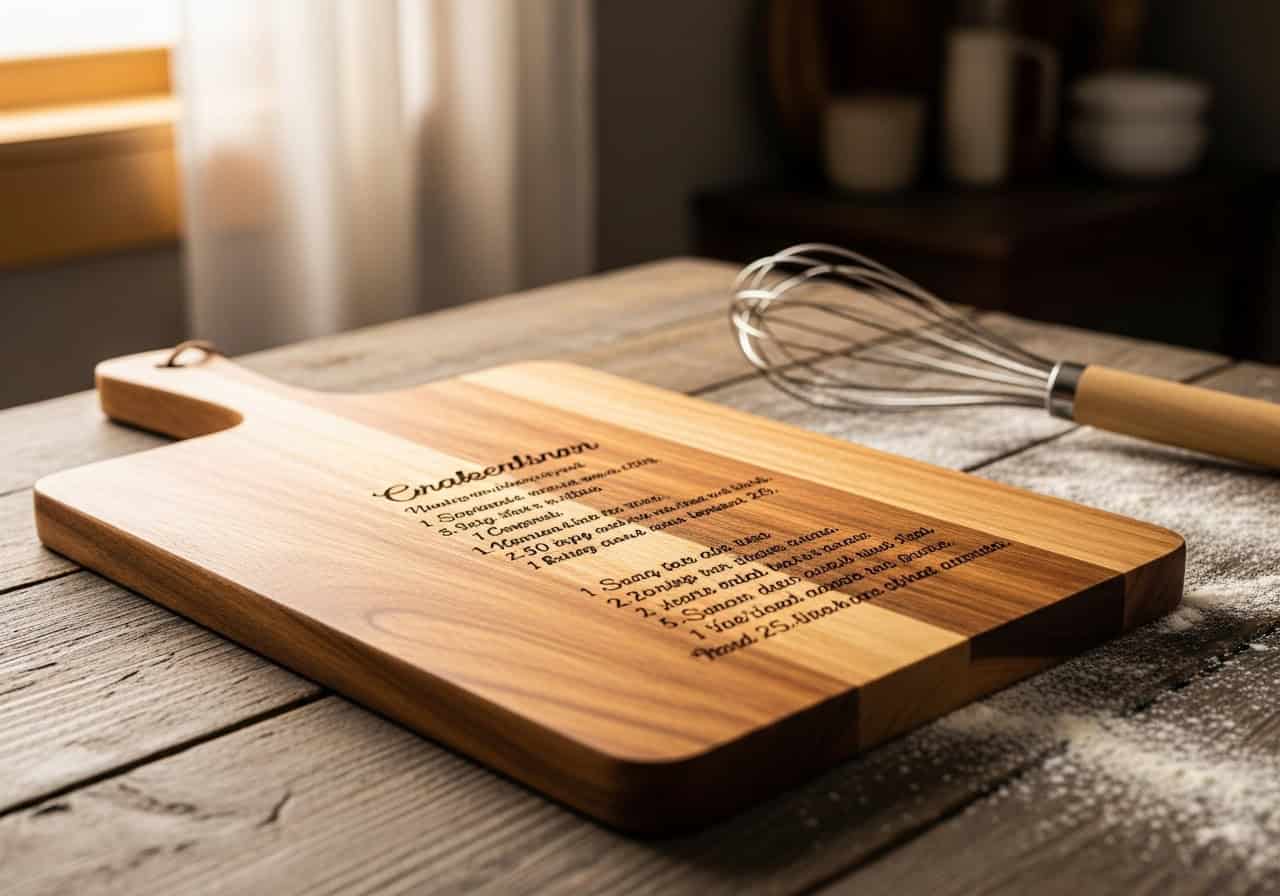
This is where laser cutting1 truly shines for consumer goods. Adding a name to a puzzle, engraving a logo on a wooden gift box, or creating custom-shaped keychains—all are simple to do with a laser. This level of personalization2 allows businesses to offer unique products that command a premium price.
Conclusion
Successfully cutting wood with a CO2 laser is less about searching for a secret list of settings and more about adopting a professional mindset. It begins with respecting the material itself. While any laser can cut wood, consistent, high-quality production is only possible when you eliminate variables. The most critical variable is the wood's internal structure. By investing in laser-grade materials, you are not just buying wood; you are buying predictability. This understanding, combined with a basic knowledge of which woods are suitable, transforms the laser from a fickle tool into a reliable and powerful production partner.