Skip to content

Learn More About Our 3D Galvo & Gantry Laser Machine
Tired of the slow, inconsistent, and environmentally damaging process of traditional denim washing? The use of harsh chemicals and massive amounts of water creates waste and hurts your brand’s sustainability goals.
CO2 laser marking machines are replacing traditional chemical processes by using a focused light beam to remove indigo dye from the denim surface. This dry, digital method creates fades, whiskers, and patterns with speed and precision.

In my years in the textile industry, I’ve seen the backstage of denim production. I remember the strong smell of chemicals and the vast amounts of water used for just a single batch of jeans. It was effective, but also messy and wasteful. Today, when I visit modern factories, the change is striking. Clean, quiet rooms now house laser machines that create the same, if not better, aged effects with just a beam of light. This isn’t just a small improvement; it’s a fundamental shift that addresses the biggest challenges in denim manufacturing: sustainability, consistency, and speed.
What Does the Laser Do to Denim When Using CO2 Laser Marking Machines?
Is it confusing how a beam of light can create a “worn-in” look on rugged denim fabric? The process might seem too high-tech or magical, making you question if it can damage the material.
The CO2 laser doesn’t burn the fabric; it precisely vaporizes the top layer of indigo dye. The laser’s energy is absorbed by the dye, turning it into gas and revealing the white cotton core underneath without harming the fabric’s integrity.
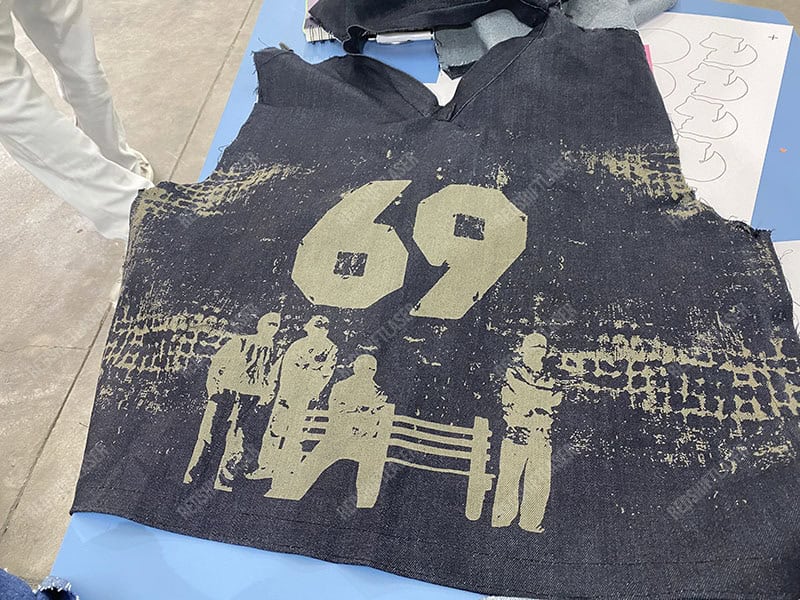
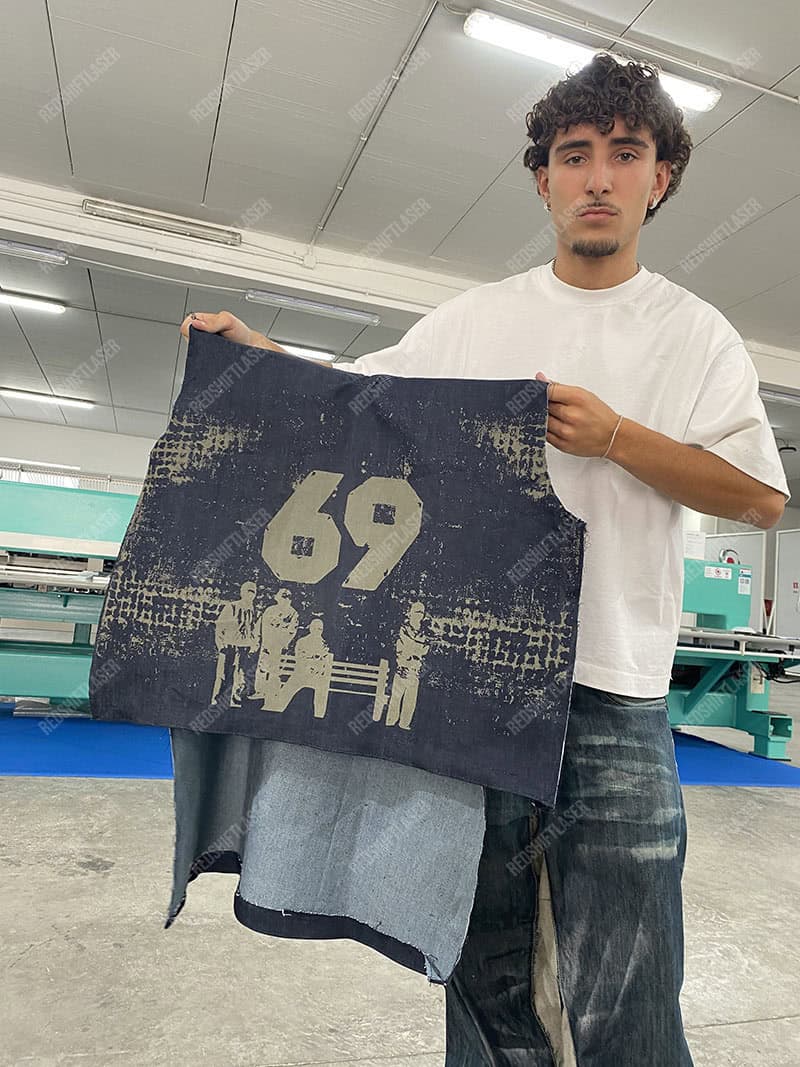
Think of it like spray-painting in reverse. Instead of adding color, the laser is gently removing it. The process is incredibly precise. The CO2 laser emits a wavelength of light that is readily absorbed by the indigo dye but is mostly reflected by the white cotton fibers of the denim. By controlling the power and speed of the laser beam, operators can determine exactly how much dye to remove. A quick, low-power pass results in a light blue fade. A slower, more powerful pass creates a brighter, almost white effect. This gives designers complete control over the final look, from subtle fading on the thighs to sharp, defined “whisker” lines around the pockets. Unlike sandblasting or heavy chemical sprays, this method doesn’t weaken the cotton fibers, so the jeans maintain their strength and durability.
What Is the Mechanism and Benefits of Using Galvo Laser Machines in Denim Fading?
Are you worried that laser etching is too slow for the demands of mass-producing denim? Traditional plotter-style lasers can seem too methodical for a high-volume factory floor.
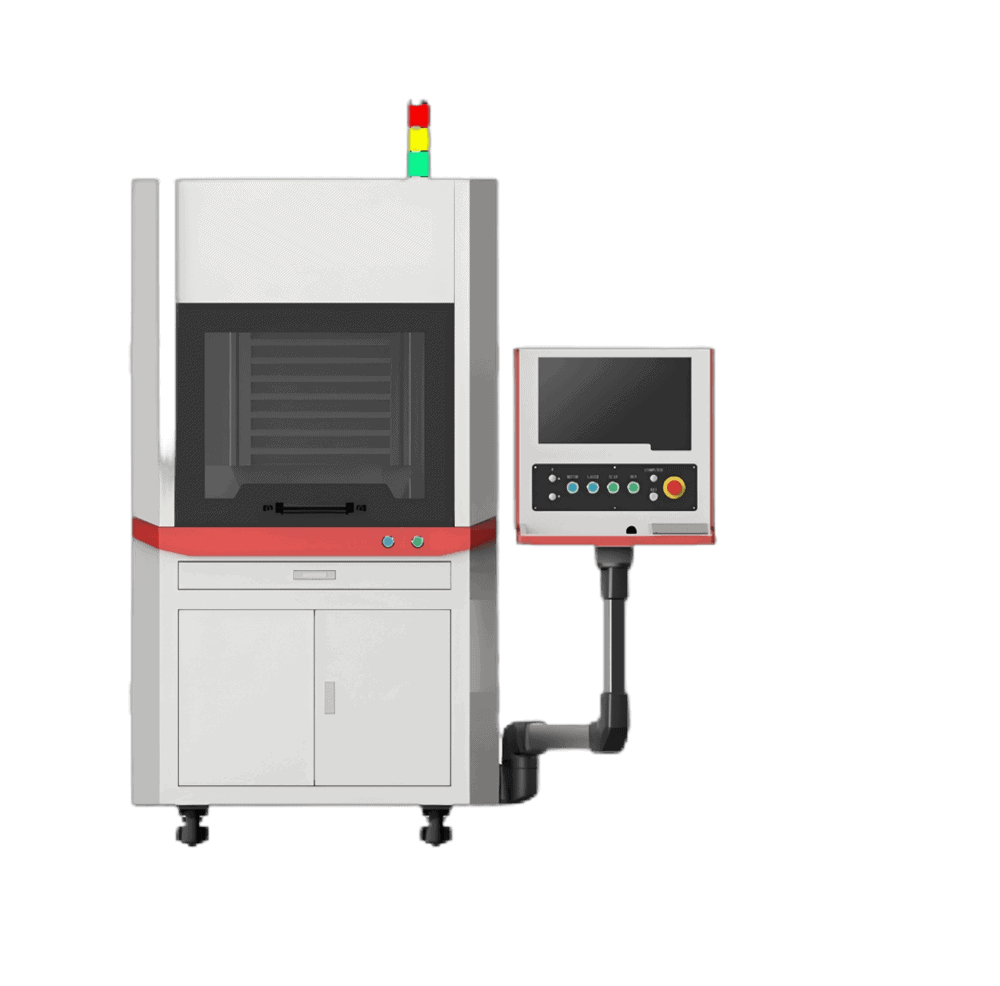
Galvo lasers use a system of fast-moving mirrors to direct the laser beam across the denim surface at incredibly high speeds. This allows for the rapid “drawing” of complex patterns like whiskers and honeycombs with perfect repeatability.
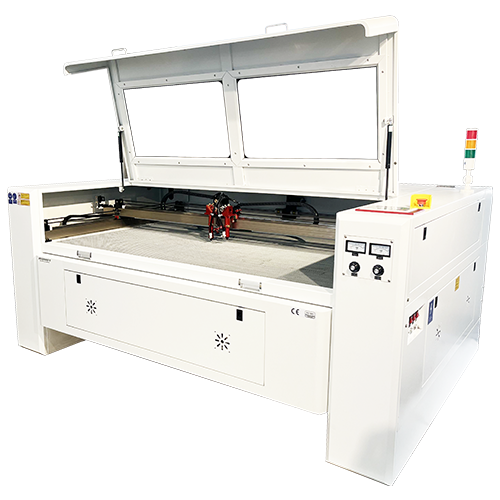
The “Galvo” system is the key to making lasers a viable tool for industrial-scale production. Instead of the entire laser head moving over the fabric, the laser beam itself is steered by two very small, computer-controlled mirrors. One mirror controls the X-axis movement, and the other controls the Y-axis. These mirrors can pivot thousands of times per second, deflecting the beam to any point on the denim almost instantaneously. This agility is what allows the laser to etch intricate patterns in just a few seconds.
Learn More About Our 3D Galvo & Gantry Laser Machine
Key Benefits of Galvo Systems:
- Speed: They are significantly faster than traditional plotter systems for creating detailed patterns in a specific area.
- Precision: The mirror system allows for extremely fine lines and sharp details, something difficult to achieve with manual or chemical processes.
- Eco-Friendly1: The process is completely dry and chemical-free2, eliminating water consumption and pollution associated with traditional fading methods.
- Consistency: Every pair of jeans marked with the same digital file3 will look identical, solving the problem of human error4 and inconsistency in manual finishing.
For a purchasing manager, this means shorter lead times, guaranteed quality control, and a powerful sustainability story to tell consumers.
What Is the Laser Marking Speed for CO2 Galvo Machines in Denim Factories?
If you’re considering this technology, you need to know the numbers. How fast is “fast”? Vague claims about speed don’t help you calculate your factory’s potential output and return on investment.
A modern CO2 Galvo machine can complete the front-side fading and whisker patterns on a pair of jeans in approximately 20 to 60 seconds. The exact speed depends on the complexity and size of the design.
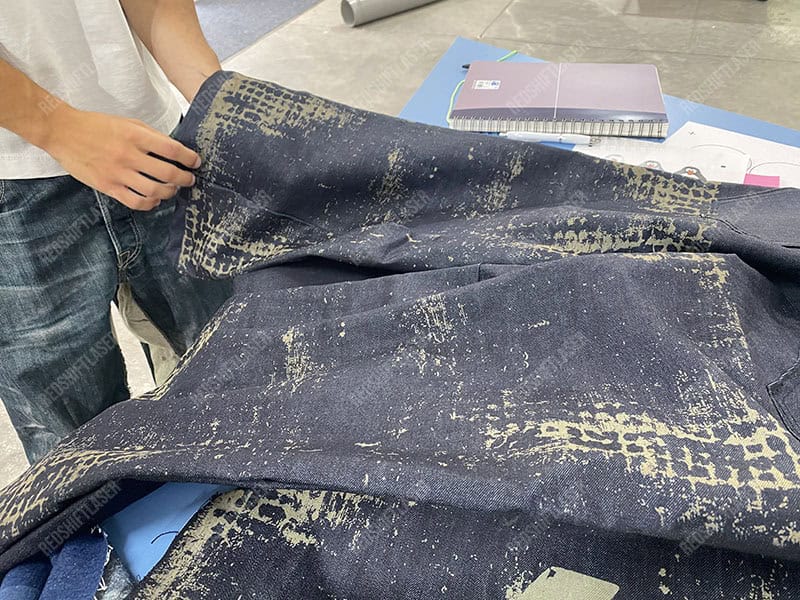
Speed is the critical factor for factory adoption, and this is where Galvo systems truly shine. Let’s break down the timing for a typical pair of jeans. Simple thigh fading might take as little as 15-20 seconds per side. Adding complex “whiskering” (the lines across the lap) and “honeycombs” (the faded patterns behind the knees) will increase the time. A highly detailed, all-over design might take closer to a minute. Even at the slower end of this range, the throughput is enormous. One machine can process hundreds of pairs of jeans in a single shift.
Factors Influencing Marking Speed:
| Design Element | Approximate Time (per side) | Impact on Speed |
|---|---|---|
| Simple Thigh Fade | 10 – 20 seconds | Fastest operation; covers a large area with low detail. |
| Whiskers/Chevrons | 15 – 30 seconds | Requires precise line work, slightly slower. |
| Destruction/Tears | 20 – 40 seconds | Slower, as the laser cuts through fibers. |
| Complex Artwork | 30 – 60+ seconds | Most time-consuming due to high detail and area coverage. |
When you compare this to the multi-step, labor-intensive process of manual scraping and chemical spraying, the efficiency gain is massive. It allows brands to respond to trends faster and produce on-demand with greater agility.
What can a 3D Galvo CO2 Laser Do for Denim Brands?
Beyond simple flat patterns, how can laser technology help a brand truly innovate and stand out? You need a competitive edge, not just a more efficient way to do the same old thing.
A 3D Galvo laser uses a dynamic focus system to maintain a perfect focal point on curved or uneven surfaces. This allows for seamless, distortion-free patterns that wrap naturally around seams, pockets, and the natural shape of the jeans.
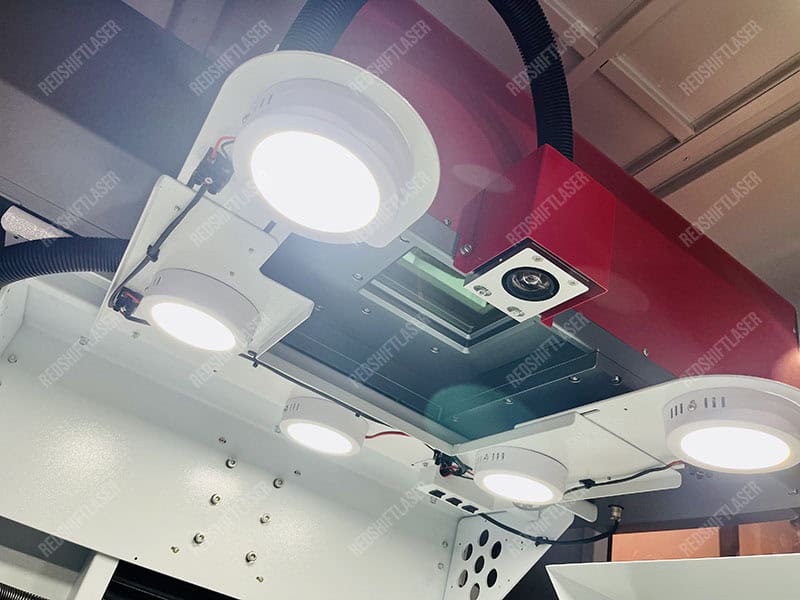
This is the cutting edge of denim finishing. A standard 2D laser works perfectly on a flat piece of fabric. But a finished pair of jeans isn’t flat; it has curves, seams, and varying thicknesses. A 3D system, often called a dynamic focus system, adjusts the laser’s focal length in real-time as it moves. This means the beam’s spot size and energy density remain constant whether it’s marking the flat thigh or the thick seam along the leg. The result? Designs that flow organically over the entire garment without the distortion or focus issues you’d get with a 2D system. For a brand, this unlocks a new level of design freedom. You can create patterns that wrap around the leg, flow seamlessly over the back pockets, or create 3D visual effects that were previously impossible. It’s a tool for creating signature looks that are difficult to copy, adding significant value and brand identity to the final product.
Conclusion
CO2 lasers, especially 3D Galvo systems, are transforming denim production. They offer an eco-friendly, fast, and precise solution that delivers quality, consistency, and unparalleled design innovation for modern denim brands.
Related:
-
Exploring this link will provide insights into the advantages of eco-friendly practices, enhancing your understanding of sustainable manufacturing. ↩
-
This resource will clarify the significance of chemical-free processes, highlighting their importance for health and the environment. ↩
-
Understanding digital files can enhance your knowledge of modern fashion production and quality control. ↩
-
Exploring the impact of human error can provide insights into improving efficiency and accuracy in production. ↩